Option 3: Dye the Garment a Darker Color
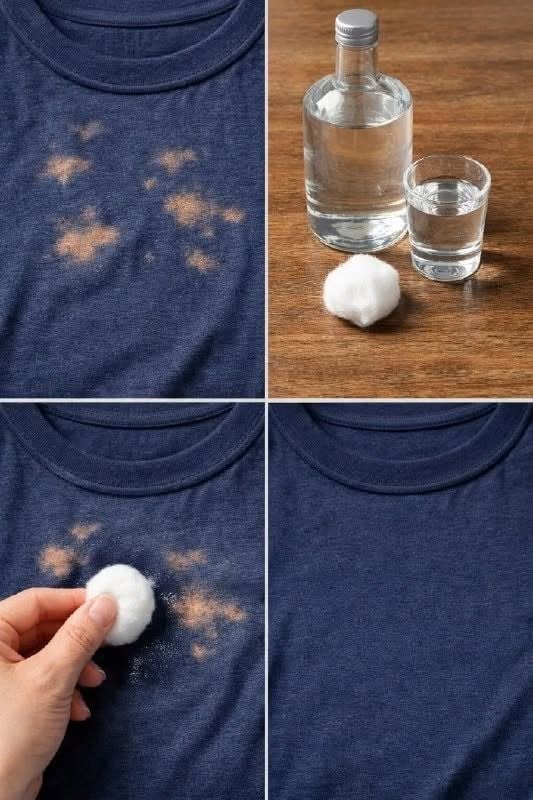
When the original color is difficult to match, dyeing the entire garment a darker shade can sometimes help visually blend the bleached area.
For example, a faded medium-blue cotton shirt may potentially be redyed darker blue or black if the fiber accepts the chosen dye.
The final outcome is not guaranteed, so it is worth treating this as a creative repair rather than expecting factory-perfect color.
Option 4: Cover the Spot With Embroidery
Embroidery is one of the most attractive ways to rescue clothing with localized bleach damage.
A small flower, leaf, star, geometric shape, initials, or decorative line can cover the pale area completely.
This approach has an advantage over recoloring because the patch does not need to match the original fabric shade.
Instead of hiding the repair, you make it part of the design.
Small Embroidery Ideas
Tiny flowers
Leaves
Stars
Hearts
Initials
Simple geometric patterns
Decorative stitching
Small symbols
Option 5: Add an Iron-On Patch
For casual garments, patches are another easy option.
They can work especially well on:
Jeans
Denim jackets
Sweatshirts
Canvas bags
Children’s clothing
Workwear
Some patches are iron-on, while others should be sewn.
Check the garment care label before applying heat because not every synthetic fabric tolerates a hot iron.
Sewn Patches Can Be More Durable
Even when a patch includes heat-activated adhesive, sewing around the edges may provide better long-term durability on garments that are washed frequently.
Option 6: Use a Decorative Appliqué
Appliqué uses a piece of contrasting fabric sewn over the damaged area.
This can create a deliberate, handmade look.
It is particularly useful if the bleach has also weakened the fabric and you want to reinforce it while covering the discoloration.
Option 7: Try Fabric Paint
Fabric paint can be useful for spots that are too large for a marker but too small to justify dyeing an entire garment.
It can also turn the damage into artwork.
You might create:
A floral design
Abstract shapes
Stripes
Dots
Letters
A stencil pattern
Use paint specifically intended for textiles and follow the instructions for curing or heat setting.
Option 8: Turn Multiple Bleach Spots Into a Pattern
If there are several marks scattered across a casual shirt or sweatshirt, disguising each one individually may be difficult.
Instead, you can create a deliberate distressed or patterned look around them.
This works particularly well on cotton garments that already have an informal style.
About Bleach Tie-Dye
Bleach tie-dye, sometimes called reverse tie-dye, intentionally removes color from selected areas of a dark garment.
It can visually incorporate accidental bleach marks into a larger design.
However, bleach should still be treated as a strong cleaning chemical.
Follow the bleach product label, use adequate ventilation, protect skin and eyes as directed, avoid mixing bleach with other chemicals, and rinse the garment thoroughly afterward.
Do not assume stronger bleach or longer exposure will create a better design. Excessive exposure can weaken fibers.
Can You Bleach the Whole Garment to Match?
Trying to remove all the color from a garment may seem like an easy solution, but results can be unpredictable.
Fabric may bleach unevenly, stitching may remain a different color, and some fibers may be damaged by prolonged exposure.
Garments made from blends may also react inconsistently.
Redyeing or redesigning is often more controllable than repeatedly bleaching the entire garment.
Option 9: Add a Pocket Over the Damage
If the bleach mark is located on the chest, hip, or another suitable area, a decorative pocket can hide it completely.
This can work particularly well on shirts, aprons, jackets, and casual dresses.
Option 10: Add Decorative Trim
If discoloration appears near a hem, cuff, collar, or sleeve edge, decorative trim may cover it naturally.
Possible options include:
Ribbon
Lace
Contrasting fabric bands
Bias tape
Decorative stitching
Option 11: Shorten or Alter the Garment
Sometimes the bleach spot is conveniently located near an edge.
A damaged pair of pants might become shorts.
A long-sleeved shirt might become short-sleeved.
A dress or skirt might be shortened.
A stained T-shirt could be converted into a cropped casual top.
Option 12: Repurpose the Fabric
If the garment cannot realistically be restored, the fabric may still be useful.
Depending on the material, it might become:
Cleaning cloths
Craft fabric
A patch source
A tote bag panel
A small pillow cover
A pet bedding layer
Quilting material
What If the Bleach Spot Is on Black Clothing?
Black clothing often develops orange, rust-colored, tan, or reddish marks when exposed to bleach.
For a tiny mark, black textile markers may be useful.
For widespread damage on dye-compatible material, redyeing the entire garment black may provide a more even result.
However, sewing thread, logos, elastic, and synthetic components may accept dye differently.
What If the Spot Is on Navy Blue?
Navy can be harder to match than black because blue shades vary significantly.
Test any fabric marker carefully before applying it to the visible area.
For larger damage, full-garment dyeing may provide a more natural result.
What If the Spot Is on Red Clothing?
Red garments can bleach to pink, orange, yellow, or pale peach.
Small marks may be disguised with a textile marker, but color matching can be challenging.
Decorative patches or embroidery may be easier.
What If the Spot Is on White Clothing?
On truly white fabric, chlorine bleach may not create obvious dye loss because there may be little or no colored pigment to remove.
However, excessive or repeated bleach use can still weaken fibers, and some white fabrics contain optical brighteners or finishes that can change appearance.
Yellowing can also occur for several reasons unrelated to a conventional bleach stain.
Bleach Can Damage the Fabric, Not Just the Color
Sometimes the problem is more than discoloration.
Strong or prolonged bleach exposure can weaken certain textile fibers.
After the garment is dry, inspect the affected area carefully.
Watch for:
Thinning
Small holes
Fraying
Weak threads
A papery texture
Fabric that tears easily when gently handled
If the material has been structurally weakened, recoloring alone will not restore its strength.
A bleach splash can remove color in seconds, but the repair should never be rushed—first determine whether you are dealing only with discoloration or with actual fiber damage as well.