
Why “Leaving It at Home” Specifically Works
There’s a meaningful difference between silencing your phone and not having it at all. Silencing still leaves the decision in your hands every few minutes — you can always check “just in case.” Leaving the phone at home removes the decision entirely. There’s nothing to resist, because there’s nothing there. People who’ve built successful device-free routines, whether for a weekend trip or just a walk around the block, consistently point to this same mechanic: the hardest part isn’t willpower in the moment, it’s making the decision once, in advance, so you’re not re-litigating it all day.
That’s echoed in how families are approaching travel lately, too — a growing number are deliberately building phone-free stretches into vacations, not through elaborate rules, but through something as simple as a drawer or a lockbox where devices go at the start of the trip. The physical act of putting it somewhere out of reach does more work than any amount of self-control in the moment.
What You Actually Get Back
It’s not really about the phone itself — it’s about what fills the space when it’s gone. The generation that used a wired phone also had to be fully present for a conversation, since there was no scrolling through something else at the same time. Board games got played because there wasn’t a faster form of entertainment sitting in every pocket. People got a little bored sometimes, and boredom, it turns out, is where a lot of ideas and actual rest happen. Modern research on attention and stress backs up what that nostalgia is really pointing at: near-constant availability keeps your brain in a low-grade state of alert, always half-listening for the next ping, and stepping away from that — even briefly — gives your attention room to actually settle.
You Don’t Have to Go All the Way Back to Rotary
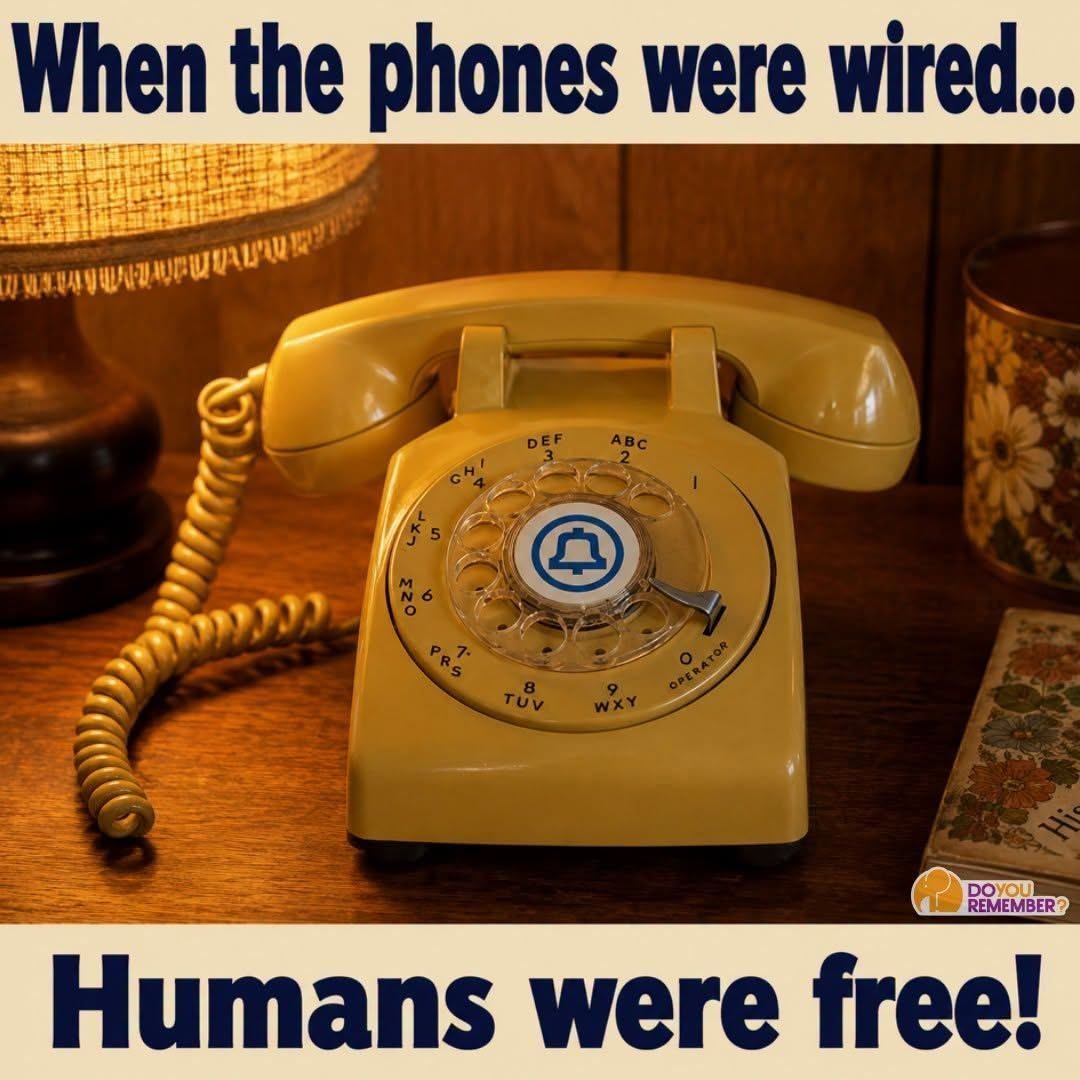
Nobody’s arguing for giving up the genuine conveniences a smartphone provides — maps, emergency access, being reachable by people who actually need you. The appeal of leaving it at home occasionally isn’t about rejecting the technology. It’s about reclaiming the specific kind of freedom that photo is nostalgic for: a few hours where nobody can reach you, where you’re not available on demand, and where being present with whatever you’re actually doing doesn’t have to compete with a device in your pocket.
Funny how something that used to be the default — just being unreachable for a while — now has to be scheduled on purpose. But if leaving your phone at home a few times a week gets you even a little of that back, it’s a pretty easy trade to make.
