
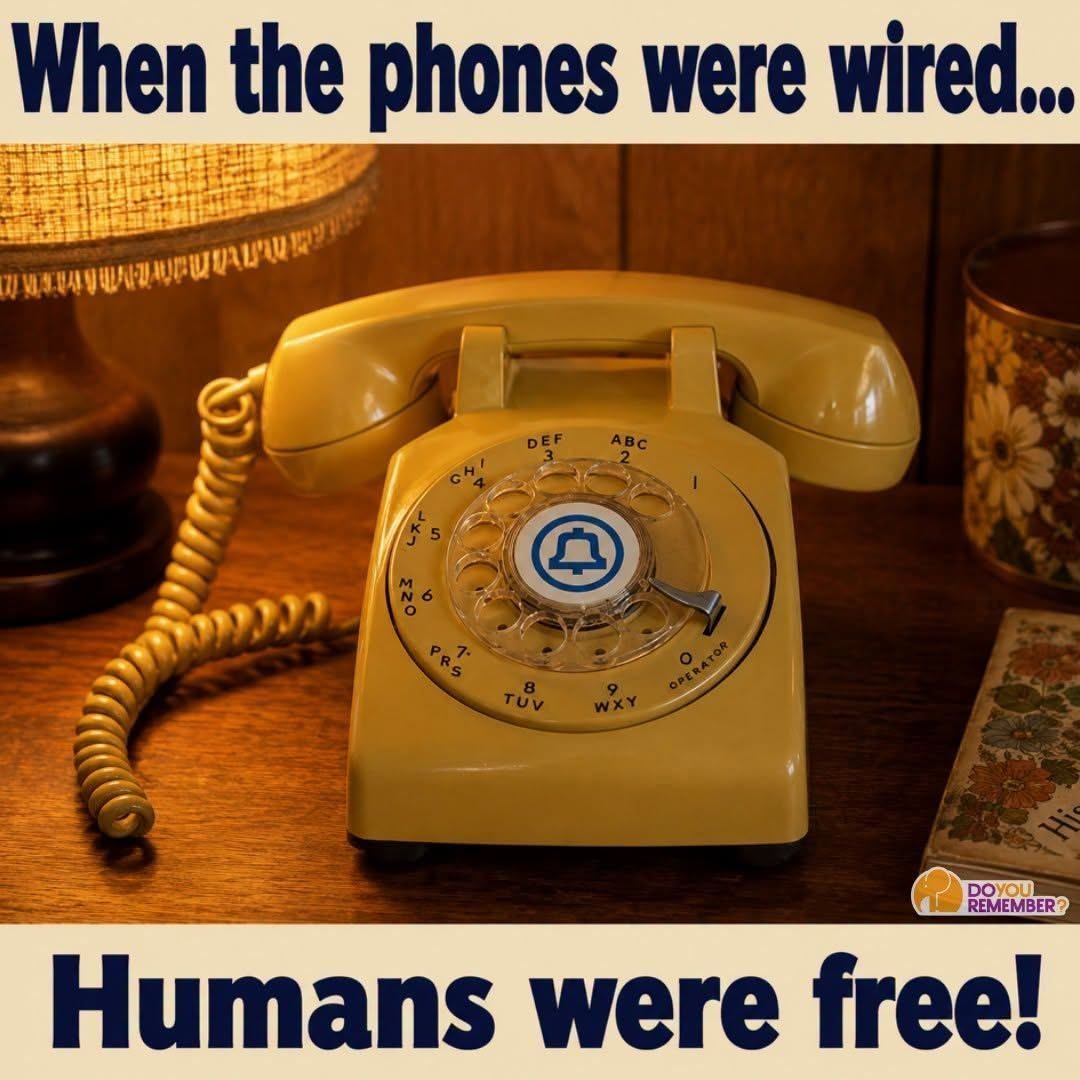
There’s something almost funny about a rotary phone photo captioned “humans were free.” A phone tethered to a wall by a curly cord doesn’t sound like freedom on paper — you couldn’t take it upstairs, couldn’t take it to the store, couldn’t even walk more than the cord would stretch. But anyone who grew up with one of those phones knows exactly what the caption means. When you hung up, you were actually, completely unreachable. No notifications trailing you into the car, the bathroom, or bed. The phone was a place you went to talk to someone — not a thing that followed you everywhere, waiting.
The Trade We Didn’t Realize We Were Making
Cell phones solved a real problem: being unreachable used to mean missing important calls, getting lost without a way to ask for directions, or waiting anxiously by a landline for news. That trade felt like a pure upgrade for a long time. But somewhere along the way, “reachable when it matters” quietly became “reachable constantly, for everything,” and a lot of people are starting to notice the cost of that shift.
The numbers back up the feeling. Recent surveys suggest a large share of Americans consider themselves at least somewhat addicted to their phones, and a striking number report checking their phone within minutes of waking up, before they’ve done much of anything else. Separate research has found that even short digital breaks — as little as 48 hours — can measurably improve attention span and working memory. None of that is really news to anyone who’s tried putting their phone in another room for an afternoon and felt the itch to go check it for no real reason.
