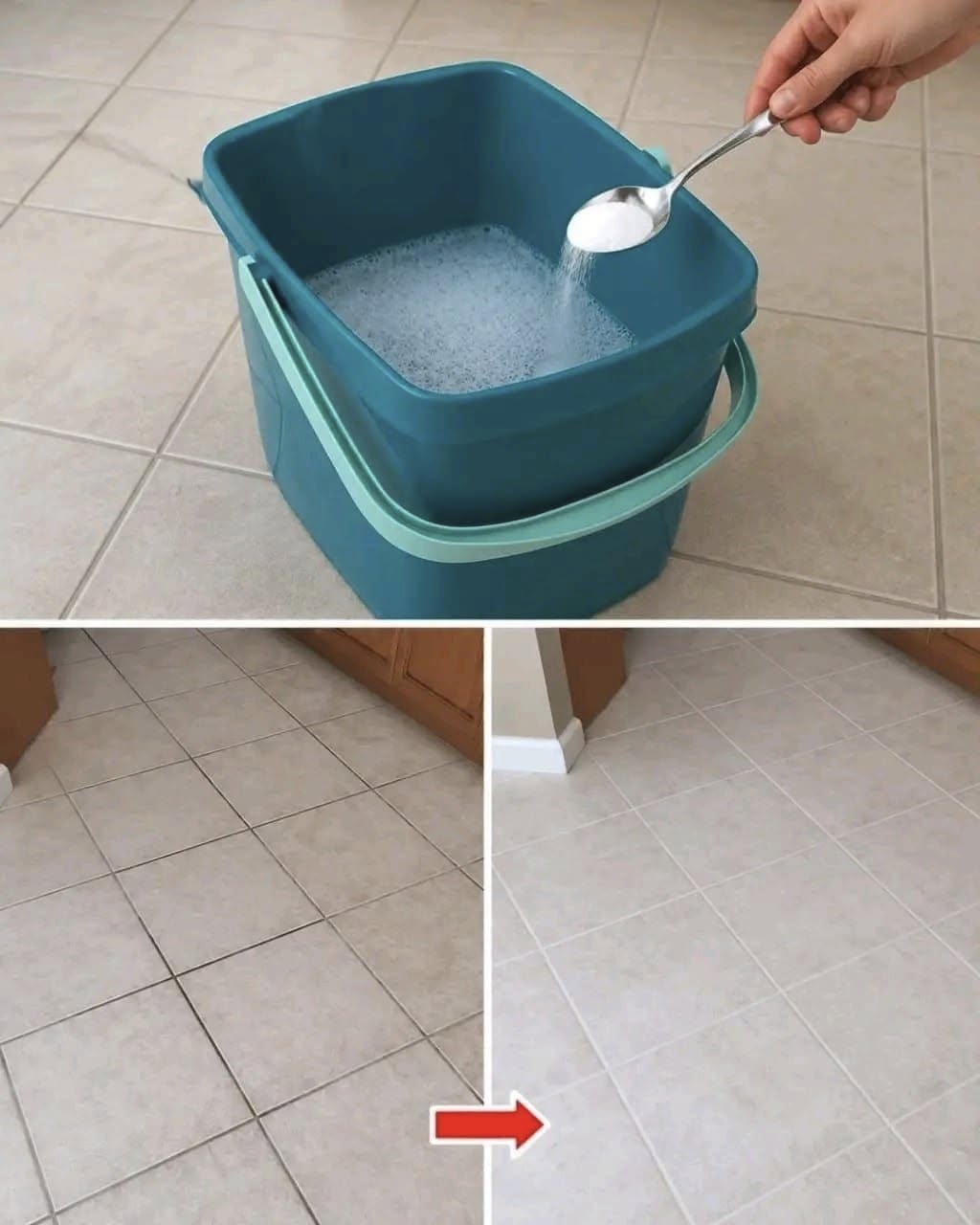
Step 5: Rinse the Floor
This is one of the most important steps.
Even a useful cleaning ingredient can leave residue when too much is used. After cleaning, go over the floor with a clean, damp mop and fresh water if necessary.
This can help remove remaining powder and loosened dirt.
A properly rinsed floor may look clearer and less cloudy than a floor that has been covered with too much cleaning solution.
Step 6: Let the Floor Dry
Allow the floor to air-dry.
If you want to reduce water spots, you can dry the surface with a clean microfiber cloth.
Good ventilation may help the floor dry more quickly, especially in bathrooms and humid areas.
Make sure the floor is completely dry before walking on it to reduce the risk of slipping.
How to Clean Tile Grout with Baking Soda
Grout often requires a different approach from the tile surface.
Because grout is textured and may be porous, dirt can become trapped inside it.
Simple Grout Paste
A basic mixture can be made with:
Baking soda
A small amount of water
Mix the ingredients until they form a thick paste.
Apply the paste carefully to the grout lines and allow it to sit briefly. Then use a soft grout brush or an old soft toothbrush to gently scrub the area.
Avoid excessive force.
After cleaning, rinse thoroughly and wipe away the residue.
For deeply stained, cracked, or permanently discolored grout, a homemade cleaner may not completely restore the original appearance. Professional cleaning, grout repair, or other maintenance may sometimes be necessary.
Why the Right Amount of Water Matters
Too little water may leave too much powder on the floor.
Too much water may:
Spread dirt around
Make the floor take longer to dry
Leave water in grout lines
Cause problems near certain flooring transitions
Create slippery conditions
The goal is not to flood the floor.
A damp mop is usually more effective than a dripping-wet mop for routine cleaning.
Can Baking Soda Remove Bad Odors?
One reason baking soda is popular for household cleaning is its ability to help reduce unpleasant odors.
A floor may develop odors because of:
Food spills
Pet accidents
Dampness
Trash bins
Dirty shoes
Organic material
Poor ventilation
Cleaning the actual source of the odor is the most important step. Baking soda should not be used as a substitute for removing spilled material or addressing a moisture problem.
If a smell persists, investigate the cause.
For example, a continuing musty smell may indicate moisture beneath or around the floor. In such cases, simply mopping with a household cleaner may not solve the underlying problem.
Should You Add Vinegar to Baking Soda?
A popular household-cleaning trend involves combining baking soda and vinegar.
The mixture creates visible fizzing, which can make it seem especially powerful. However, the bubbling reaction does not automatically mean the mixture is more effective for routine cleaning.
Because vinegar is acidic and baking soda is alkaline, combining them causes a chemical reaction that eventually produces mostly water, carbon dioxide, and other dissolved components.
For many everyday cleaning tasks, using a suitable cleaner correctly is more important than creating a dramatic chemical reaction.
There is another important consideration: vinegar may not be suitable for every type of tile or grout.
Acidic cleaners can damage or dull natural stone surfaces, including certain marble, limestone, travertine, and other calcareous materials.
Always identify your flooring before selecting a cleaner.
What Types of Tile Can Be Cleaned This Way?
Many ceramic and porcelain tile floors are durable and relatively easy to maintain.
A gentle baking soda solution may be suitable for these surfaces when used appropriately.
However, caution is necessary with other materials.
Ceramic Tile
Ceramic tile is generally durable, but finishes can vary.
A mild cleaning approach is often sufficient.
Porcelain Tile
Porcelain is commonly used for floors because it is hard and relatively resistant to moisture.
Routine cleaning generally does not require harsh products.
Natural Stone
Natural stone requires more care.
Examples include:
Marble
Travertine
Limestone
Granite
Slate
Some stones are sensitive to acidic or abrasive cleaning methods.
Do not assume that a homemade cleaner is automatically safe for natural stone.
Specialty and Coated Surfaces
Some tiles have special coatings, finishes, or decorative treatments.
Always check the manufacturer’s instructions.
Common Tile-Cleaning Mistakes to Avoid
Using Too Much Cleaning Product
More cleaner does not always mean more cleanliness.
Too much product can leave a film behind.
Skipping the Dry Sweep
Mopping over a dusty floor can create streaks and muddy residue.
Sweep first.
For Complete Cooking STEPS Please Head On Over To Next Page Or Open button (>) and don’t forget to SHARE with your Facebook friends