Using Abrasive Tools on Delicate Surfaces
Metal scrubbers and harsh pads may scratch or dull certain tiles.
Use soft brushes and microfiber cloths whenever possible.
Ignoring the Grout
Dirty grout can make a clean floor appear neglected.
Clean it regularly rather than waiting for heavy staining.
Leaving Standing Water
Standing water is unnecessary for most routine tile cleaning.
Use a well-wrung mop.
Mixing Random Household Chemicals
Never mix cleaning products without understanding the risks.
Some household chemicals can create dangerous fumes when combined. In particular, bleach should never be mixed with ammonia or acidic cleaners.
Use one appropriate cleaning product at a time, follow product labels, and ensure good ventilation.
A Weekly Tile-Floor Cleaning Routine
A simple routine can prevent heavy dirt from building up.
Daily or As Needed
Sweep visible dirt.
Clean spills promptly.
Remove food residue.
Wipe muddy footprints.
Once or Twice a Week
Sweep or vacuum thoroughly.
Mop high-traffic areas.
Clean around kitchen work zones.
Monthly
Inspect grout.
Clean corners and edges.
Move light furniture if necessary.
Look for hidden dirt around appliances.
Every Few Months
Consider a deeper cleaning session, especially in busy rooms.
You may also inspect the floor for:
Cracked grout
Loose tiles
Water damage
Mold or mildew
Persistent stains
Preventive maintenance is often easier than dealing with severe buildup later.
How to Make Tile Floors Look Brighter
Cleanliness and shine are not always the same thing.
A dull-looking floor may have residue rather than dirt.
To improve the appearance:
Rinse Properly
Remove cleaning-product residue.
Change Dirty Water
Mopping with dirty water can simply spread grime across the floor.
Use a Clean Mop
A dirty mop cannot produce a clean floor.
Buff After Drying
For suitable smooth tile surfaces, a dry microfiber cloth can help remove remaining streaks.
Clean Spills Quickly
The longer some spills remain, the harder they may be to remove.
The Importance of Clean Tools
Cleaning tools themselves can become dirty.
Your mop should be washed after use.
Buckets should also be rinsed and dried.
If you use a reusable mop pad, follow the manufacturer’s washing instructions.
A dirty mop may:
Spread bacteria
Redistribute grease
Leave streaks
Produce unpleasant odors
For a cleaner floor, clean the cleaning tools too.
A Gentle Cleaning Method for Busy Kitchens
Kitchen floors often collect grease.
Before using a baking soda solution, sweep thoroughly.
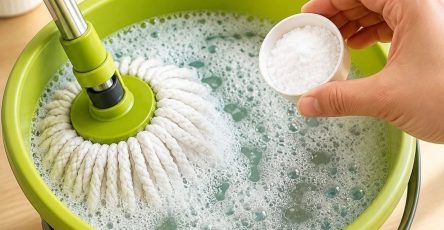
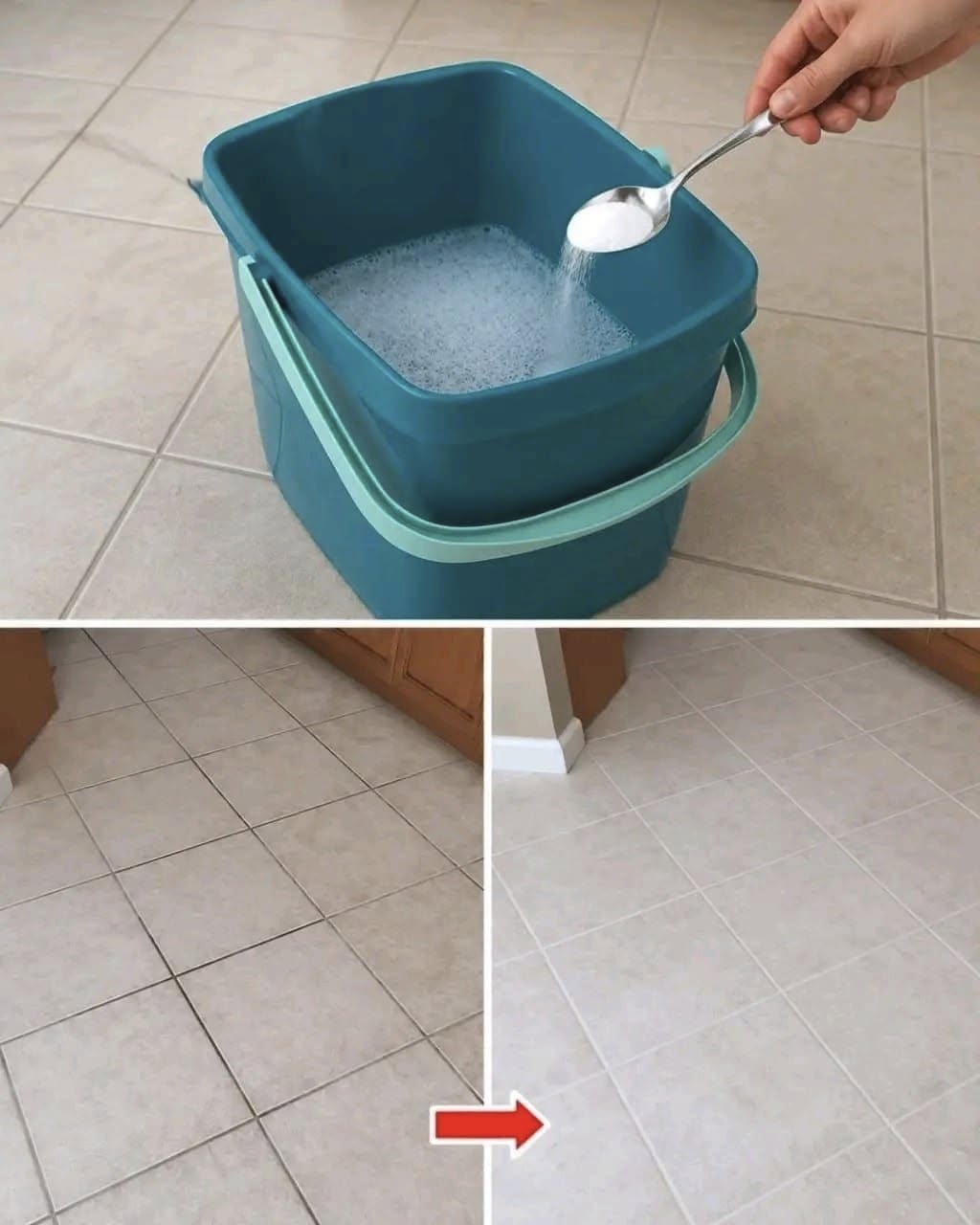
Then prepare warm water with a moderate amount of baking soda.
Focus on:
In front of the stove
Near the refrigerator
Around the trash area
Under the table
Near pet bowls
For sticky spots, use a damp cloth first. If needed, apply a small amount of baking soda paste and gently clean the affected area.
Rinse afterward.
A Bathroom Tile-Cleaning Routine
Bathrooms require frequent attention because of moisture.
A good routine includes:
Removing hair and dust.
Cleaning the floor regularly.
Allowing the room to ventilate.
Drying wet areas.
Checking grout and corners for moisture problems.
Ventilation is important. Open windows when practical or use an appropriate bathroom exhaust fan.
If there is significant mold growth, repeated water damage, or a persistent musty odor, investigate the moisture source rather than repeatedly applying cleaning products.
Is Baking Soda an Environmentally Friendly Choice?
Baking soda is often considered a simple household ingredient with relatively low environmental impact compared with some heavily fragranced cleaning products.
However, environmentally responsible cleaning is not only about the ingredient.
Good practices include:
Using only the amount you need
Avoiding unnecessary chemicals
Using reusable cleaning cloths
Reducing excessive water use
Following local waste-disposal guidelines
Selecting appropriate products for the specific surface
The simplest effective cleaning method is often the best choice.
Can You Use Essential Oils in the Cleaning Water?
Some people enjoy adding essential oils to homemade cleaning mixtures for fragrance.
However, fragrance is not the same as cleaning power.
Some oils may:
Leave residue
Make floors slippery if overused
Trigger allergies or sensitivities
Be unsafe around certain pets or children depending on the oil and exposure
If fragrance is desired, use a very small amount and ensure the product is appropriate for your household.
For routine floor cleaning, plain warm water and a suitable cleaner may be sufficient.
How to Prevent Floors from Getting Dirty So Quickly
The best cleaning routine begins before the dirt reaches the floor.
Use Doormats
Place a good mat at entrances.
This can reduce the amount of dust, sand, and soil brought indoors.
Remove Shoes
Where practical, removing outdoor shoes can significantly reduce floor dirt.
Clean Spills Immediately
Fresh spills are usually easier to remove than dried ones.
Use Rugs in High-Traffic Areas
Rugs can protect floors, although the rugs themselves should be cleaned regularly.
Maintain Pets
Keeping pets’ paws clean after outdoor walks can reduce mud and debris.
Homemade Cleaning Is Not Always the Best Choice
Homemade methods can be convenient, but they are not automatically superior to commercial products.
Some problems require specialized solutions.
Consider an appropriate commercial cleaner or professional advice when dealing with:
Severe grease
Heavy mineral buildup
Mold problems
Cracked grout
Deep stains
Natural stone
Specialty tile finishes
Always select products designed for the surface you are cleaning.
A Quick Before-and-After Floor Cleaning Checklist
Before Cleaning
Identify the flooring material.
Check the manufacturer’s recommendations.
Sweep or vacuum.
Remove loose objects.
Test a new cleaner in a hidden area.
During Cleaning
Use moderate amounts of cleaning ingredients.
Avoid soaking the floor.
Clean in sections.
Rinse the mop frequently.
Focus on dirty areas.
After Cleaning
Rinse away residue when necessary.
Allow the floor to dry.
Inspect for streaks.
Wash the mop.
Empty and rinse the bucket.
Frequently Asked Questions
Can I pour dry baking soda directly onto the floor?
It is generally better to use baking soda in a controlled way, such as dissolved in water for routine cleaning or made into a paste for a small targeted area. Excess dry powder may be difficult to remove.
Will baking soda make every floor shiny?
No. The final appearance depends on the type and condition of the floor. A cleaner surface may look brighter, but baking soda cannot repair damaged finishes, deep scratches, or permanently worn surfaces.
For Complete Cooking STEPS Please Head On Over To Next Page Or Open button (>) and don’t forget to SHARE with your Facebook friends