
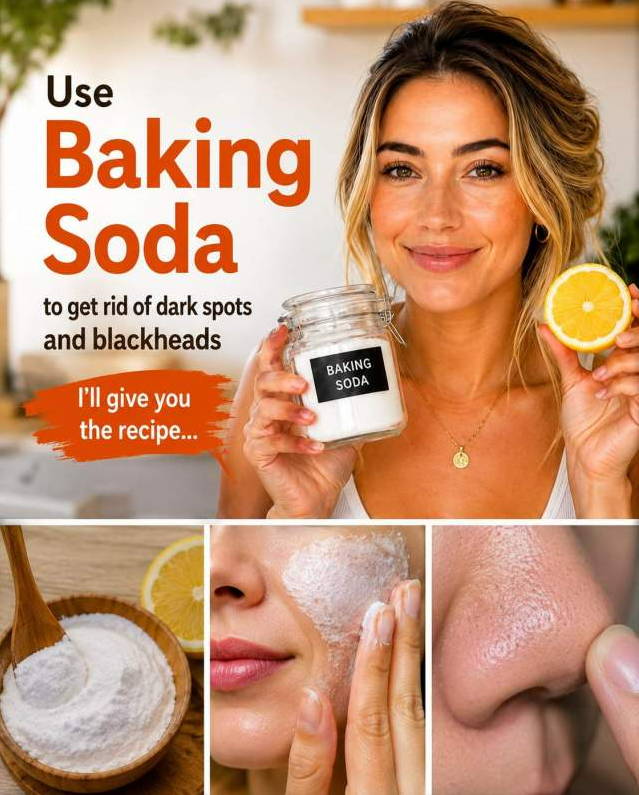
Dark spots that won’t budge. Wrinkles that keep etching deeper. Blackheads that sit there like tiny plugs in a clogged drain. That’s the promise on the table, and baking soda is the ingredient being pushed to do the dirty work.
What makes this interesting is the way it scrubs at the surface like a dry, gritty eraser. That fine white powder can sweep away the dull film sitting on top of skin, and the instant you rinse it off, your face can feel squeaky-clean, almost too clean — like glass after a hard polish. That’s the surface story.
Underneath, your skin is not a countertop. It’s a living barrier, and when that barrier gets hammered the wrong way, the result is often more dryness, more irritation, and more of the same uneven tone people were trying to erase. Why does a kitchen staple get talked about like a beauty shortcut when the skin is screaming for balance? Because cheap, easy, and dramatic sells fast — and nobody puts a warning label on a bowl of white powder.
That’s where the real mechanism starts to matter.
The Surface Scrub That Tries to Strip the Film Away
Baking soda works like a tiny abrasive sandblaster on dead skin buildup. Not a miracle wand. A grit bomb.
When dead cells cling to the face, they catch light badly, and the skin starts looking shadowed, rough, and tired. Baking soda can knock some of that buildup loose, which is why people chase it for dark spots, blackheads, and that dull, dusty look that makes the face seem older than it is.
But here’s the catch that gets buried under the hype: your skin runs on a delicate acid mantle, and baking soda is alkaline. Push it too hard and you don’t just remove buildup — you strip the protective glaze off the front door of your skin.
That’s when the face starts feeling tight after washing, like a canvas stretched too far. The first thing many people notice is not “glow.” It’s that raw, overwashed feeling around the nose and cheeks, the kind that makes moisturizer vanish in seconds. And once that barrier is rattled, the dark spots you wanted to fade can look even louder under irritation.
But the part that really matters is what happens to the clogged pores.
Why Blackheads Seem to Shrink After the Paste

Blackheads are not dirt sitting on the skin like soot on a shelf. They’re little packed tunnels of oil and debris that oxidize at the surface, turning dark like a rusted nail left in the rain.
When baking soda is mixed into a paste and rubbed across damp skin, it can loosen some of that top-layer gunk. That’s why the nose and chin may feel smoother afterward — the plug gets shaved down, not magically erased.
Think of a sink drain with greasy sludge clinging to the sides. A harsh scrub can scrape off enough film to make the water run better for a minute, but if you keep attacking the pipe with the wrong tool, the lining gets damaged. Skin works the same way. Overdo it and the pores fight back with more oil, more redness, more congestion.
That’s the ugly contrast nobody likes to say out loud: the very thing people use to “clean” blackheads can trigger the kind of irritation that makes pores look angrier by the next mirror check. And once that cycle starts, the face becomes a battlefield instead of a clean surface.
There’s another reason people reach for it, and it has everything to do with the shadowy marks left behind.
The Dark-Spot Chase and the Anger Behind It

Dark spots are the souvenirs left after sun, acne, or inflammation has already done its damage. They sit there like ink stains under the skin, refusing to disappear just because you’re annoyed with them.
Baking soda gets dragged into the conversation because surface exfoliation can make the skin look temporarily brighter. That’s the hook. The face reflects more light when dead buildup is thinned out, so the patch looks less muddy for a while.
But that’s not a true erase. It’s a spotlight shift. The mark is still there, just less buried under dull buildup.
And that’s why people get furious with the beauty aisle. They’re sold a quick fix for a problem that lives deeper than the top layer. No patent hiding inside a spoonful of kitchen powder. No glossy ad campaign built around the truth that dark spots need consistency, protection, and patience — not a one-night scrub that leaves skin feeling like paper.
After a few days of overuse, the pattern gets clearer: tighter skin, patchier texture, and the same spots staring back, only now surrounded by irritation. That’s not progress. That’s a setback wearing a bright face.
So what actually changes when people use it carefully? Two body-specific shifts stand out.
see the next page
