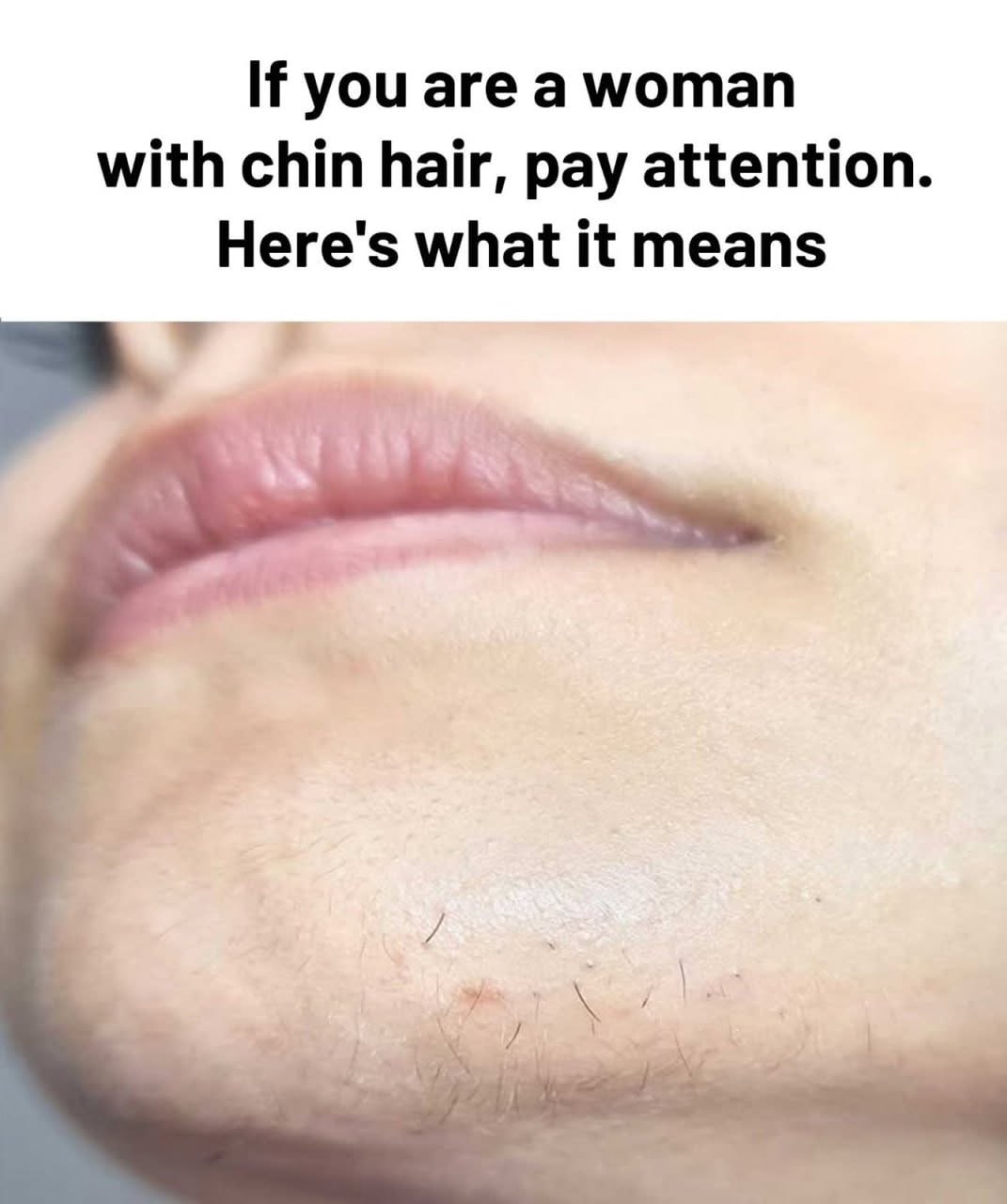
true when accompanied by other hormonal or metabolic symptoms.
Key Clinical Considerations
-
- Hormonal Influences
Androgens such as testosterone and dehydroepiandrosterone sulfate (DHEA-S) can stimulate terminal hair growth in androgen-sensitive areas. Potential contributing factors include:
- Hormonal Influences
Polycystic ovary syndrome (PCOS): A common hormonal disorder that may be associated with excess facial or body hair, irregular menstrual cycles, acne, scalp hair thinning, and metabolic abnormalities such as insulin resistance.
Perimenopause and menopause: Declining estrogen levels can alter the balance between estrogen and androgens, making facial hair more noticeable in some women.
Thyroid disorders: Thyroid dysfunction can affect menstrual cycles, hair growth, and sex-hormone metabolism and may sometimes contribute to changes in facial hair.
Insulin resistance: Elevated insulin levels may contribute to increased ovarian androgen production, particularly in people with PCOS.
Medications and adrenal or ovarian disorders: Certain medications, hormone treatments, and, rarely, androgen-producing ovarian or adrenal conditions can cause increased hair growth.
- Genetic