Place the strawberries in a clean colander.
Rinse them gently under cool, clean running water.
Move the berries carefully so that water reaches their surfaces.
Remove damaged or spoiled pieces.
Dry the berries with clean paper towels or allow them to drain.
Eat them promptly or store them appropriately.
If the strawberries are particularly delicate, avoid rubbing them aggressively. Excessive handling can damage their skin and shorten their shelf life.
The goal is not to sterilize fresh fruit. It is to remove ordinary surface dirt and reduce avoidable contamination.
6. Is Vinegar Water Better Than Salt Water?
Vinegar and salt are popular household ingredients, so it is understandable that people experiment with them when cleaning fruit.
However, popularity on social media does not establish effectiveness.
A vinegar solution may change the surface environment of fruit and may affect some microorganisms under particular conditions. But a homemade vinegar soak should not be considered a validated method for disinfecting strawberries or eliminating all harmful bacteria.
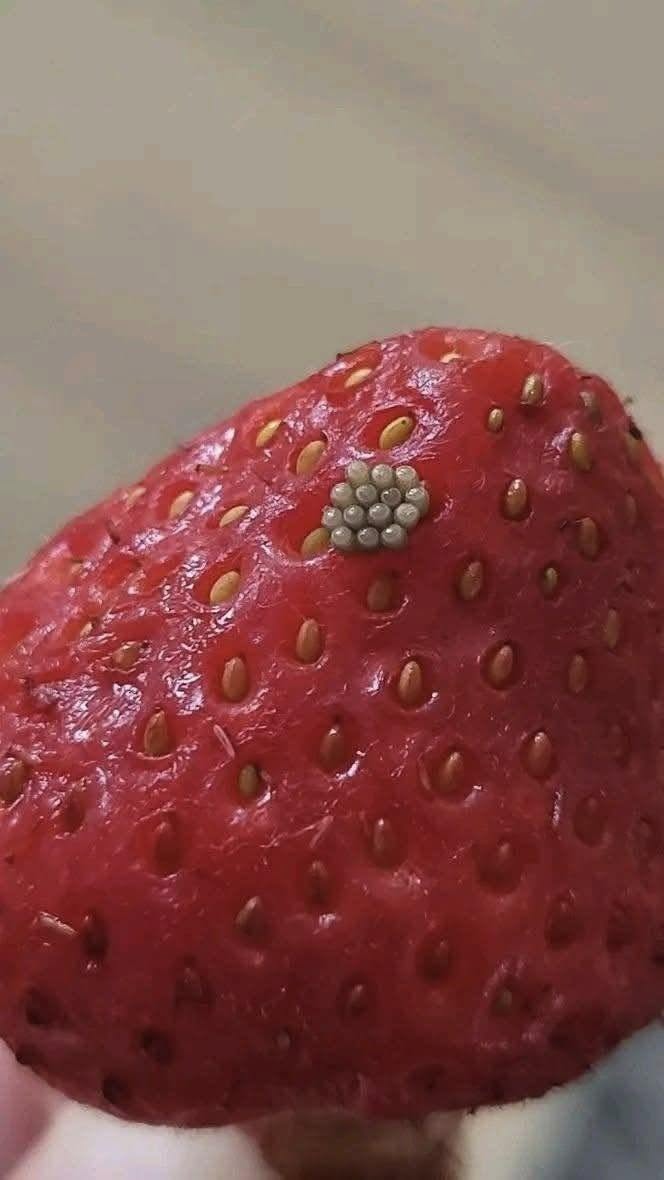
Likewise, salt water may cause some larvae to move out of damaged or infested fruit, but it cannot reliably remove every egg or larva.
Neither method guarantees that the fruit is free from microorganisms or pesticide residues.
Long soaking can also affect the texture of strawberries. Because they are soft and contain considerable moisture, they can become waterlogged, lose some of their firmness, or deteriorate more quickly after washing.
For ordinary household use, rinsing under clean running water is a sensible routine.
If you choose to use a salt or vinegar soak because you want to observe whether larvae emerge, understand that it is not a substitute for inspection, proper washing, or discarding fruit that shows signs of spoilage.
7. What Are the Signs That Strawberries Should Be Thrown Away?
The presence of a tiny insect larva is not the only factor to consider when deciding whether fruit is suitable to eat.
Spoilage is often a more important practical concern.
Look for these warning signs:
Visible mold: Fuzzy white, green, gray, or blue growth is a reason to discard the affected strawberry. Mold can extend beyond the area that is immediately visible, especially in soft fruit.
Unusual softness: A berry that has become extremely mushy, collapsed, or watery may be deteriorating.
Leaking juice: Excessive liquid collecting at the bottom of the container can indicate damaged or deteriorating fruit.
Unpleasant odor: A sour, fermented, or rotten smell suggests that the fruit is no longer fresh.
Extensive insect damage: If the strawberry is heavily tunneled, collapsing, or visibly decomposing, discard it rather than trying to salvage it.
Slimy surfaces: A sticky or slimy texture may indicate microbial deterioration.
PREV