

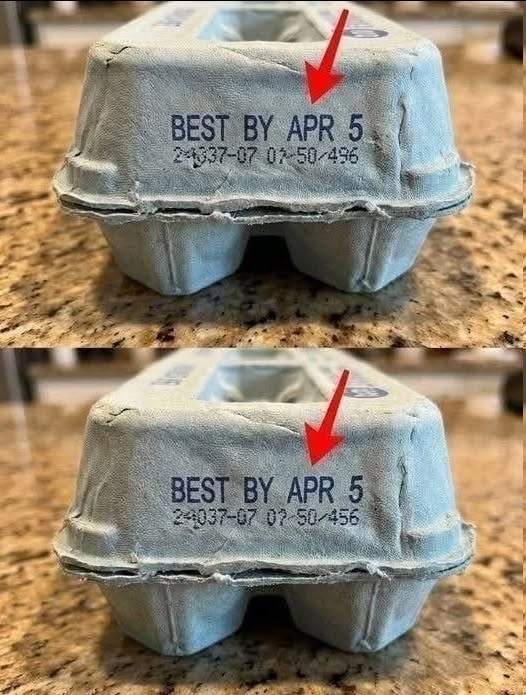
Near the Julian date, you may also see a code starting with “P” followed by four numbers.
This is known as the plant code.
The plant code identifies the facility where the eggs were processed and packaged.
This code becomes especially important if there is a food safety recall. Consumers can check the plant code to determine whether their eggs were processed at the affected facility.
Why These Codes Matter
Understanding egg carton codes helps you make more informed shopping decisions.
Eggs typically remain fresh for about four to five weeks after packaging. However, regulations in some countries allow eggs to be sold for up to 30 days after packaging.
This means that even if the carton is within the sell-by date, the eggs may already be several weeks old.
Tips for choosing fresher eggs