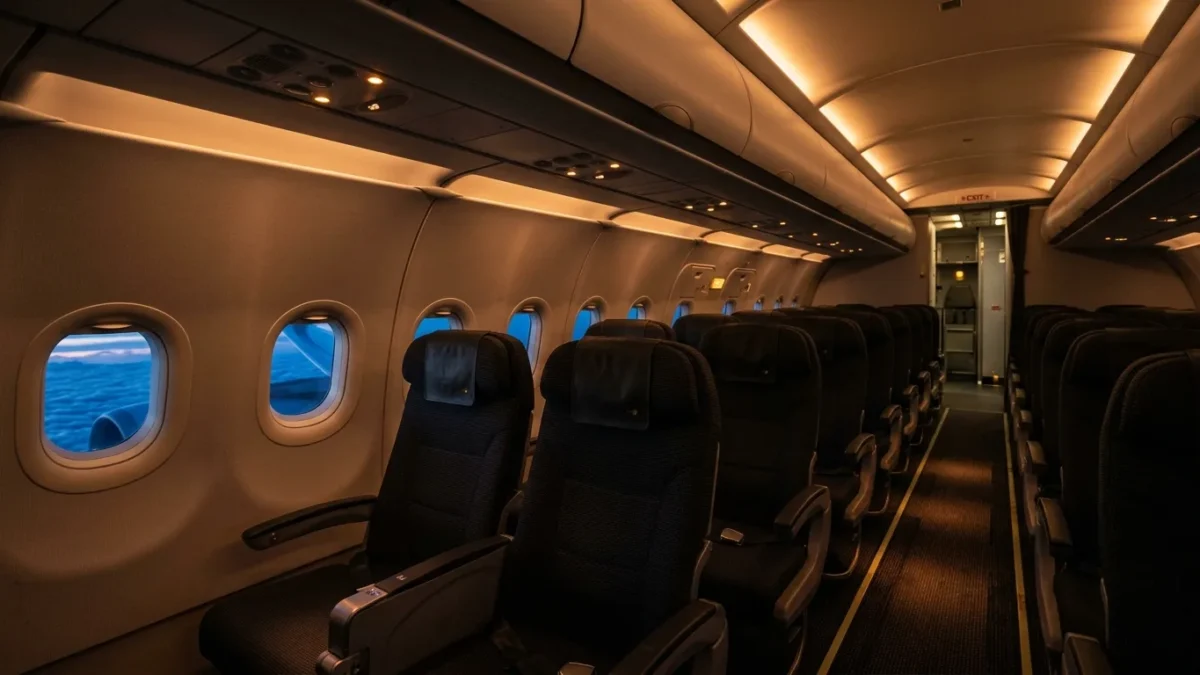
When the cabin goes dark before takeoff and the crew asks you to lift the window shades, it isn’t about mood lighting — it’s a quiet piece of safety engineering built around the human eye.
The cabin lights drop a notch, the engines settle into a low hum, and a flight attendant walks the aisle asking everyone to slide their window shades up. Most passengers barely register the moment. It feels like routine theater, the airline equivalent of a deep breath before the run down the runway. But the dimming is not decoration, and it is not about helping you nap. It is a deliberate safety measure, timed to the exact minutes of flight when something is statistically most likely to go wrong.
Takeoff and landing are when aviation accidents cluster. Industry safety reviews have long described the period from the start of the takeoff roll to a few minutes after,
There’s more to discover. Continue to the next page for the rest of this article.and the final descent through touchdown, as the “critical phases” of flight. The aircraft is low, slow, heavy with fuel, and close to the ground. Crews prepare for these windows not because they expect trouble,