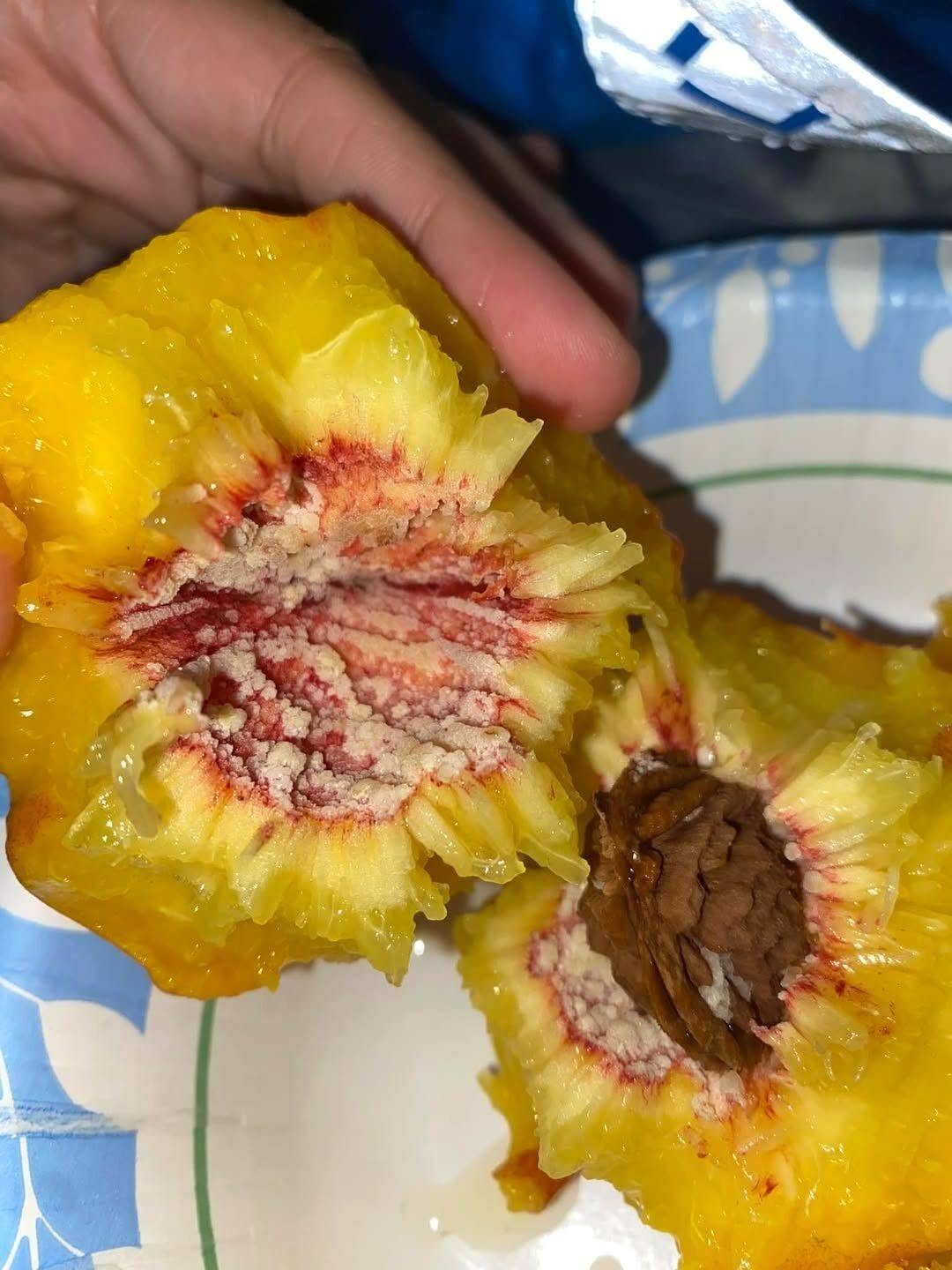
✅ Good news: callus tissue is more common in organic or locally grown peaches—a sign of minimal intervention and natural ripening!
🚫 Mold vs. callus tissue: how to tell the difference
Yes, mold can grow on peaches, but it looks and behaves very differently from callus tissue.
Characteristic
Peach callus tissue
Mold
Color
Bright white, sometimes slightly creamy
Fuzzy green, black, gray, or blue
Texture
Smooth, cottony; firmly attached to the pit
Fluffy, powdery; smears across the skin
Smell
None: the peach still smells sweet and fresh.
Sour, musty, or fermented odor
Location
Only on the surface of the pit, never on the fruit flesh.
On the skin or flesh, often near bruises or soft spots.
🛑 If you notice mold on the peach flesh, discard the entire fruit. Callus tissue, on the other hand, is found only on the pit and does not spread.
🥣 Is it safe to eat?
What should you
There’s more to discover. Continue to the next page for the rest of this article.do?
Yes, rest assured: the callus tissue is non-toxic and poses no health risks.
There is no need to remove it; simply eat around the pit as usual.
Never eat the peach pit itself: it