8. Why Moisturizer Can Make a Bigger Difference Than Another Serum
Skincare marketing often emphasizes active ingredients and dramatic transformations, but moisturizer can be one of the most useful products for skin that feels dry, tight, or easily irritated.
A good moisturizer helps reduce water loss and supports the skin barrier. Depending on its formulation, it may contain humectants that attract water, emollients that soften the skin, and occlusive ingredients that help retain moisture.
Glycerin is a common humectant. Ceramides are lipids that help support the skin barrier, while ingredients such as petrolatum can reduce moisture loss in suitable formulations. Hyaluronic acid is another humectant used in many moisturizers.
Applying a small amount of green color corrector to neutralize facial redness
You do not need all these ingredients in one product, and a longer ingredient list does not automatically mean better results. What matters most is whether the formulation suits your skin and can be used comfortably and consistently.
If your nose becomes red after applying skincare, look for signs that the product may be irritating you. Stinging that continues, increased warmth, itching, swelling, or a rash suggests that you should stop using the product and seek advice if the reaction does not settle.
Fragrance is a potential trigger for some people, although not everyone reacts to it. Essential oils and strongly scented botanical extracts can also cause problems for sensitive skin. A fragrance-free moisturizer may be a reasonable starting point if you have a history of irritation.
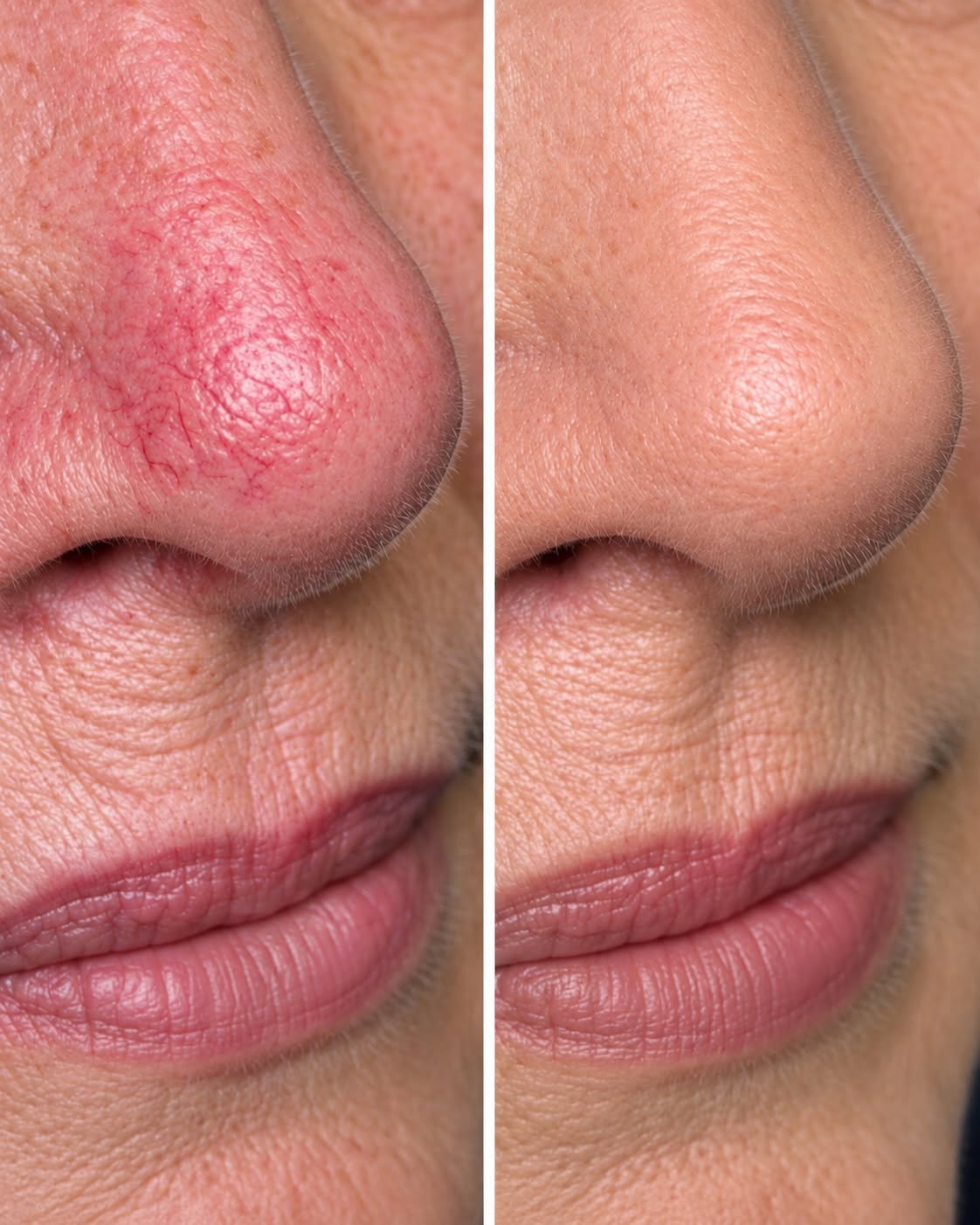
Do not expect moisturizer to erase established visible blood vessels. It can improve dryness and make the surface look smoother, which may help makeup sit better, but the vessels themselves may require a different treatment.
If the redness is persistent despite a gentle routine, a healthcare professional can help determine whether the issue is barrier irritation, rosacea, dermatitis, or another condition. The right diagnosis can prevent months of trial and error with products that were never suited to the problem.
9. Sunscreen Is Essential for Preventing Further Sun-Related Damage
Sun protection is one of the most useful everyday measures for maintaining skin health. Ultraviolet exposure contributes to premature skin aging and can make visible blood vessels and uneven pigmentation more noticeable over time.
If your skin is prone to redness, choose a broad-spectrum sunscreen with an SPF of at least 30, and use it according to the product instructions. Apply enough to cover the face, including the nose, the sides of the nostrils, and the area above the upper lip. These areas are often missed when people apply sunscreen quickly.
Reapply when needed, particularly after swimming, sweating, towel drying, or spending extended periods outdoors. A hat, shade, and other sun-protective habits provide additional protection.
Some people with sensitive skin prefer mineral sunscreens containing zinc oxide or titanium dioxide, while others tolerate chemical filters well. Neither category is automatically best for everyone. The most appropriate choice is one that provides reliable protection and does not cause irritation.