How Often Should You Clean a Fan?
There is no universal schedule because dust levels vary from home to home.
A fan used every day in a household with pets may need attention much more frequently than a fan used occasionally in a low-dust room.
As a practical rule, inspect the grille every few weeks during periods of heavy use.
If you can clearly see dust building up, clean it before the layer becomes thick and sticky.
A Simple Weekly Maintenance Routine
During heavy fan use, maintenance can take only a few minutes.
Unplug the fan.
Vacuum visible dust from the grille.
Wipe the outer surfaces with a microfiber cloth.
Check the rear motor vents for dust buildup.
Make sure the power cord is undamaged.
Reconnect only when everything is clean and completely dry.
This quick routine can dramatically reduce the need for difficult deep cleaning later.
Why Pet Owners May Need to Clean More Often
Pet hair and dander can accumulate quickly around the intake side of a fan.
Long hairs can also become caught around the grille or internal rotating components.
If you have shedding pets, inspect the fan frequently and vacuum the exterior before thick buildup develops.
Fans in Bedrooms
Bedroom fans can collect lint from bedding, carpets, clothing, and skin particles.
If the fan runs all night, dust accumulation may be faster than expected.
Regularly vacuum the grille and keep the area around the fan reasonably clean.
Fans Near Open Windows
A fan placed next to an open window can pull in outdoor pollen, road dust, insects, and other debris.
These fans may need more frequent cleaning, especially during pollen season or in dusty environments.
Fans in Kitchens
Kitchen fans can collect airborne grease that turns ordinary dust into stubborn sticky grime.
Moving the fan farther away from active cooking areas can reduce buildup.
Never position a portable fan where it could create a safety hazard near flames, hot oil, or cooking appliances.
Fans in Workshops or Garages
Fans used around sawdust, sanding dust, construction debris, or workshop particles can become clogged very quickly.
These environments may require more frequent maintenance and may also demand equipment specifically rated for the conditions.
Do not use an ordinary household fan in hazardous environments where flammable vapors or combustible dust may be present unless the equipment is specifically designed for that purpose.
How Dust Can Affect Airflow
A fan works by rotating blades or an internal blower to move air.
When dust builds up heavily on grille openings and blade surfaces, it can interfere with smooth airflow.
Removing the buildup may help restore airflow if dirt was restricting the fan.
However, if airflow remains weak after cleaning, the cause may be mechanical or electrical rather than dirt.
Why a Fan May Still Be Noisy After Cleaning
Dust is not the only reason a fan makes noise.
Rattling, grinding, clicking, humming, or squealing can result from:
Loose components
Damaged blades
Worn bearings
A bent grille
Motor problems
An unstable base
Objects caught inside the housing
If cleaning does not resolve unusual noises, unplug the fan and have it inspected or serviced according to the manufacturer’s recommendations.
Do Not Lubricate the Motor Randomly
Some older fans may have serviceable bearings, while many modern fans are designed differently.
Do not spray household oil, penetrating lubricant, or silicone spray through ventilation openings hoping to make a noisy fan quieter.
Using the wrong lubricant or spraying electrical components can damage the appliance or create a fire hazard.
Follow the manufacturer’s maintenance instructions.
Inspect the Power Cord While Cleaning
Cleaning time is an excellent opportunity to inspect the electrical cord.
Look for:
Cracks
Exposed wires
Loose plugs
Burn marks
Fraying
Pinched sections
If the cord or plug is damaged, stop using the fan until it has been repaired or replaced appropriately.
What If the Fan Smells Hot?
A persistent burning or hot electrical smell is not something to solve with ordinary cleaning.
Turn the fan off and unplug it.
Dust around ventilation openings can contribute to heat buildup, but a burning smell can also indicate an electrical or motor problem.
Do not keep running the appliance to “see if it goes away.”
What If the Motor Housing Is Full of Dust?
If large amounts of dust are visibly packed inside the motor housing, surface cleaning may no longer be adequate.
Consult the owner’s manual for disassembly or service instructions.
If the fan is not designed for consumer disassembly, professional servicing or replacement may be safer.
When You Actually Should Take the Fan Apart
Cleaning without disassembly is useful for routine maintenance, but it has limits.
Consider proper disassembly according to manufacturer instructions when:
The blades are coated in thick grease
Dust cannot be reached through the grille
The interior contains packed debris
Hair is wrapped around the motor shaft
The grille itself requires washing
Surface cleaning no longer improves airflow
If the owner’s manual provides instructions for removing the grille and blades, follow those directions rather than improvising.
When Professional Repair Is Better
Stop using the fan and consider professional evaluation when:
The motor overheats
The appliance produces sparks
The plug becomes unusually hot
There is a burning electrical smell
The motor starts intermittently
The blades wobble severely
The cord is damaged
The fan has been exposed to substantial water
Cleaning is maintenance. It is not a substitute for repairing electrical faults.
What If Water Accidentally Gets Inside?
Do not immediately plug the fan back in.
Disconnect it from power if it is not already unplugged and allow it to remain off.
If a significant amount of liquid entered the motor housing, controls, or electrical components, have the appliance inspected according to manufacturer guidance before using it again.
Visible exterior dryness does not necessarily mean internal electrical parts are dry.
Can You Wash a Fan With a Hose?
No ordinary household electric fan should be assumed safe to hose down.
Water can reach the motor, switches, bearings, wiring, and electrical connections.
Only wash removable components separately if the manufacturer specifically identifies them as washable.
Can You Put Fan Parts in the Dishwasher?
Do not place fan grilles or blades in a dishwasher unless the manufacturer specifically says they are dishwasher-safe.
High heat and detergent can warp plastic, damage coatings, or affect balance.
When removable components are washable, hand washing with mild soap is usually a more controlled approach.
How to Prevent Dust From Building Up So Fast
You cannot prevent all dust from reaching a fan, but you can slow the process.
Dust and vacuum the room regularly.
Keep pet hair under control.
Avoid placing the fan directly beside a source of cooking grease.
Keep the floor around pedestal fans clean.
Vacuum the grille before dust becomes thick.
Store seasonal fans clean and covered when not in use.
Clean Before Storing a Fan for Winter
If you use the fan only during warm weather, clean it before putting it into storage.
Removing dust before storage prevents months-old grime from becoming harder to remove later.
Make sure the fan is completely dry, then store it in a dry location.
A breathable cover can help keep additional dust off while still avoiding trapped moisture.
Frequently Asked Questions
Can I really clean a fan without opening it?
Yes, routine surface cleaning can often be done without disassembly. Vacuum the grille, wipe accessible surfaces, and carefully reach accessible blades if the design permits. Heavy internal buildup may eventually require proper disassembly.
What is the easiest way to remove fan dust?
Start with a vacuum fitted with a soft brush attachment. Dry removal is usually faster and cleaner than immediately wetting dusty surfaces.
Can I spray cleaner directly onto the fan?
It is better to apply a small amount of cleaner to a cloth rather than spraying directly onto the appliance. This reduces the chance of liquid entering the motor or controls.
Can I use dish soap?
A few drops of mild dish soap in lukewarm water can be useful for accessible washable surfaces, particularly where grease is present. Keep the cloth only slightly damp.
Can I use vinegar?
Vinegar is not necessary for most fan cleaning. If you use it on a surface permitted by the manufacturer, keep it away from electrical components and never pour or heavily spray it into the fan.
Can I use a plastic bag to clean a running fan?
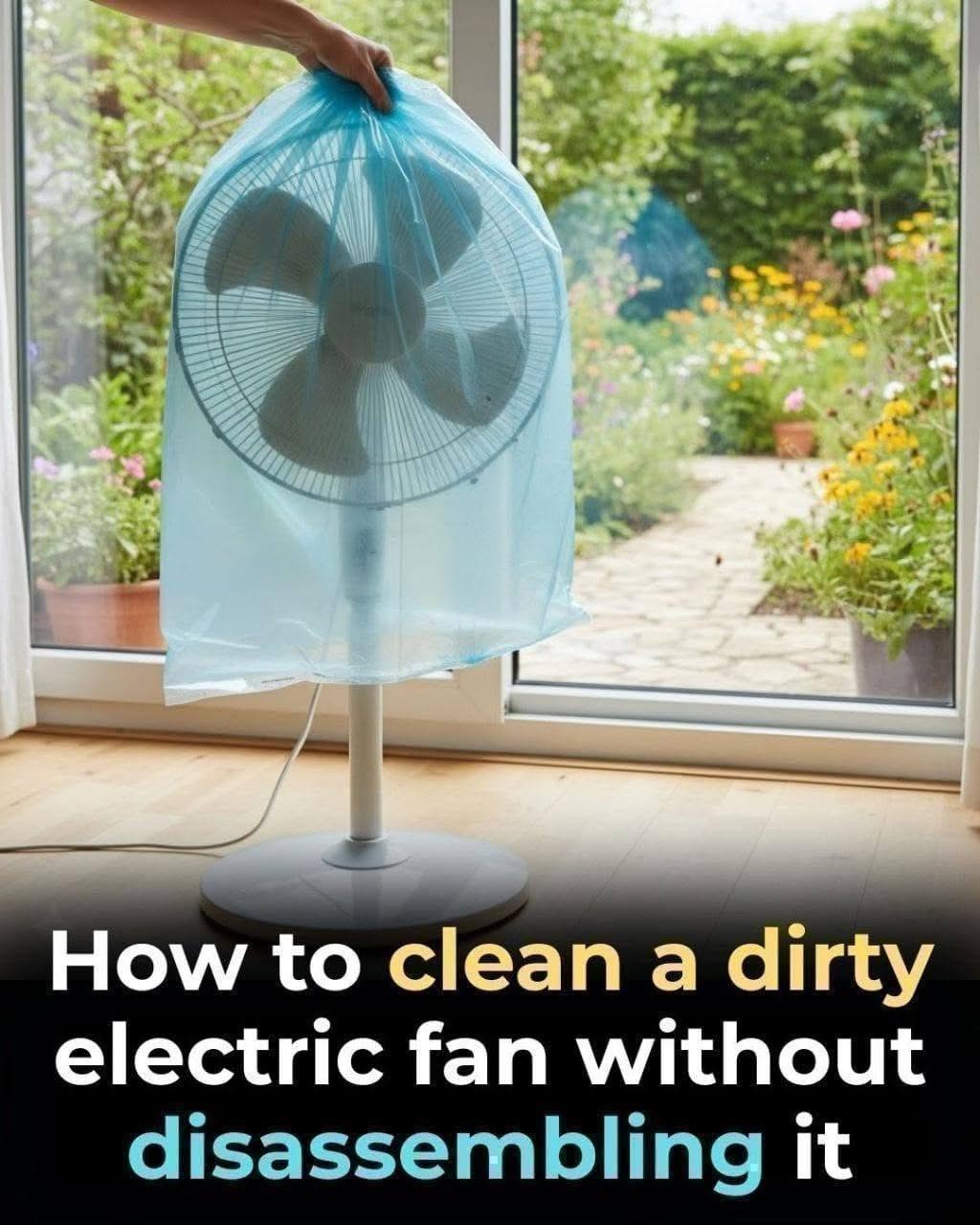
It is safer not to cover or enclose a running fan with a plastic bag. Doing so can obstruct airflow, interfere with motor cooling, trap moisture, or allow the bag to contact moving parts.
Can I turn the fan on after spraying it to shake off dust?
No. Do not operate the fan while it is wet. Allow all surfaces to dry completely before reconnecting it to power.
Can I use a hair dryer to dry the fan?
High heat can damage plastics or push moisture deeper into openings. Air-drying the unplugged appliance is generally safer unless the manufacturer provides different instructions.
How often should I clean my fan?
Inspect it every few weeks during frequent use. Homes with pets, open windows, kitchen grease, or high dust levels may require more frequent cleaning.
Why is my fan blowing less air?
Dust buildup on the grille and blades may restrict airflow, but weak airflow can also result from motor or mechanical problems. If cleaning does not help, the fan may need service.
Why is my fan making a rattling noise?
A rattling sound can come from a loose grille, damaged blade, unstable base, debris inside the housing, or worn components. Unplug the fan and inspect it before continuing to use it.
Can fan dust cause allergies?
Dust accumulated on a fan can contain common household particles such as pollen, pet dander, and other allergens. When the fan operates, some loose debris may be redistributed into the room. Regular cleaning can reduce the fan’s dust load, although it does not replace broader allergen-control measures.
Should I clean the back of the fan too?
Yes. The rear grille can accumulate significant amounts of dust, especially because many fans pull air through the back before pushing it forward.
Can I clean a tower fan the same way?
The basic principles are similar, but tower fans have narrower openings. Vacuum and brush the vents from the outside and avoid inserting wet cloths deeply into the housing.
How do I clean blade edges through a grille?
If the openings safely allow access, wrap a lightly damp microfiber cloth securely around a thin blunt tool and gently wipe the blades while the fan is unplugged. Do not force anything through narrow openings.
What if I cannot reach the blades?
Do not force tools through the grille. Vacuum as much dust as possible and consult the fan’s manual for proper grille removal if deeper cleaning is necessary.
Is it worth taking a very dirty fan apart?
If thick grime covers surfaces you cannot reach safely, disassembly may provide a much more thorough cleaning. Only disassemble the fan according to manufacturer instructions.
The Safest No-Disassembly Cleaning Routine
If you want a simple routine to remember, use this order:
Turn the fan off and unplug it.
Vacuum loose dust from the front and rear grilles.
Brush dust from narrow openings.
Wipe the exterior with a dry microfiber cloth.
Use a barely damp cloth with mild soapy water for stubborn grime.
Reach accessible blades only if you can do so safely.
Keep all liquid away from the motor housing and electrical controls.
Dry every surface completely.
Inspect the cord and plug.
Reconnect the fan only after it is fully dry and safe.
Final Thoughts
You do not necessarily need to dismantle a fan every time dust appears on the grille. For ordinary maintenance, a vacuum, soft brush, microfiber cloth, and small amount of mild soapy water can remove a surprising amount of buildup while leaving the appliance assembled.
The most important part is controlling moisture. A fan is an electrical appliance, not a washable household object. Avoid pouring water onto it, spraying cleaner directly into vents, operating it while damp, or covering a running fan with plastic in an attempt to trap dust.
Dry cleaning should always come first. Vacuuming and brushing remove most loose debris without introducing moisture at all. Damp cleaning should be limited to accessible exterior surfaces and performed with a cloth that has been thoroughly wrung out.
If dirt is trapped too deeply to reach safely, that is usually the point at which the grille should be removed according to the manufacturer’s instructions rather than forcing tools through it.
A few minutes of maintenance every few weeks can prevent heavy buildup, keep the grille open, reduce loose dust, and make the fan much easier to care for throughout the season.
Keep it unplugged while cleaning, keep the motor dry, let everything dry completely before use, and you can maintain a much cleaner fan without turning a simple household chore into a complicated repair project.