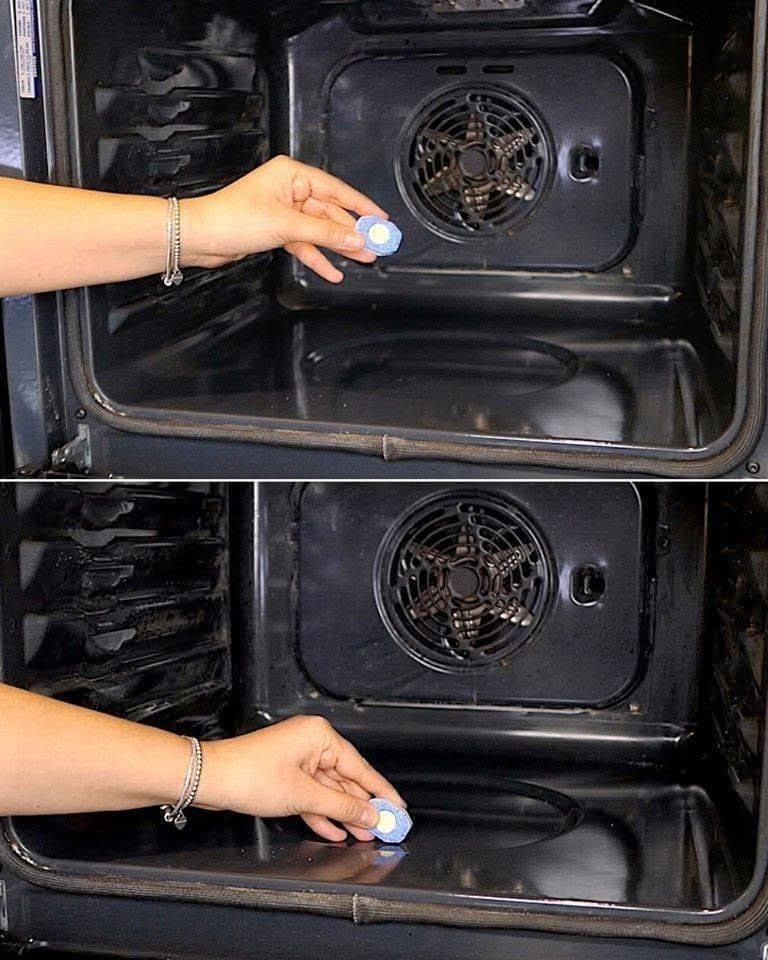
Step 5: Apply the Solution to Greasy Areas
Dip a soft sponge or cloth into the diluted detergent solution and wring out excess liquid.
Apply it to greasy areas of a compatible oven interior.
There is usually no need to flood the oven with water.
Excess liquid can enter vents, fan openings, electrical areas, door cavities, or insulation.
Avoid These Areas
Unless your manufacturer specifically allows cleaning them this way, avoid directly coating:
Heating elements
Gas burners
Igniters
Electrical connections
Temperature sensors
Fan openings
Ventilation slots
Control panels
Door-lock mechanisms
Catalytic liners
Why You Should Not Soak Heating Elements
Heating elements are electrical components and should not be treated like ordinary metal oven walls.
A slightly damp cloth may be appropriate for some surrounding areas when the oven is disconnected and cool, but soaking electrical components with detergent is unnecessary and potentially damaging.
Step 6: Allow the Cleaner Time to Work
For moderate grease, allowing the diluted solution to remain on a compatible surface for approximately 10 to 20 minutes may help soften residue.
Do not let detergent dry into a hard film.
If the surface begins drying, wipe it before continuing.
Step 7: Wipe Rather Than Scrape Aggressively
Use a soft sponge or non-scratch brush to loosen softened grime.
Work gradually.
Heavy pressure with abrasive pads can scratch enamel, glass, or special finishes.
Avoid Steel Wool on Sensitive Oven Surfaces
Steel wool may remove stubborn deposits, but it can also leave permanent scratches on enamel, stainless steel, and glass.
Once a surface becomes scratched, it may become more difficult to keep clean and can lose its original appearance.
Use the least abrasive method that works.
Step 8: Rinse Thoroughly
This step is extremely important.
Dishwasher detergent is not intended to remain on cooking surfaces after cleaning.
Use a separate cloth dampened with clean water to repeatedly wipe the areas you cleaned.
Rinse the cloth frequently and continue until no slippery detergent film, foam, or visible residue remains.
Why Detergent Residue Must Be Removed
If cleaning product remains inside the oven and the appliance is heated, it may produce odors or fumes.
It can also leave a visible film on interior surfaces.
A thorough clean-water rinse is therefore just as important as the cleaning step itself.
Step 9: Dry and Ventilate the Oven
Wipe surfaces with a clean dry cloth and leave the oven door open for a while so remaining moisture can evaporate.
Make sure the oven is fully dry before normal use.
Cleaning Oven Racks With a Dishwasher Tablet
Oven racks often accumulate some of the toughest grease because food splatters bake onto them repeatedly.
If the racks are made from a material compatible with dishwasher detergent, they can be cleaned separately.
Place the racks in a large sink or suitable container and use warm water with dissolved dishwasher detergent.
Allow the grease to soften before scrubbing gently.
Afterward, rinse extremely well and dry the racks before returning them to the oven.
Be Careful With Aluminum
Strong alkaline dishwasher detergents can react with aluminum and may cause darkening, discoloration, dullness, or surface damage.
Do not assume that every metal oven tray or accessory can safely be soaked in dishwasher-tablet solution.
If an accessory is aluminum, check the manufacturer’s instructions first.
Cleaning Oven Glass With Dishwasher Detergent
Greasy oven-door glass is another area where this trick is commonly used.
If the manufacturer’s instructions permit it, a diluted solution can help soften greasy deposits.
Use a soft cloth or non-scratch sponge rather than abrasive tools.
Rinse the glass several times with clean water afterward.
Do Not Flood the Oven Door
Oven doors often consist of multiple panes of glass with insulation, seals, hinges, and ventilation channels between them.
Pouring large quantities of water over the door can allow moisture to enter spaces that are difficult to dry.
Use damp cloths rather than soaking the entire door.
Why Grease Becomes So Difficult to Remove
Fresh oil is relatively easy to wipe away.
Inside an oven, however, repeated heating changes grease.
Thin layers of fat can polymerize, oxidize, and combine with food particles, gradually forming a sticky brown film.
After repeated heating cycles, that film becomes increasingly hard and dark.
This is why cleaning small splatters regularly is much easier than waiting until the entire oven is coated.
Why Dishwasher Detergent Works Better Than Plain Water
Plain water has limited ability to dissolve greasy deposits.
Dishwasher detergents contain ingredients designed to loosen fats and food residues and help water carry them away.
The trick therefore has a reasonable cleaning basis—but that does not mean dishwasher detergent is automatically safe for every oven material.
The most important part of this trick is not how much detergent you use. It is how carefully you rinse it away afterward.