If you have a sleek glass-top stove, you already know how nice it is to cook on. The smooth surface looks modern, wipes clean beautifully, and gives your kitchen that polished, uncluttered look.
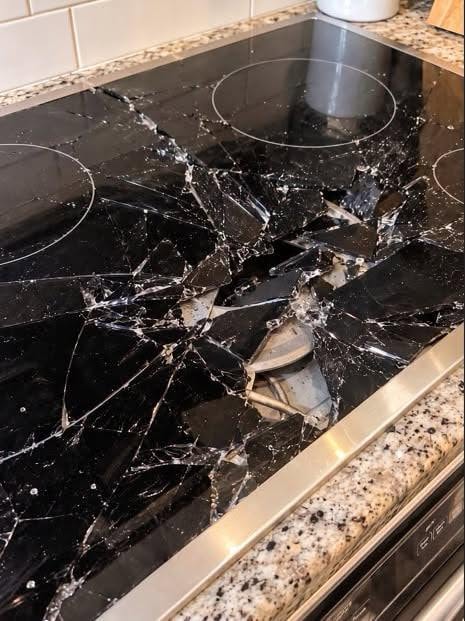
But there’s one thing about glass cooktops that deserves a little more attention: they can crack or even shatter if they’re exposed to the wrong kind of impact or temperature stress.
And the mistake I’m talking about is surprisingly easy to make.
Putting a hot lid, pan, or other heat-retaining object directly onto the glass cooktop can create a sudden temperature change that may damage the surface.
It sounds harmless. You finish cooking, move the pan, and set the lid down on the cooktop for a second.
What could possibly go wrong?
Well… quite a lot, unfortunately!
Why Glass-Top Stoves Need a Little Extra Care
Unlike traditional coil burners or heavy cast-iron cooking surfaces, a glass cooktop has a smooth ceramic-glass surface that can be damaged by impact, excessive force, or thermal stress.
The material is designed to withstand the high temperatures produced during normal cooking, but that doesn’t mean it’s indestructible.
The biggest issue is rapid temperature change.
When one part of the cooktop becomes extremely hot while another area remains much cooler, the material can experience uneven expansion and contraction.
Most of the time, the cooktop handles normal heating and cooling just fine.
But add an unexpected shock—especially a heavy or very hot object—and you can create a problem.
Sometimes, the damage isn’t immediately dramatic. A tiny crack can develop first and become worse over time.
The Mistake That Can Damage Your Glass Cooktop
One of the easiest mistakes to make is placing a hot object onto a cool section of the cooktop.
This can include:
- A hot pan
- A hot saucepan lid
- A Dutch oven
- A baking dish
- A kettle
- A cast-iron skillet
- A hot roasting pan
- A griddle
- A heat-retaining trivet or cookware accessory
The problem isn’t simply that the object is hot.
It’s the combination of heat, contact, weight, and temperature difference.
Why a Hot Lid Can Be a Problem
Here’s a scenario many home cooks will recognize.
You’re cooking something on the stove. You lift the lid because dinner is almost ready, and instead of putting the lid on a counter or heat-safe surface, you flip it over and place it on the glass cooktop.
The lid may still be extremely hot.
If it concentrates heat into a relatively small area, that section of the glass can become much hotter than the surrounding surface.
That creates unnecessary thermal stress—and there’s simply no reason to take the chance.
Never Assume the Glass Is Too Tough to Break
This is probably the biggest misconception about glass-top stoves.
They’re made to handle everyday cooking, so it’s tempting to assume they’re basically bulletproof.
They’re not.
A glass cooktop can withstand normal cooking temperatures, but impact damage is another story entirely.
Dropping a heavy pan onto the surface can chip or crack it. Sliding rough cookware across it can cause scratches. A damaged surface may then be more vulnerable to further stress.
And once glass-ceramic develops a significant crack, continuing to cook on it can be dangerous.
The Cast-Iron Skillet Problem
see continuation on next page