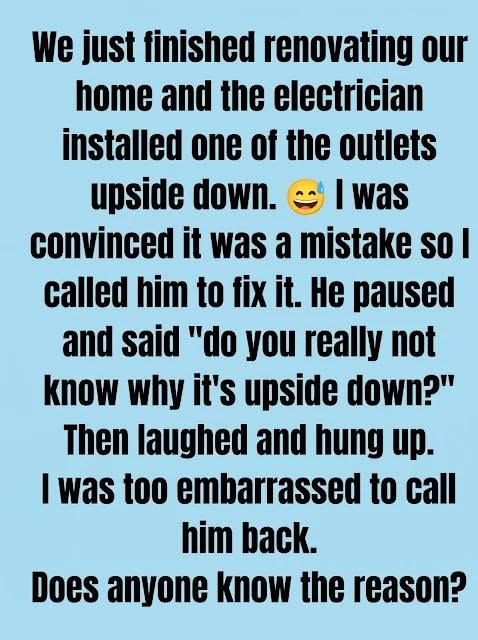
However, the exact safety implications depend on the plug, receptacle, device, and circumstances. It’s not accurate to say that simply flipping every receptacle upside down automatically makes a home safer.
4. Hospitals and Other Specialized Locations May Use Different Orientations
You’ve probably noticed that electrical installations in hospitals, commercial buildings, workshops, and industrial facilities can look a little different from what you’re used to seeing at home.
That’s because electrical installations can have specific design and identification practices.
In some environments, receptacle orientation may be deliberately standardized or used alongside other markings to help identify circuits or equipment.
There can also be requirements or conventions specific to the type of facility.
So if you see an upside-down outlet in a commercial or institutional building, it may have been installed that way intentionally rather than randomly.
5. Someone May Have Replaced the Receptacle
Here’s another very ordinary explanation.
Perhaps the original receptacle wore out, became damaged, or was replaced during a renovation.
The replacement may have been installed in a different orientation from the old one.
This can happen especially when homeowners or contractors replace individual receptacles rather than every outlet in the room.
Suddenly, you have one outlet that looks