
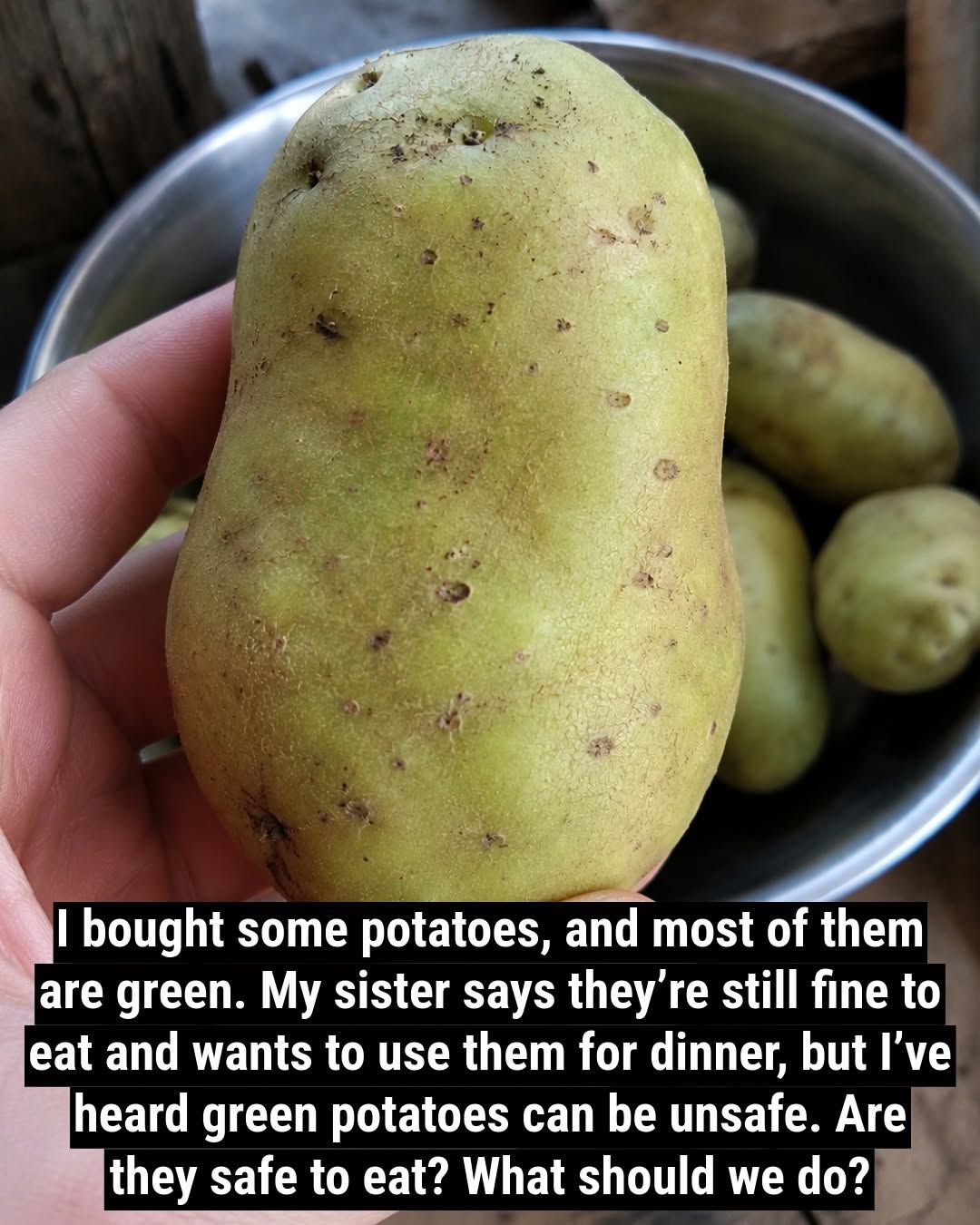
A bitter-tasting compound produced by potatoes (and other nightshade plants like tomatoes and eggplants) as a defense against pests, fungi, and disease
Concentrated in the skin, eyes (sprouts), and green areas
Heat-stable: Not destroyed by cooking, boiling, or frying
Symptoms of Solanine Poisoning (Rare, but Possible):
Mild Exposure
Severe Exposure (Very Rare)
Bitter or metallic taste in mouth
Nausea, vomiting, diarrhea
Mild stomach discomfort
Headache, dizziness, fever
No symptoms at all (most common)
Neurological symptoms (confusion, weakness)
 Important context: Solanine poisoning is extremely rare in modern food systems. Most cases involve consuming very large quantities of heavily greened or sprouted potatoes—far more than a typical serving.
 Can You Still Eat Green Potatoes?
Short answer: It depends on the extent of greening—and your risk tolerance.
When It’s Likely Safe:
Small green spots on the skin only
Flesh is still white or cream-colored beneath the surface
No sprouts, soft spots, or foul odor
You peel generously, removing all green areas plus a margin of surrounding flesh
When to Discard:
 Extensive greening throughout the flesh
Potato tastes bitter (a sign of high solanine)
Sprouting heavily (eyes are also high in solanine)
Soft, mushy, or moldy texture (indicates spoilage beyond solanine concerns)
Serving vulnerable individuals: young children, elderly, pregnant people, or immunocompromised individuals
 Practical rule: When in doubt, throw it out. Potatoes are inexpensive; your health isn’t.
 How to Safely Handle a Slightly Green Potato
If you find a potato with minor greening and want to salvage it:
Step-by-Step Safety Protocol:
Wash thoroughly: Scrub under running water to remove surface dirt and residual solanine.
Peel deeply: Remove not just the green skin, but at least ¼ inch of flesh beneath it. Solanine concentrates just under the surface.
Cut away eyes and sprouts: Use a paring knife or vegetable peeler to remove all buds.
Taste a small raw piece: If it tastes bitter or peppery, discard the whole potato.
Cook as usual: Remember, cooking won’t eliminate solanine—but proper prep reduces risk significantly.
 Pro tip: When peeling, err on the side of caution. It’s better to lose a little extra potato than to risk discomfort.
 How to Prevent Potatoes from Turning Green
Prevention is far easier than triage. Store potatoes properly to avoid greening—and extend their shelf life.
Ideal Storage Conditions:
Factor
Recommendation
Why It Matters
Light
Store in complete darkness
Light triggers chlorophyll and solanine production
Temperature
45–55°F (7–13°C)
Cool but not cold; refrigeration converts starch to sugar, affecting flavor
Humidity
Moderate (not damp)
Prevents shriveling without encouraging mold
Ventilation
Use paper bags, mesh bags, or ventilated bins
Allows airflow; plastic traps moisture and accelerates spoilage
Location
Pantry, cellar, or cool cupboard—not on the counter
Countertops expose potatoes to light and warmth
What NOT to Do:
Don’t store potatoes in clear plastic bags on the counter
Don’t refrigerate raw potatoes (unless you plan to cook them immediately—cold temps alter texture)
Don’t store near onions (they release gases that can speed up sprouting)
Don’t wash before storage (moisture encourages mold; wash just before cooking)
 Darkness hack: If your pantry has a window or light leak, store potatoes inside a cardboard box, paper bag, or opaque container.
 What About Sprouted Potatoes?
Sprouting often accompanies greening—and raises similar concerns.
Handling Sprouted Potatoes:
Condition
Action
Small sprouts, firm potato, no greening
Cut away sprouts and eyes generously; potato is likely safe
Large sprouts + soft texture + greening
Discard—the potato is past its prime
Sprouts only, but potato is shriveled
Compost—it’s lost moisture and nutrients; not worth the risk
 Fun fact: You can plant sprouted potatoes to grow your own crop! Just cut into sections with 1–2 eyes each, let them cure for a day, and plant in soil.
 Does Cooking Destroy Solanine?
No. This is a critical point many people misunderstand.
Solanine is heat-stable: Boiling, baking, frying, or microwaving does not significantly break it down.
Peeling and trimming are your best defenses—not cooking.
Acidic ingredients (vinegar, lemon juice) do not neutralize solanine.
 Science note: Solanine begins to degrade only at temperatures above 340°F (170°C)—but by then, your potato is likely burnt. Prevention and preparation are far more effective than hoping heat will “fix” a green potato.
Solanine Levels: How Much Is Too Much?
Potato Condition
Estimated Solanine Level
Risk Level
Fresh, unexposed potato
2–10 mg per 100g
None
Lightly greened skin, peeled well
10–30 mg per 100g
Very low
Extensively greened flesh
30–100+ mg per 100g
Moderate to high
Toxic threshold
~200–400 mg total intake
Potentially harmful
 Perspective: You’d need to eat several pounds of heavily greened potatoes in one sitting to approach toxic levels. But why risk it? A little caution goes a long way.
For Complete Cooking STEPS Please Head On Over To Next Page Or Open button (>) and don’t forget to SHARE with your Facebook friends
