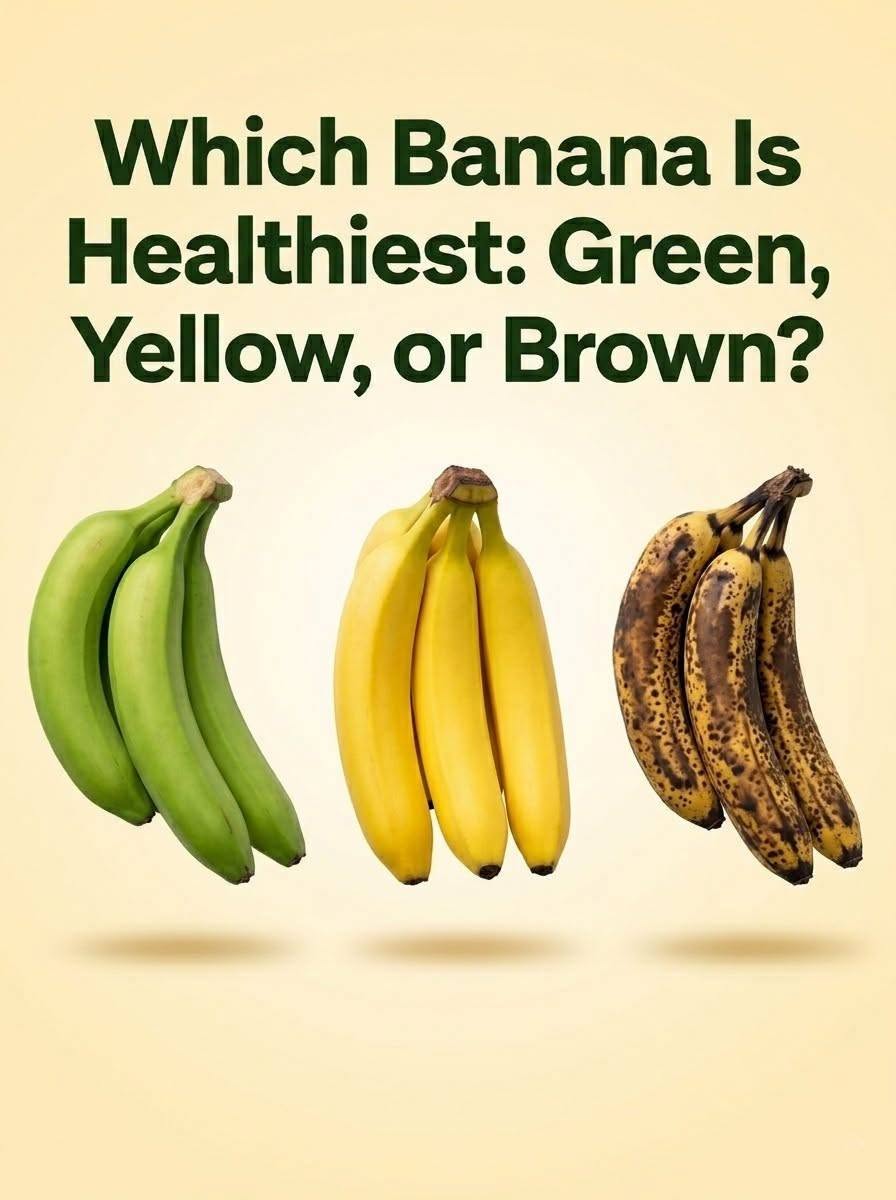
fruit as it moves from green to yellow and eventually develops brown spots.
Before deciding which banana is right for you, it’s worth looking at what actually changes inside the fruit as it ripens.
The Science of Banana Ripening
As bananas mature, some of their complex carbohydrates, including starches, are converted into simpler sugars. This process changes the fruit’s taste and texture and can also affect how quickly its carbohydrates are digested.
The journey from green to yellow to brown involves several nutritional changes that may influence digestion, blood sugar response, and antioxidant content.
Green Bananas: Best for Blood Sugar Control and Fullness
Green bananas are at an earlier stage of ripeness and generally contain more resistant starch than ripe bananas.
Resistant starch is a type of carbohydrate that is not fully digested in the small intestine. Some of it reaches the
colon, where it can be fermented by gut microorganisms.
Benefits of Green Bananas
High in resistant starch
Lower in naturally occurring sugars than ripe bananas
Provides dietary fiber
May help increase feelings of fullness
Can support a healthy gut microbiome
Because resistant starch is digested differently from readily available sugars, green bananas may have a lower blood sugar impact than more-ripe bananas. However, individual responses can vary.
Who Should Choose Green Bananas?
Green bananas may be a useful choice for:
People paying attention to blood sugar levels
Individuals looking to increase their intake of resistant starch
Those who want a more filling carbohydrate source
Anyone interested in supporting a diverse gut microbiome
The downside is that green bananas have a firmer texture and less-sweet flavor, which may not appeal to everyone.
As the banana softens and becomes sweeter, its nutritional profile shifts again—creating the familiar yellow stage that many people