Step 6: Rest Before Slicing
Let the chicken rest for 5 minutes before cutting. This allows juices to redistribute through the meat rather than spilling onto the cutting board, which is one of the most overlooked steps in home cooking.
Nutritional Information (per breast, approx.)
Calories: 285
Protein: 38g
Fat: 14g
Carbohydrates: 1g
Sodium: 480mg (varies with brining)
Chicken breast remains one of the highest protein-to-calorie-ratio proteins available, making it a staple in muscle-building and weight-management diets.
Healthier Alternatives for the Recipe
Remove the skin before baking to cut roughly 4-5g of fat per serving, though you’ll lose some crispness.
Swap butter for a light olive oil spray during basting to reduce saturated fat.
Use a low-sodium brine or skip it for those managing sodium intake.
Add citrus zest instead of extra salt for flavor without the sodium load.
Serving Suggestions
Slice and fan over a bed of garlicky sautéed greens, or dice into cubes for grain bowls with quinoa and roasted vegetables. For a comforting dinner, pair with mashed potatoes and a pan sauce made from the baking sheet drippings.
It also shreds beautifully for meal-prepped salads or wraps throughout the week.
Common Mistakes to Avoid
Skipping the pat-dry step—moisture on the surface prevents browning and can leave rubbery skin.
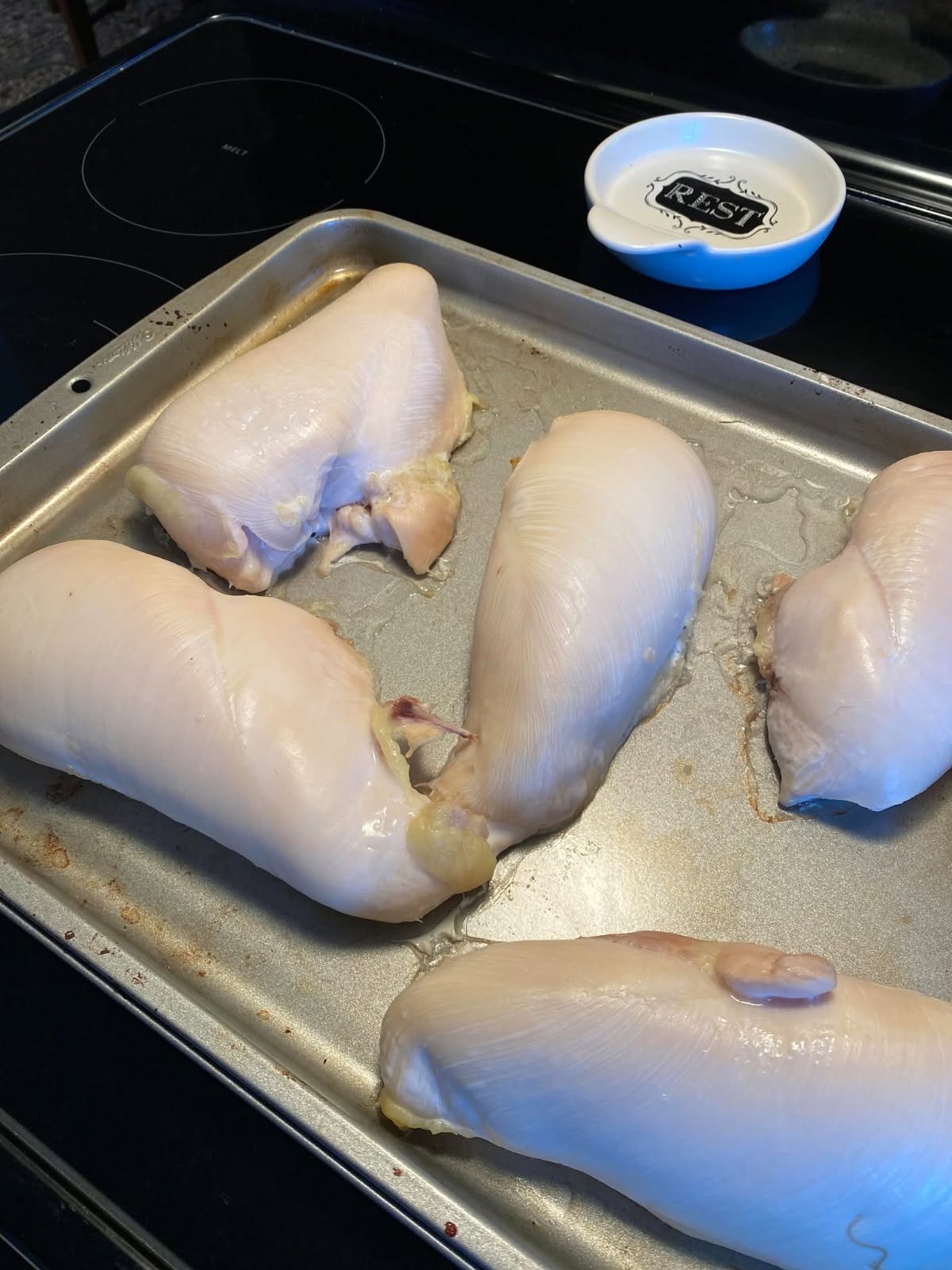
Not trimming excess cartilage/fat leads to uneven texture, exactly the kind of gristly bite people complain about.
Baking at too low a temperature—slow ovens dry chicken out over the longer cook time required.
Skipping the thermometer—guessing by color or time is the leading cause of both undercooked and overcooked chicken.
Cutting immediately after baking releases the juices you worked to lock in.
Storing Tips
Store cooked chicken in an airtight container in the refrigerator for up to 4 days. For longer storage, freeze sliced or whole breasts for up to 3 months—thaw overnight in the fridge before reheating.
Reheat gently in a 300°F oven with a splash of broth to prevent drying out; microwaving tends to toughen the texture.
Conclusion
This baked chicken breast method—trimmed, brined, seasoned, and roasted hot—solves the most common complaints (dryness, blandness, chewy bits) in under 45 minutes. Try it this week, and let us know how it turned out in the comments or reviews below. Subscribe for more foolproof recipes delivered straight to your inbox!
FAQs
Can I use boneless, skinless chicken breasts instead?
Yes—reduce bake time by 3-5 minutes since there’s no skin insulating the meat, and consider adding extra oil to prevent dryness.
Why does my chicken turn out rubbery?
A rubbery texture usually comes from overcooking or leftover cartilage/tendons not being trimmed before cooking.
Is brining necessary?
No, but it significantly improves moisture retention, especially for larger or leaner breasts.
Can I marinate instead of using a dry rub?
Absolutely — a yogurt or buttermilk-based marinade for 1-2 hours adds tenderness and tang.
What’s the small white piece near the tenderloin?
That’s cartilage/tendon tissue naturally found near the tenderloin attachment point—trimming it before cooking prevents a chewy bite.