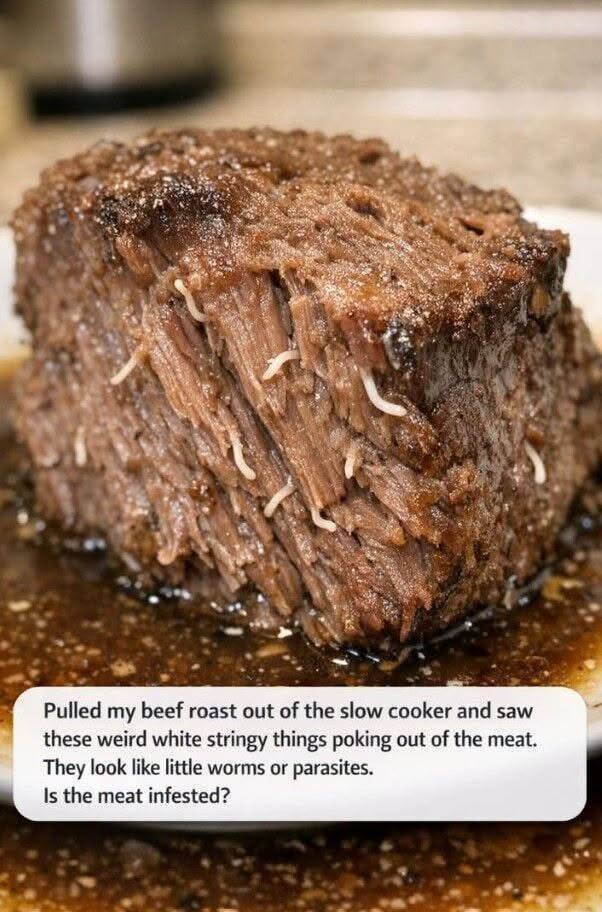
Beef naturally contains several types of tissue, including:
Collagen
Elastin
Muscle fibers
Fat and other connective tissues
When beef is cooked slowly for several hours, heat causes changes in these tissues. Collagen gradually softens and converts into gelatin, while muscle fibers separate and become tender.
The white, stringy material you see may therefore be:
Softened connective tissue
Tendon or other connective tissue
Collagen-rich fibers
Separated muscle fibers
Small strands of fat or other tissue
This is especially common in tougher cuts of beef that contain a lot of connective tissue.
Why Does It Happen More in a Slow Cooker?
Slow cookers use relatively low temperatures over an extended period. This gives tough cuts of meat plenty of time to soften.
During the cooking process:
Connective tissue gradually breaks down.
Collagen converts into gelatin.
Muscle fibers become tender and separate.
Fat renders and contributes flavor and moisture.
Because these changes happen gradually, you may actually see strands of connective tissue or muscle fibers that were less noticeable before cooking.
This is one of the reasons cuts such as chuck roast and brisket work so well in slow-cooker recipes.
Are the White Strings Worms or Parasites?
Are the White Strings Worms or Parasites?
Usually, no.
White stringy strands in cooked beef are far more likely to be normal connective tissue, collagen, fat, or separated muscle fibers than parasites.
However, it is important not to claim that unusual-looking meat can never be associated with a food-safety problem. The appearance of a single white strand is not enough to diagnose what it is.
If the meat looks or smells abnormal, was improperly stored, or you have another reason to suspect contamination, it is safer not to eat it.
For Complete Cooking STEPS Please Head On Over To Next Page Or Open button (>) and don’t forget to SHARE with your Facebook friends