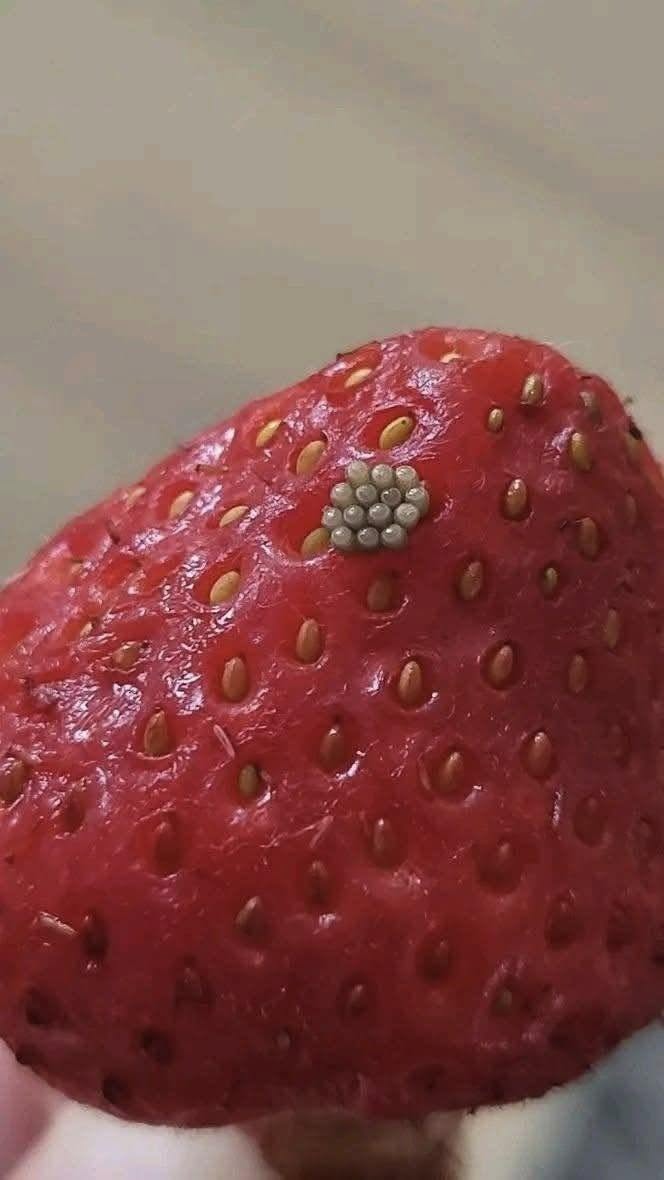
How it works: The salt water creates a hypertonic environment (higher salt concentration than the larvae’s bodies). Water is drawn out of the larvae, irritating them. They try to escape the uncomfortable environment by exiting the fruit.
What it does NOT do: Remove all larvae. Some larvae may die inside the fruit without exiting. Some may be too small to see. Some may not respond to the salt.
What it IS useful for: Identifying whether your berries are infested. If you see larvae after a salt soak, you know that fruit fly larvae are present.
Does This Happen in All Strawberries?
No. Infestation rates vary by:
Growing region: Spotted wing drosophila is more common in certain areas (Pacific Northwest, Northeast, parts of Europe and Asia). It’s less common in arid regions (California’s Central Valley, desert areas).
Growing practices: Organic farms (which don’t use synthetic pesticides) have higher infestation rates. Conventional farms that use insecticides have lower rates.
Time of year: Infestation rates are highest in late summer and early fall when fruit fly populations are at their peak.
Variety: Some strawberry varieties are more resistant than others.
The truth: Most commercially grown strawberries (especially from large-scale conventional farms) have very low infestation rates. You’ve likely eaten hundreds of strawberries without ever seeing a larva.
Should You Throw Away Your Berries?
No. If you’ve already soaked your berries and seen larvae, the larvae are now in the water. The berries themselves are safe to eat.
But: If you’re grossed out (and I don’t blame you), you can take steps to reduce the “ick” factor.
How to Clean Berries (If You Want to Remove Larvae)
Let me give you practical steps.
The Salt Water Soak Method (Viral TikTok Method)
Ingredients: 1-2 tablespoons of salt per 4 cups of cold water.
Instructions: Submerge berries in salt water. Soak for 15-20 minutes. Stir occasionally. Rinse thoroughly with fresh water. Pat dry.
Result: Some larvae may exit the fruit (the ones that are alive and responsive). Others may remain inside.
The Vinegar Water Soak Method (More Effective)
Ingredients: 1 part white vinegar, 3 parts cold water.
Instructions: Submerge berries in vinegar water. Soak for 5-10 minutes. The vinegar kills surface bacteria, fungi, and may encourage larvae to exit. Rinse thoroughly. Pat dry.
Result: Kills surface pathogens. May dislodge some larvae.
The Heat Method (Kills Larvae)
Instructions: Cook your berries. Heat destroys the larvae.
Options: Make jam, pie filling, compote, or sauce. Bake into muffins or bread. Simmer into a reduction.
Result: Larvae are killed. You won’t see them. You won’t taste them. The berries are safe and delicious.
What About Other Berries?
Spotted wing drosophila affects many soft-skinned fruits:
Strawberries (most commonly affected)
Blueberries