
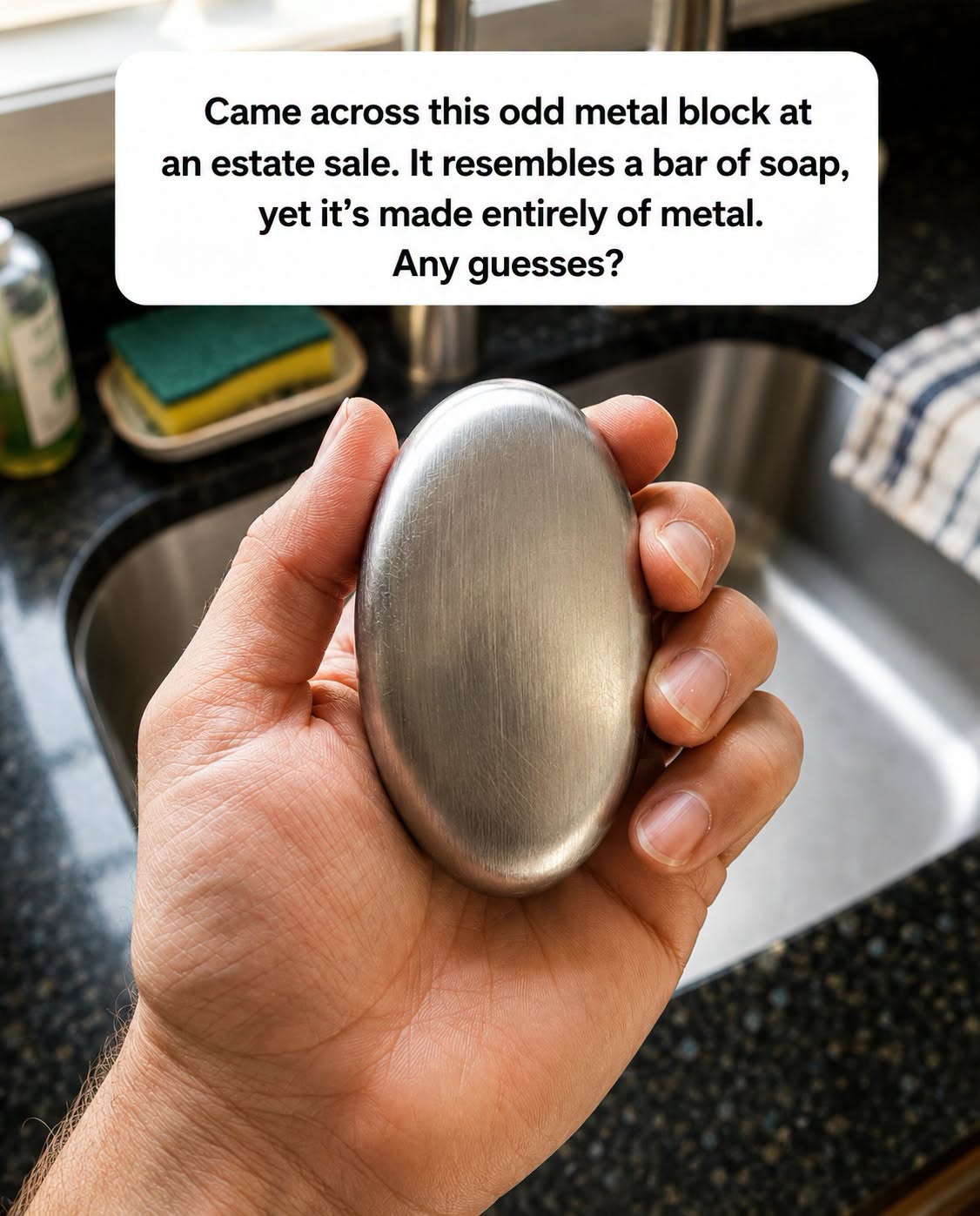
Run cold water.
Rub the steel bar between your hands for around 20–30 seconds.
That’s it.
No scrubbing aggressively. No special technique.
Just treat it like regular soap—minus the bubbles.
Some people focus on fingertips and under nails since odors tend to cling there the longest. And oddly enough, cold water usually works better than hot water for this.
Why? Hard to say exactly. Kitchen wisdom has its mysteries.
Why They Keep Showing Up in Older Homes
These bars were especially popular decades ago because they fit a certain mindset people had about kitchens back then.
Reusable tools mattered. Durable things mattered.
If something could last 20 years without batteries, plastic parts, or replacement cartridges? People loved it.
So these odor bars ended up tucked beside sinks, stored in little soap dishes, or tossed into utensil drawers where they stayed for years. Sometimes decades.
That’s why estate sales are full of them now.
You’ll see one sitting between vintage Pyrex bowls and old potato mashers, and unless you recognize it, you’d never guess what it does.
It’s Easy To Mistake for Something Else
To be fair, they don’t exactly advertise their purpose.
Most odor remover bars are:
smooth
silver
rounded
completely unmarked
No logo. No instructions. Nothing.
So people mistake them for:
paperweights
decorative metal blocks
tool parts
massage stones
random junk drawer objects
I’ve even seen someone online think it was a fancy cheese-aging tool. Which… honestly, I kind of understand.
Here’s the Funny Part: You Might Already Own a DIY Version
A lot of people don’t realize this, but you can often get a similar effect using regular stainless steel items already in your kitchen.
For example:
a spoon
a butter knife
the side of a stainless sink
even a ladle sometimes
Same idea. Same metal.
The dedicated bars are just more comfortable to hold and easier to keep near the sink.
Still, it’s kind of amusing knowing some people paid for a special gadget while others accidentally discovered the trick rubbing their hands on the kitchen faucet.
Are They Expensive?
Not at all.
Most stainless steel odor bars cost somewhere around $5–15 depending on the brand. Some come in fancy packaging, others look hilariously plain.
And because they don’t wear out, one bar can basically last forever unless someone mistakes it for scrap metal and tosses it.
Which probably happens more than manufacturers would like to admit.
So… Do They Actually Work?
Honestly?
For a lot of people, yes.
Maybe not like magic. Maybe not perfectly every single time. But enough that chefs, fishermen, and home cooks have kept using them for years.
And even if part of the effect is psychological, there’s something oddly satisfying about using this strange little metal “soap” bar after chopping garlic and realizing your hands don’t smell nearly as strong afterward.
It’s one of those old kitchen tricks that sounds fake until you try it yourself.
Then suddenly you understand why somebody kept one by the sink for 30 years.
