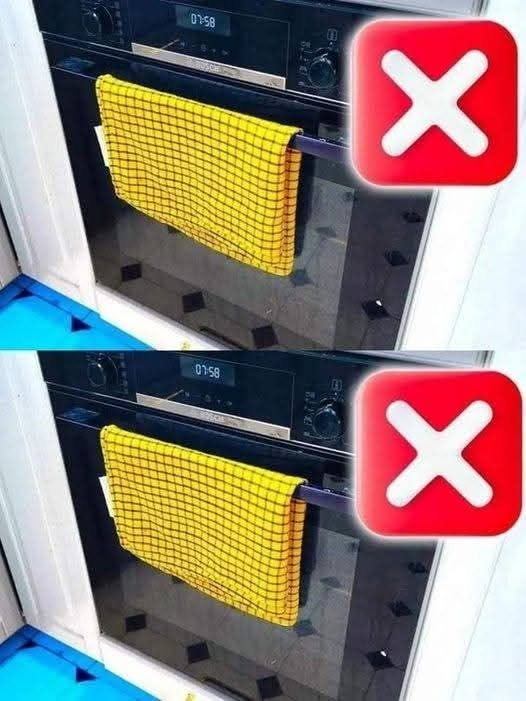
For many, the kitchen is a sanctuary—a place for creating delicious meals, baking with loved ones, and experimenting with new recipes. One of the often-overlooked kitchen habits, however, could be putting you at risk without you realizing it: hanging a tea towel on the oven door.
Although it might seem like a convenient and harmless practice, this habit can lead to unexpected hazards. From fire risks to hygiene concerns, here’s everything you need to know about why hanging your tea towel on the oven door is a mistake you don’t want to make.
Fire Hazard Alert
One of the most significant dangers associated with hanging a tea towel on the oven door is the risk of fire. Even when the oven is off, the door can retain heat from previous cooking sessions.
Imagine preheating your oven for a meal while a towel is hanging on the handle—this seemingly benign act can quickly turn hazardous.
“A towel catching fire isn’t as rare as people might think,” notes a safety expert from the National Fire Protection Association (NFPA). “Many kitchen fires begin with small mistakes that go unnoticed.
It’s critical to keep anything flammable away from the oven, including tea towels.”
The fire risk escalates if your oven has a gas range, as gas ovens often produce residual heat around the door area, increasing the likelihood that the towel could ignite.
It’s easy to forget that an oven door is more than just a place to open and close your appliance; it’s also part of the cooking mechanism, often retaining high levels of heat even after the oven is turned off.
Hygiene and Bacteria Concerns
Beyond fire safety, hygiene plays a significant role in why your tea towel shouldn’t hang on the oven door. Kitchen towels are often used for drying hands, wiping down surfaces, and cleaning up spills, which means they’re already prone to harboring bacteria.
Hanging a towel on the oven door might expose it to grease particles, food spills, and even bacteria from raw ingredients like poultry, increasing the risk of cross-contamination.
According to food safety guidelines by the U.S. Department of Agriculture (USDA), one of the primary ways bacteria spreads in the kitchen is through contact with contaminated surfaces.
“Kitchen towels are among the most contaminated items in the home. By hanging them on the oven door, you’re increasing their exposure to kitchen bacteria, especially if the towel is used on multiple surfaces,” notes a USDA food safety expert.
Even if you wash your tea towel frequently, exposing it to the kitchen environment for extended periods can mean you’re unintentionally transferring germs onto your hands, utensils, and possibly even food.
The Impact of Humidity and Odor
Another often overlooked factor is humidity. When a towel is hung on the oven door, it can become damp from the heat or moisture in the kitchen.
Damp towels are the perfect breeding ground for bacteria, mildew, and unpleasant odors. While you may not notice it immediately, a moist towel can start to develop a smell over time, which can, in turn, affect the air quality in your kitchen.
Humidity can also make the towel less effective for drying. When you need it most, you’ll find it’s already moist or partially damp, defeating its purpose and requiring more frequent washing to maintain cleanliness.
Aesthetic vs. Practicality
Some people choose to hang tea towels on the oven door as a decorative touch. A beautifully patterned or seasonal tea towel can enhance the kitchen’s look and feel, adding charm and warmth to the space.
However, in terms of practicality, the oven door may not be the best location.
Placing a towel on the oven door solely for aesthetic reasons sacrifices functionality and increases risk. If aesthetics are essential to you, consider hanging the towel in a less risky area, such as on a wall hook or designated towel holder that isn’t in the immediate vicinity of heat sources.
Safe Alternatives for Storing Tea Towels
So, what’s the best way to store tea towels without compromising safety or hygiene? Here are some practical options:
Towel Racks and Bars: Install a towel bar away from heat sources, like under the kitchen sink or on a nearby wall. This keeps the towel within reach without exposing it to high temperatures.