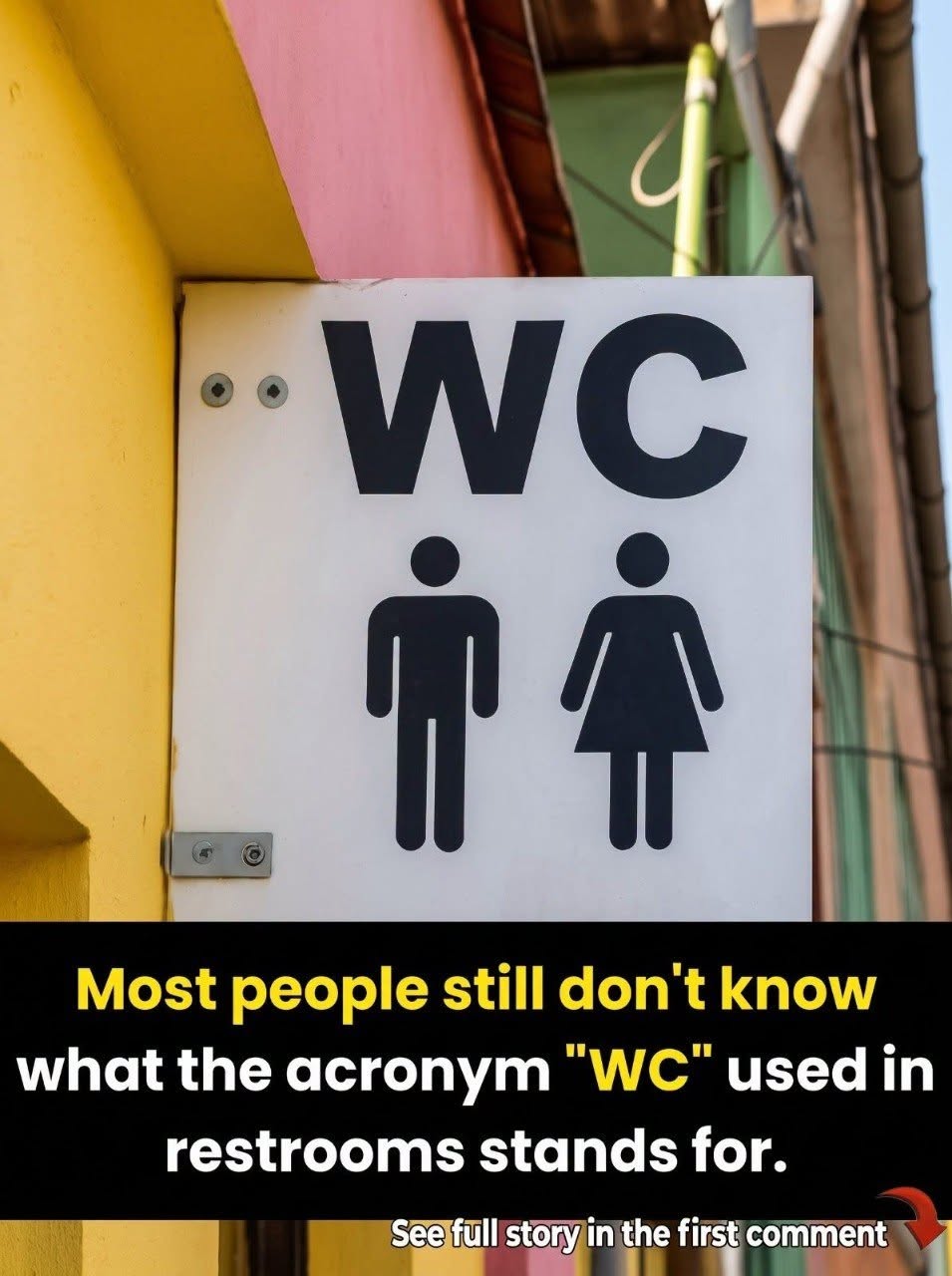
Why Do Some Countries Still Use WC?
Language tends to leave behind little fossils.
ADVERTISEMENT
A word or abbreviation can remain useful long after people stop using the original phrase in everyday conversation.
That’s essentially what happened with WC.
In many European countries, WC remains a recognizable international abbreviation for toilet facilities. It’s short, easy to put on a sign, and doesn’t require translating a longer word into every language.
A traveler might not know the local word for toilet, but seeing “WC” can still provide a useful clue.
WC Is Especially Convenient for Travelers
Imagine arriving at a train station where the signs are written in a language you don’t speak.
ADVERTISEMENT
A universally recognizable symbol is helpful.
So is a short abbreviation such as WC.
That practical quality has helped keep the term alive.
Why Don’t We Usually Say “Water Closet” Anymore?
This is where language gets interesting.
Even though the abbreviation survived, the full expression became less common in everyday American and British speech.
In modern American English, water closet can sometimes refer more specifically to a separate small room containing the toilet, particularly in home-design and real-estate contexts.
In ordinary conversation, however, most people simply say bathroom, restroom, or toilet.
In Britain, “toilet” and “loo” are much more natural everyday terms.
So you can easily grow up seeing “WC” everywhere without ever having a reason to expand the initials.
Social Media Has Reignited the Question
Every so often, an old piece of everyday vocabulary suddenly becomes an internet mystery.
That happened with WC when social media users began asking a deceptively simple question:
“What does WC actually stand for?”
A short TikTok explanation from creator @itsnathannyc brought the question to a wider audience, with viewers sharing their own reactions to the revelation.
Some people admitted they’d seen WC signs for years without knowing what the letters represented.
And honestly, it’s easy to understand why.
We encounter certain symbols so frequently that our brains stop treating them as something that needs explanation.
The sign says WC.
We know where it leads.
Mystery solved—or so we thought!
Why We Stop Questioning Familiar Signs
There’s a fascinating little lesson hiding behind the WC story.
We interact with hundreds of signs, symbols, abbreviations, and labels every day.
Once we understand what something does, we don’t necessarily need to understand where its name came from.
A WC sign is a perfect example.
You don’t need to know that WC means water closet to recognize that it’s pointing toward a toilet.
So the abbreviation can become familiar while its original meaning fades from everyday knowledge.
It’s the same reason people can recognize certain symbols without knowing their history.
WC vs. Bathroom vs. Restroom vs. Toilet
These terms aren’t perfectly interchangeable everywhere, and regional usage matters.
Bathroom
In North American English, “bathroom” is commonly used for a room containing a toilet, even when there isn’t a bathtub.
Restroom
“Restroom” is particularly common in American public places.
Despite the name, you’re not necessarily expected to rest there!
Toilet
“Toilet” commonly refers to the fixture itself, but in British English it is also a normal word for the room containing it.
Loo
“Loo” is an informal British term for a toilet or toilet room.
Water Closet
“Water closet” is the historical term behind the abbreviation WC and is still used in some architectural, plumbing, and design contexts.
The words may differ, but they all point toward the same basic need: finding the facilities!
Is WC the Same Thing as a Bathroom?
Not always.
Historically and architecturally, a water closet specifically referred to a room containing a toilet.
A modern bathroom can contain considerably more, including a bathtub, shower, sink, and toilet.
In some home designs, a WC may still mean a separate toilet room rather than the entire bathroom.
So if you see “WC” in a house plan or real-estate listing, context matters.
Why Do Hotels and Public Buildings Use WC Signs?
There are several practical reasons.
A short abbreviation takes up very little space and can be recognized quickly.
More importantly, WC has international familiarity. In places where visitors speak many different languages, a standardized abbreviation or symbol can make navigation easier.
That’s especially useful in:
Airports
Train stations
Hotels
Restaurants
Shopping centers
Museums
Tourist attractions
Public transportation facilities
A two-letter sign is wonderfully efficient.
The Surprisingly Interesting History Behind Two Letters
The next time you see WC, remember that you’re looking at a tiny piece of plumbing history.
The abbreviation isn’t a secret code.
It isn’t a brand name.
And it isn’t short for some mysterious modern phrase.
It simply comes from water closet, an older term for a small room containing a water-flushed toilet.
As indoor plumbing transformed homes and public buildings, the terminology evolved along with it.
But the abbreviation stuck around.
And now, generations later, people are still walking past those two letters and wondering what they mean.
Frequently Asked Questions
What does WC mean on a bathroom sign?
WC stands for water closet, an older term referring to a room containing a toilet, particularly one connected to a water-flushing system.
Is WC short for “wash closet”?
No. The traditional abbreviation is WC for water closet.
Why do European countries use WC?
WC remains a familiar abbreviation for toilet facilities in many European countries. Its short, recognizable format is also useful in places visited by international travelers.
Is “water closet” still used today?
Yes, although it is much less common in everyday conversation than terms such as bathroom, toilet, or restroom. It can still appear in architectural, plumbing, and home-design contexts.
Does WC mean the same thing as bathroom?
Not necessarily. Traditionally, a water closet refers specifically to a room containing the toilet. A bathroom may also contain a sink, shower, bathtub, or other fixtures.
Why is it called a closet?
Historically, “closet” could mean a small private room or enclosed space. It didn’t necessarily mean a storage cupboard as the word often does today.
Is WC an international abbreviation?
It’s widely recognized in many countries, particularly across Europe and in places accustomed to international travelers. However, signage varies by country, so pictograms and local words are also commonly used.
Final Thoughts
It’s funny how the most ordinary things can hide the most interesting little stories.
We’ve probably all walked past a WC sign hundreds of times without giving those letters a second thought.
But now you know.
WC means “water closet.”
The phrase comes from an era when indoor plumbing was changing the way homes and buildings handled sanitation, and “closet” could mean a small private room rather than a place for storing coats and shoes.
The full expression may sound old-fashioned today, but the abbreviation has proved remarkably durable.
So the next time you spot those two little letters at a train station, hotel, restaurant, or public building, you’ll know exactly what they’re telling you.
And maybe you’ll look at that tiny sign a little differently.
Funny how a two-letter abbreviation can carry so much history!!