5. Bay Leaf
Bay leaf is perhaps the quietest choice on this list.
Unlike garlic, onion, or chili peppers, you don’t normally notice bay leaves immediately when you taste a dish. In fact, you usually add them during cooking and remove them before serving.
So why use them?
Bay leaves can contribute a subtle herbal and earthy character to foods that simmer for a long time. They are commonly used in soups, stews, sauces, braised dishes, and other slow-cooked recipes.
The flavor isn’t supposed to overpower everything else.
Instead, bay leaf works in the background, adding another layer of aroma and helping the overall flavor profile feel more rounded.
One important thing to remember is that you shouldn’t expect a single bay leaf to completely transform a meal. Its contribution is generally subtle, especially compared with stronger ingredients such as garlic or chili.
But subtle doesn’t mean unimportant.
Sometimes the ingredients that work quietly in the background are what help bring everything together.
If You Picked Bay Leaf…
You may appreciate subtlety and patience.
You probably understand that good cooking isn’t always about making one ingredient stand out. Sometimes the best results come from allowing several flavors to develop slowly and complement one another.
You may also enjoy traditional soups, stews, sauces, and slow-cooked meals where flavor develops gradually.
6. Cilantro
Cilantro is easily one of the most controversial choices on the list.
People tend to have strong opinions about it.
Some describe cilantro as fresh, bright, citrusy, and pleasantly herbal. Others experience its flavor very differently and describe it as unpleasant or even soapy.
And there is a scientific reason why some people may experience cilantro differently.
Certain genetic variations can influence how people detect particular aroma compounds found in cilantro. This means that the same herb can taste deliciously fresh to one person while tasting completely different to someone else.
That makes cilantro an especially interesting choice.
It is also incredibly versatile. Fresh cilantro can be used in salads, salsas, soups, rice dishes, sauces, tacos, curries, and many other recipes.
If You Picked Cilantro…
You may enjoy distinctive flavors and aren’t afraid of ingredients that divide opinions.
You might also be someone who likes experimenting with different cuisines and trying combinations that other people might not immediately consider.
And if you absolutely cannot stand cilantro, don’t worry. You’re certainly not the only one.
So, Which Seasoning Would You Choose?
Now that you’ve seen all six choices, take another look:
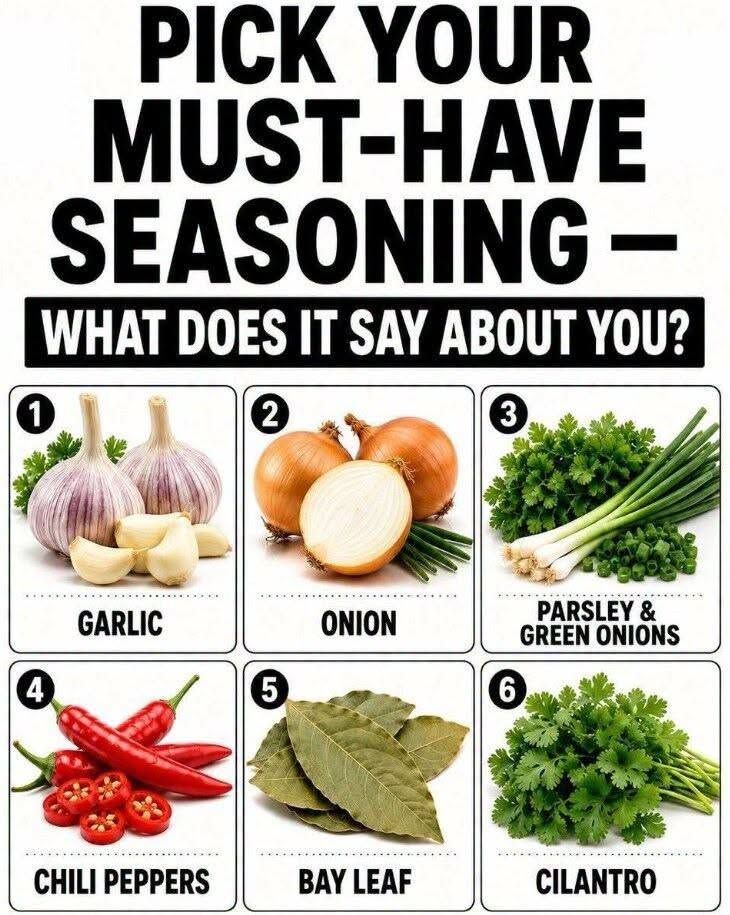
1. Garlic
Bold, aromatic, savory, and incredibly versatile.
2. Onion
Dependable, adaptable, and capable of becoming sweet and deeply flavorful when cooked.
3. Parsley & Green Onions
Fresh, bright, colorful, and perfect for finishing a dish.
4. Chili Peppers
Spicy, energetic, and ideal for anyone who loves a little excitement.
5. Bay Leaf
Subtle, earthy, aromatic, and especially useful in slow-cooked meals.
6. Cilantro
Fresh, distinctive, and famously loved by some and disliked by others.
Which one would you miss the most if you suddenly couldn’t use it?
Your Favorite Seasoning Says More Than You Think
Choosing a favorite seasoning isn’t exactly a scientific personality test, but it can be a fun way to think about your personal relationship with food.
Our preferences are often influenced by what we grew up eating, the meals we associate with home, the cuisines we enjoy, and the way we learned to cook.
Someone who grew up eating heavily seasoned dishes may naturally reach for garlic, onions, or chili peppers. Someone who enjoys lighter meals may prefer fresh herbs. Another person might love slow-cooked comfort food and appreciate the subtle contribution of bay leaves.
There is no correct answer.
Food is personal, and the ingredients we rely on often become part of our cooking identity.
Try Something Different
If your favorite choice wasn’t the one you expected, why not experiment?
If you’re usually a garlic person, try using more fresh herbs. If you always reach for chili, experiment with milder varieties and different levels of heat. If bay leaves are your favorite, try incorporating them into a slow-cooked soup or stew.
Cooking becomes much more interesting when you allow yourself to explore.
You don’t need to completely change your favorite flavors. Sometimes simply trying an ingredient in a different way can help you discover something new.
Final Thoughts :
Seasonings may seem like small additions, but they can have an enormous impact on the way a meal tastes.
Garlic can bring richness and aroma. Onions can create a savory foundation. Parsley and green onions can add freshness. Chili peppers can provide heat and excitement. Bay leaves can quietly build depth in slow-cooked dishes. Cilantro can contribute a distinctive freshness that people either love or strongly dislike.
The best part is that every choice has its own personality.
So take another look at the six options and ask yourself one final question:
If you could keep only one of these in your kitchen, which one would you choose?
There is no wrong answer. Your favorite seasoning may simply be the flavor that makes your food feel most like home.
And once you’ve made your choice, share the challenge with someone who loves cooking. Ask them to pick their must-have seasoning too—you might be surprised by how different their answer is!