
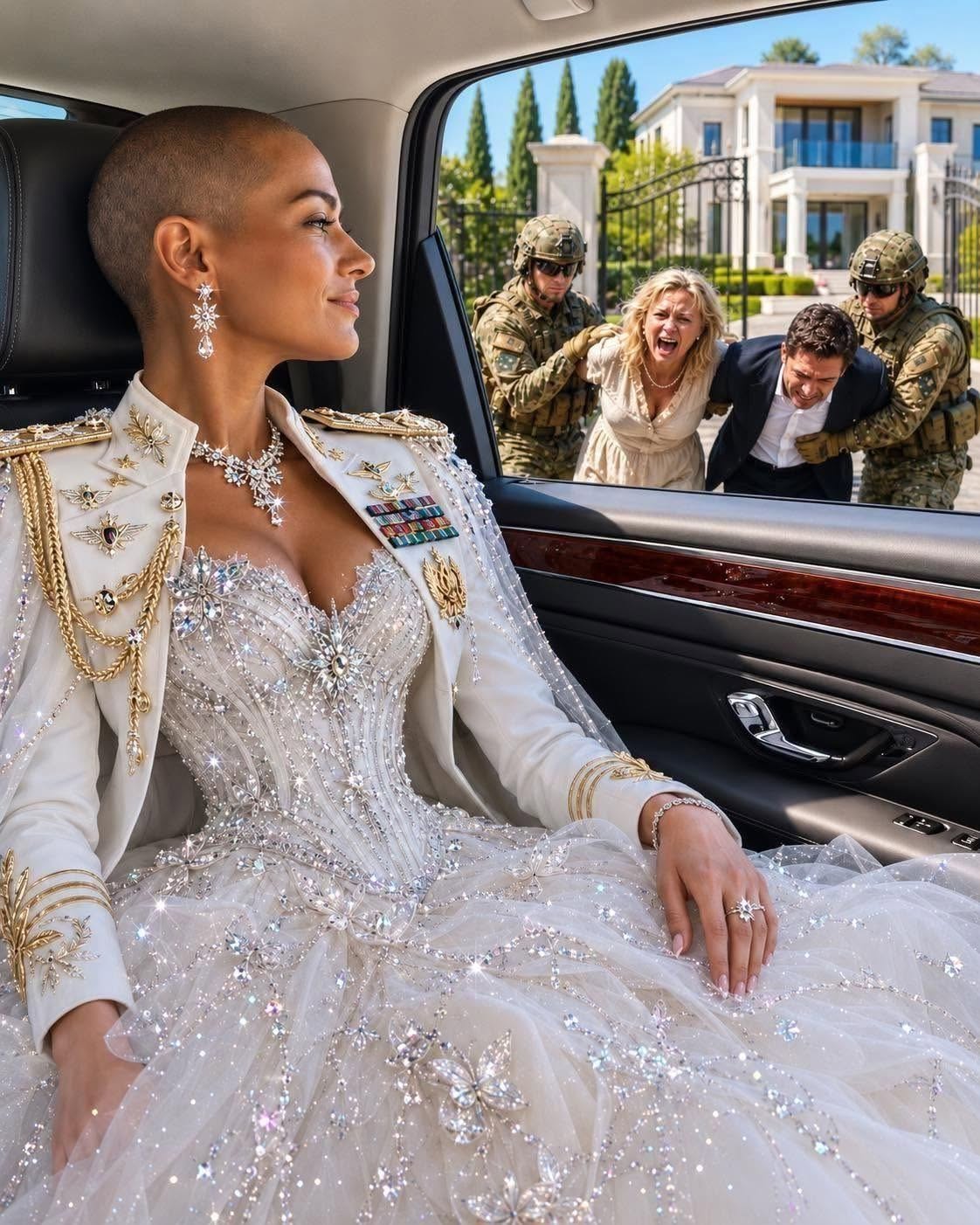
There is a difference.
Still, public attention brought unexpected things.
Letters arrived.
Some from women who had left controlling homes. Some from soldiers who had hidden personal crises behind perfect uniforms. Some from men apologizing for not seeing what their sisters, daughters, or colleagues had endured. Some were clumsy. Some were beautiful. I read them late at night when sleep would not come.
One letter had no return address.
Colonel Ellison,
You don’t know me. I served with Captain Price. We thought she quit because she couldn’t handle pressure. I repeated that once. I am ashamed. Thank you for making me question the stories people tell when women disappear.
I folded that letter and kept it in my desk.
Alina testified in a closed session first.
I met her afterward in a quiet hallway outside the federal building. She was thinner than in her old photograph, her curls shorter, her eyes older. But she stood straight when she saw me.
“Colonel Ellison,” she said.
“Captain Price.”
Her smile trembled. “Not anymore.”
“Still earned.”
Her eyes filled, but she blinked the tears back. “I watched your speech.”
“I’m glad you did.”
“I wasn’t going to answer them. Investigators, I mean. I have a life now. Small, but mine. Then I saw you standing there with no hair and no apology.”
My throat tightened.
She continued, “I thought, if she can stand in front of the Army like that, I can stand in a room and tell the truth.”
We did not hug. We were not friends yet. Maybe we never would be. Trauma does not automatically make sisters of strangers.
But we stood together in that hallway, two women connected by the same hands that had tried to erase us.
That was enough.
The turning point came from Ryan, not Linda.
Three weeks after Linda’s arrest, Ryan requested a cooperation meeting.
Sarah warned me before prosecutors did.
“He may try to trade testimony against Linda.”
“Will it help him?”
“Probably.”
“Will it hurt her?”
“Definitely.”
I looked out my office window at the courtyard where autumn had begun touching the trees gold. “Of course he’ll do it.”
Ryan had always mistaken self-preservation for intelligence.
The meeting did not include me, but transcripts came later through proper channels. Ryan admitted parts of the scheme. Enough to implicate Linda. Not enough to fully condemn himself. He painted himself as manipulated, afraid, trapped by a mother who controlled every part of his life.
Some of that may have been true.
But then prosecutors asked about me.
Why shave Colonel Ellison’s head?
Ryan answered, “She needed to miss the ceremony.”
Who decided that?
“My mother.”
Did you object?
A pause.
“No.”
Why?
Another pause.
“Because Mara listened to the Army more than she listened to me.”
There it was, simple and rotten at the core.
Not fear.
Not confusion.
Entitlement.
He believed my obedience had been owed, and every achievement I earned outside him felt like theft.
When prosecutors asked about the forged credentials at the gate, he said he only wanted to talk.
They showed him the fake authorization letter claiming I was under domestic medical supervision.
He stopped talking.
Linda did not cooperate.
Linda fought.
She accused Ryan of lying. Accused investigators of fabricating. Accused me of using military influence. Accused Sarah of being jealous, Alina of being unstable, Diane of being senile, Jenna of seeking attention.
Every woman who spoke against her became defective.
That was Linda’s last lesson: when control fails, contempt shows its face.
The trial date was set months away. Civil proceedings moved separately. My annulment petition advanced quickly once identity fraud became undeniable. The court froze disputed assets. My pension remained protected. The house entered legal limbo.
Meanwhile, my hair grew back.
At first it was shadow. Then rough velvet. Then a dark cap that made me look younger and harder at once. People stopped staring. Or maybe I stopped noticing.
One evening, after a long classified briefing, Major Desai knocked on my open door.
“Ma’am, do you have a minute?”
“Of course.”
She stepped inside carrying two paper cups of tea. “You missed dinner again.”
“I had pretzels.”
“That is not dinner.”
“It’s adjacent.”
She placed tea on my desk with the authority of a medic issuing orders. “You can court-martial me later.”
I picked up the cup. “Noted.”
For a moment, we sat in companionable silence.
Then she said, “My aunt saw your speech. She left her husband last week.”
I looked up.
Priya’s face was composed, but her voice softened. “Twenty-nine years. She said she kept thinking dignity is not negotiable.”
The tea warmed my hands.
I did not know what to say.
So I told the truth.
“I’m glad she’s safe.”
Priya nodded. “Me too.”
After she left, I sat alone in the office I had nearly been prevented from entering. The guidon stood in the corner. My mother’s recipe cards sat in the top drawer. My father’s watch rested beside my keyboard.
My life had not become easy.
But it had become mine again.
And I was beginning to understand that mine was enough.
PART 7 — The Name That Set Me Free
The annulment hearing lasted less than forty minutes.
I had expected something larger. Thunder, perhaps. A dramatic confrontation. Ryan shouting. Linda fainting. A judge slamming a gavel so hard the past cracked open.
Instead, freedom arrived in a beige courtroom with humming lights and a clerk who mispronounced my middle name.
To see the full cooking instructions, go to the next page or click the Open button (>) and don’t forget to SHARE it with your friends on Facebook.
