How to Prepare the Mixture
Step 1: Fill Your Bucket
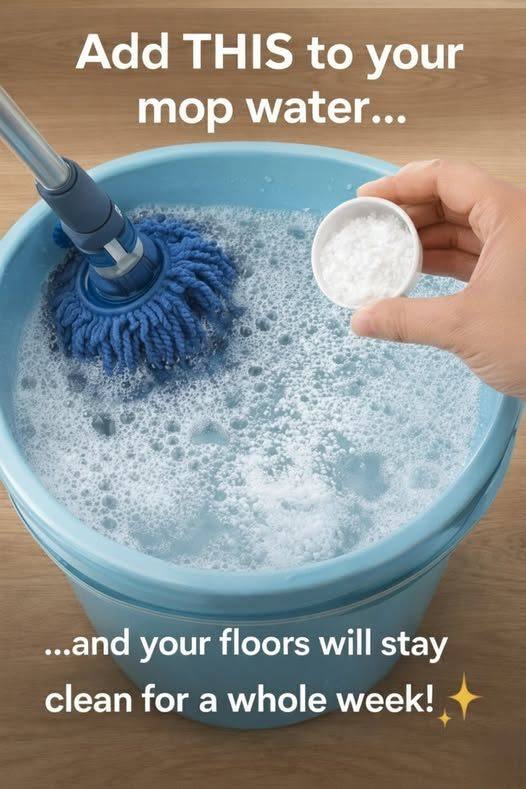
Start by filling a clean bucket with warm water. Warm water can help loosen everyday grime and makes the mixture comfortable to work with.
Avoid using extremely hot water, particularly if you’re cleaning a flooring material for which high temperatures are not recommended.
Step 2: Add the Cleaning Ingredients
Add a small amount of baking soda and a little mild cleaning soap to the water.
Stir the water gently to distribute the ingredients throughout the bucket.
If you’re cleaning laminate or varnished flooring, use less baking soda and avoid saturating the floor with water.
Step 3: Add an Optional Scent
If you’d like your home to have a fresh scent after cleaning, you can add a few drops of an essential oil such as lavender, eucalyptus, or lemon.
Use essential oils sparingly. More drops don’t necessarily mean a better result.
Also keep in mind that essential oils can be irritating or harmful to pets, particularly cats, so check that the oil you choose is appropriate for your household before using it.
How to Clean Your Floors
Before mopping, remove loose dirt, crumbs, hair, and dust by sweeping or vacuuming the floor.
This step is important because mopping over loose debris can simply move the dirt around.
Once the floor is free of loose debris:
-
Dip your mop or microfiber cloth into the cleaning solution.
-
Wring it out thoroughly so it is damp rather than dripping wet.
-
Clean the floor in manageable sections.
-
Pay particular attention to entrances, hallways, and other high-traffic areas.
-
Rinse or refresh the mop as it becomes dirty.
-
Allow the floor to dry completely.
For floors that are sensitive to moisture, use as little water as possible.
Where Can You Use It?
This type of homemade cleaning solution can be suitable for several common hard flooring surfaces, including:
-
Ceramic tile
-
Porcelain tile
-
Vinyl flooring
-
Some finished or varnished floors
-
Some laminate flooring, provided you use very little moisture and a conservative amount of baking soda
Always check your flooring manufacturer’s care instructions first. Different finishes and materials can react differently to cleaning products.
Surfaces to Avoid
Homemade cleaning mixtures aren’t automatically safe for every type of flooring.
Avoid using baking soda-based mixtures on:
-
Raw or untreated wood
-
Natural porous stone, such as marble
-
Other flooring materials whose manufacturer specifically recommends against alkaline cleaners or water-based cleaning
Natural stone deserves particular care because some types can be sensitive to household cleaning ingredients.
If you’re uncertain about a particular floor, test your cleaning solution on a small, inconspicuous area first.