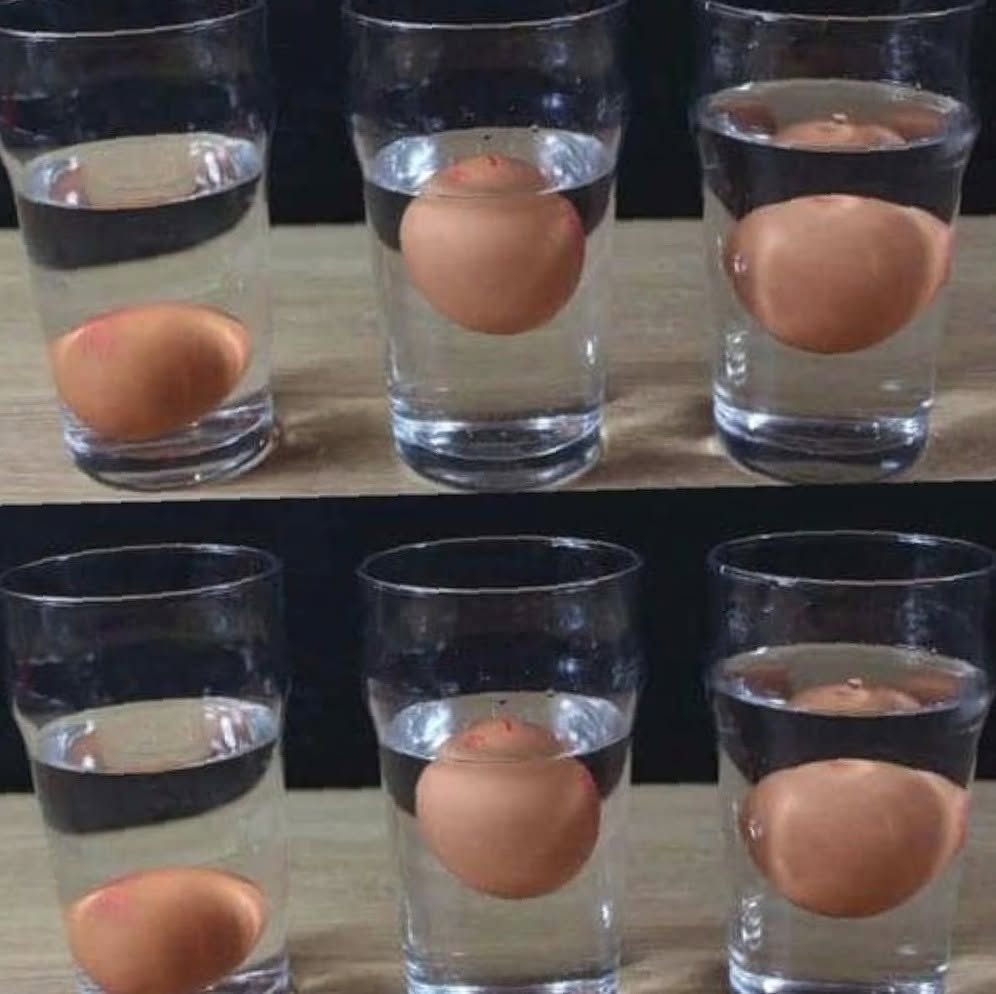
Watch what it does:
Sinks and lies flat on the bottom?
→ Very fresh—perfect for poaching, soft-boiling, or delicate dishes like custards.
Sinks but stands upright on the bottom?
→ Older but still safe to eat—great for hard-boiling, scrambling, or baking. Use within a day or two.
Floats to the surface?
→ Toss it. That air pocket inside has grown so large (from evaporation and gas buildup) that the egg is likely spoiled. Don’t crack it—just discard.
Why it works:
continued on next page Why it works: As eggs age, moisture and carbon dioxide escape through the shell’s pores, enlarging the air cell. A floating egg = too much air = potential bacterial growth.
BiologicalSciences
2. The Sniff Test: Your Nose Knows Best
Never skip this one—especially if you’ve already cracked the egg.
Fresh eggs have little to no odor.