many fabrics, but some deserve special attention.
Be particularly careful with:
Silk
Satin
Chiffon
Lace
Fine knits
Lightweight cotton
Vintage fabrics
Stretch fabrics
These materials can snag, stretch, or develop
visible holes more easily.
For delicate fabric, use very small movements and avoid pulling the material tightly while cutting stitches.
Can You Use a Seam Ripper for Embroidery?
Yes, in some situations.
A seam ripper can help remove unwanted embroidery stitches, although specialized embroidery scissors may provide better control for intricate work.
If you’re removing embroidery from a garment, work slowly and check the front and back of the fabric frequently.
How to Store a Seam Ripper Safely
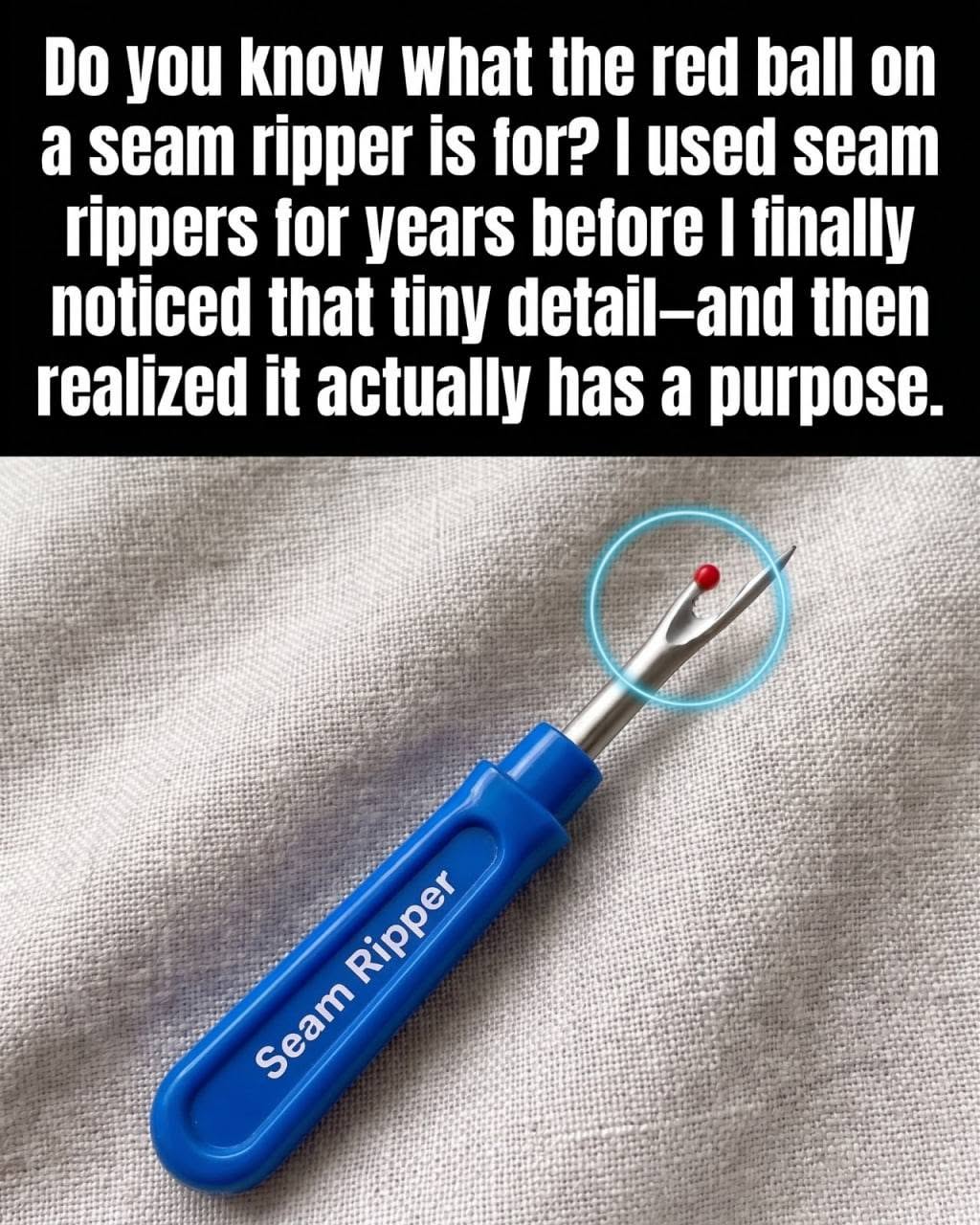
Because the blade is sharp, don’t simply toss your seam ripper loose
into a drawer.
If it came with a protective cap, use it.
Otherwise, store it in a sewing box or organizer where the sharp point won’t accidentally catch your fingers.