For stubborn buildup on the stovetop itself, choose a product specifically approved for that surface.
Different Stovetop Materials Need Different Care
Stainless steel: Use soft cloths and avoid aggressive scouring pads. Wiping with the visible grain can also help maintain its appearance.
Glass: Glass cooking surfaces can scratch, so use products and tools specifically intended for glass stovetops.
Enamel: Enamel is generally durable but can chip or become damaged through aggressive scraping. Softening hardened food before removal is usually preferable.
The Easiest Way to Prevent Heavy Buildup
The easiest grease to remove is fresh grease.
After cooking, wait until the stove is completely cool and wipe away new splashes and crumbs.
This prevents residue from being heated repeatedly until it becomes dark, hard, and difficult to remove.
Also try to clean boil-overs relatively soon after they happen. Sauces, milk, pasta water, soups, and sugary foods can leave increasingly stubborn deposits after repeated heating.
A Simple Weekly Routine
Once the stovetop has cooled, wipe it with a damp microfiber cloth and inspect the burner caps for fresh spills.
Look underneath the grates and around burner areas for hidden crumbs.
If the stove has seen particularly heavy use, clean removable components according to the manufacturer’s recommendations.
A few minutes of routine maintenance can prevent the type of buildup that eventually requires extensive scrubbing.
Frequently Asked Questions
Can Gas Burners Be Soaked Overnight?
Only do this if the appliance manufacturer specifically says prolonged soaking is acceptable. Some metals, coatings, and finishes can be affected by extended exposure to water or acidic solutions.
Can Gas Burners Go in the Dishwasher?
Do not automatically assume they are dishwasher-safe. Certain burner finishes may discolor or corrode. Check your appliance manual first.
Can White Vinegar Be Used on Every Stove?
No. Materials differ between appliances. Confirm that vinegar is suitable for your particular removable components and stovetop finish.
Why Is the Flame Uneven After Cleaning?
Possible explanations include a burner cap that is not seated properly, components that remain damp, or debris around burner openings.
Turn the burner off, allow everything to cool, and check the assembly against the manufacturer’s instructions.
Can I Use Dish Soap?
Mild dishwashing liquid is commonly useful for kitchen grease, but compatibility still depends on the appliance. Removable parts should be thoroughly rinsed and dried when washing is permitted.
Is Baking Soda Safe for Every Burner?
Not necessarily. Baking soda is mildly abrasive. Some painted, coated, polished, or delicate surfaces may require a gentler product.
Final Thoughts
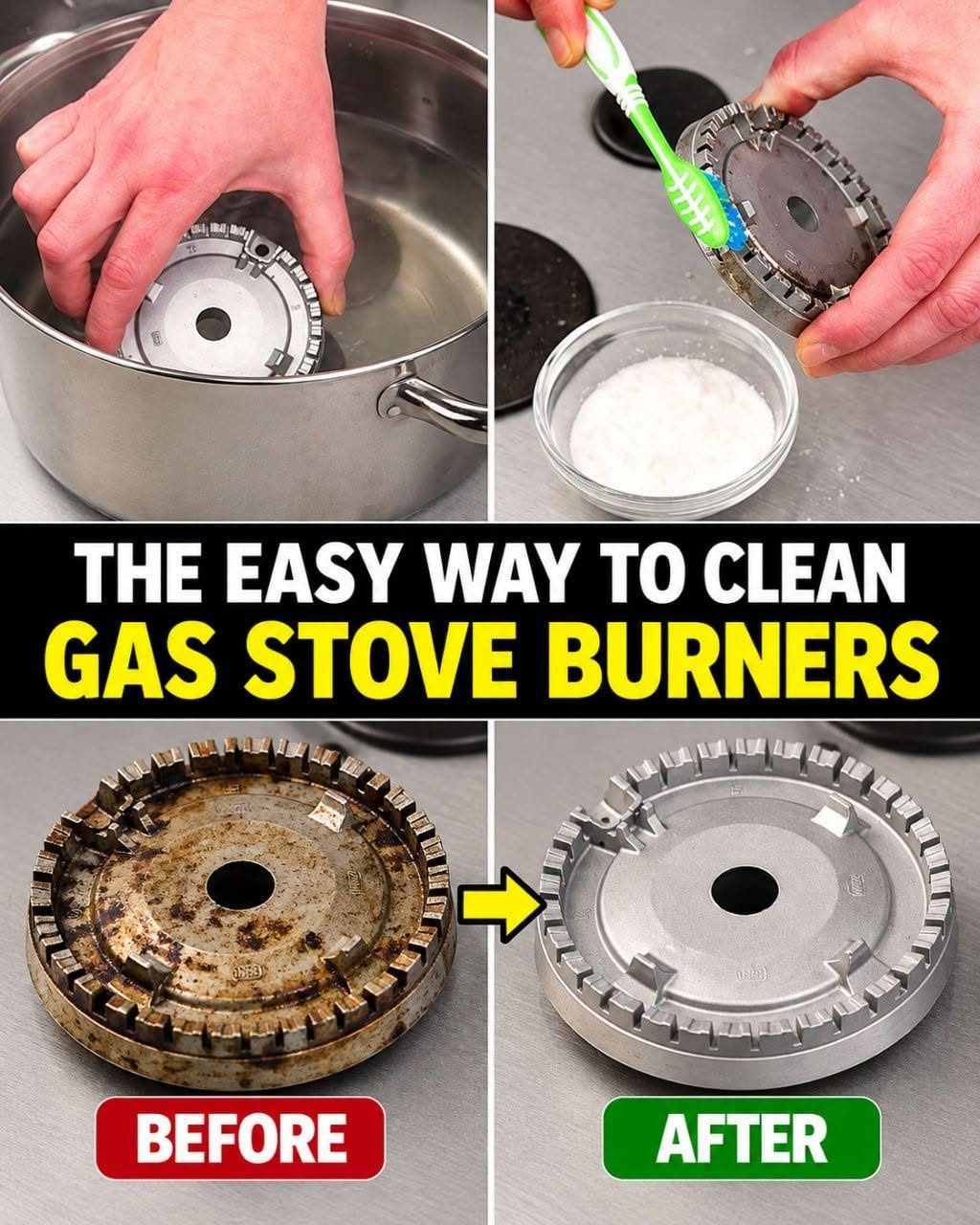
Cleaning gas stove burners does not have to involve complicated products. When compatible with your appliance, white distilled vinegar can help loosen residue during soaking, while baking soda can provide mild abrasive action afterward.
The biggest difference often comes from the simple details: letting residue soften, scrubbing gently, keeping fixed ignition components from becoming saturated, and allowing every removable part to dry completely before reassembly.
Most importantly, always follow the cleaning instructions for your specific stove. Different burner materials, finishes, and ignition systems require different care.
With regular wiping and an occasional deeper clean, stubborn buildup becomes much easier to manage—and your gas stovetop can stay cleaner without turning every cleaning session into a major chore.
Keep reading — tap the button below to continue.