How Often Should Kitchen Towels Be Washed?
There is no single schedule that applies to every household because kitchen towels are used in very different ways.
A towel used only to dry clean dishes may stay relatively clean longer than one repeatedly used to wipe hands, counters, spills, and food-preparation surfaces.
Kitchen towels should be replaced with clean ones more frequently when they become:
Wet for long periods
Greasy
Visibly stained
Used during raw-food preparation
Musty smelling
Used by many people throughout the day
Keeping several kitchen towels in rotation makes frequent replacement much easier.
How Often Should Bath Towels Be Washed?
Bath-towel washing frequency also varies according to use, household conditions, personal preference, and how well the towel dries between showers.
A towel that dries completely in a well-ventilated bathroom may remain fresher longer than one constantly left damp.
Wash bath towels sooner if they:
Develop a musty smell
Remain damp between uses
Are used after heavy sweating
Have visible soil or cosmetic residue
Are shared among several people
Are being used during an illness
Should Family Members Share Bath Towels?
Using separate towels is generally a simple way to reduce unnecessary sharing of skin oils, moisture, cosmetics, and microorganisms.
This can be particularly useful when someone has a contagious skin condition, respiratory illness, or another infection where shared personal items have been discouraged.
Labeling hooks or assigning towel colors can make individual towel use easier in larger households.
Should You Wash Face Towels Separately?
A facial washcloth or face towel may deserve its own consideration because it touches more sensitive skin.
People with acne-prone or easily irritated skin may prefer washing facial cloths more frequently and avoiding heavily soiled kitchen items in the same load.
This is not because an ordinary shared laundry load automatically becomes dangerous, but because keeping face cloths clean and free from heavy grease, fragrance residues, or kitchen soils can be more comfortable for sensitive skin.
What About Hand Towels?
Bathroom and kitchen hand towels are used frequently by multiple people and may stay damp for long periods.
They should be changed regularly, especially in busy households.
If a hand towel develops a stale or sour odor even after drying, laundering it sooner is sensible.
Why Towels Can Still Smell After Washing
If towels come out of the washing machine smelling unpleasant, the problem may not simply be that they were washed together.
Possible causes include:
Too much detergent
Overloading the machine
Leaving wet laundry in the washer too long
Using insufficient detergent for heavily soiled items
A dirty washing machine
Poor rinsing
Towels not drying completely
Repeated buildup of oils or fabric-softener residue
Correcting these basic laundering issues often makes a bigger difference than separating every towel category.
Do Towels Need an Extra Rinse?
Not every towel load requires one.
However, if you have used too much detergent, have especially thick towels, or notice persistent residue, an additional rinse may sometimes help.
Many modern machines also have settings designed for bulky or towel-heavy loads.
Drying Is an Important Part of Laundry Hygiene
Washing is only part of the process.
Towels should be dried thoroughly before being folded and stored.
Putting slightly damp towels into a closet or linen cupboard can create the perfect conditions for stale odors.
If using a clothes dryer, choose an appropriate setting for the fabric.
If air-drying, hang towels so air can circulate freely rather than stacking them over one another.
Sun Drying
Drying suitable towels outdoors can be an effective way to remove moisture and may leave fabrics smelling fresh.
Sunlight and airflow can help drying, but outdoor exposure is not a substitute for proper washing.
Colored towels may also fade with repeated strong sunlight exposure.
Do Dryer Temperatures Matter?
Dryer heat can contribute to reducing remaining microorganisms, but the appropriate temperature depends on the fabric.
More heat is not automatically better.
Very high temperatures may shrink, weaken, or damage some towels and can shorten the life of elastic, decorative details, or delicate fibers.
Follow care instructions and focus primarily on ensuring that the towels become completely dry.
Clean the Washing Machine Too
A washing machine that develops detergent residue, lint, moisture, mold, or unpleasant odors can transfer those smells to freshly washed laundry.
Follow the manufacturer’s recommendations for routine washer maintenance.
Depending on the machine, this may include:
Cleaning the detergent drawer
Wiping door seals
Cleaning filters where applicable
Running a designated washer-cleaning cycle
Leaving the door or lid open after use when recommended
Front-Loading Washers
Front-loading washers are efficient, but moisture can remain around door seals after use.
Wiping excess water and allowing the interior to ventilate according to manufacturer guidance may help reduce musty odors.
Do You Need a Laundry Sanitizer?
For normal everyday kitchen and bath towels, detergent and appropriate washing and drying are usually sufficient.
Laundry sanitizers may be useful in specific circumstances, such as certain heavily contaminated loads or situations in which additional microbial reduction is desired.
Use only products labeled for laundry and follow their instructions regarding dosage, water temperature, contact time, and fabric compatibility.
Never Mix Household Cleaning Chemicals Randomly
More chemicals do not automatically mean cleaner laundry.
Combining products without understanding their chemistry can damage fabrics and, in some cases, create dangerous fumes.
In particular, chlorine bleach should never be mixed with ammonia or acidic products.
Follow product labels rather than creating improvised mixtures.
What About Vinegar?
White vinegar is frequently suggested as a laundry additive because its acidity may help remove some mineral and detergent residue.
However, it is not a substitute for detergent and should not automatically be treated as a disinfectant.
Some washing-machine manufacturers also advise limiting or avoiding frequent vinegar use because repeated acid exposure may affect certain seals or components.
Check the appliance manual before making vinegar part of a regular routine.
What About Baking Soda?
Baking soda is sometimes used to help manage odors in laundry.
It can be useful in some washing situations, but it does not transform a normal wash cycle into medical-grade sterilization.
As with any laundry additive, follow machine and detergent guidance and avoid assuming that adding more products necessarily improves results.
A Practical Sorting System
You do not need an elaborate laundry system to manage towels safely.
A simple approach can work well:
Load 1: Normally used bath towels and lightly used compatible kitchen towels
Load 2: Heavily greasy or food-soiled kitchen cloths
Load 3: Contaminated laundry requiring additional precautions
Load 4: Delicate, strongly colored, or special-care fabrics
Separate microfiber when appropriate to reduce lint transfer and preserve performance
This method keeps the focus on the actual condition of the laundry rather than creating unnecessary loads for every room in the house.
Common Laundry Mistakes to Avoid
Several mistakes can make towels feel dirtier even when they have just been washed.
Leaving wet towels in a heap
Overloading the washer
Using excessive detergent
Using too much fabric softener
Leaving clean wet laundry sitting inside the machine for hours
Folding towels before they are fully dry
Mixing heavily contaminated kitchen cloths with lightly soiled personal towels
Ignoring care labels
Using harsh chemicals unnecessarily
A Simple Rule to Remember
Instead of asking only, “Can kitchen towels and bath towels be washed together?” ask four questions:
What touched this towel?
How dirty is it?
Can these fabrics and colors tolerate the same wash?
Can I wash and dry this load effectively without overloading the machine?
Those questions provide a far more useful answer than a blanket rule based on which room the towel came from.
Final Thoughts
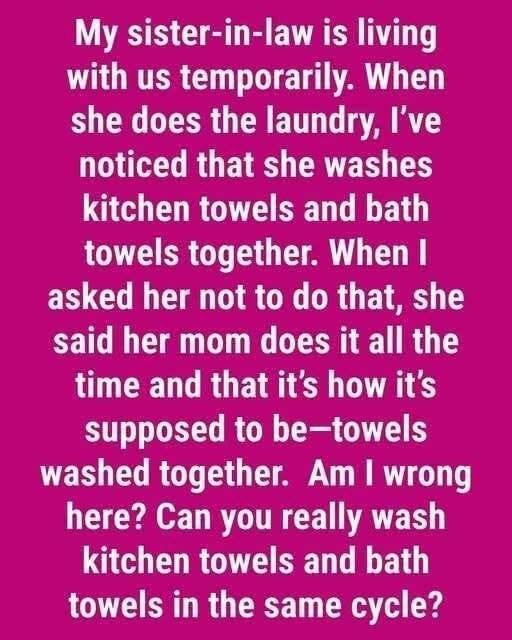
Kitchen towels and bath towels do not always need to be separated.
Lightly and normally soiled towels with compatible colors, fabrics, and care instructions can often be washed together successfully.
The situations that deserve greater caution involve heavy food contamination, raw meat juices, bodily fluids, illness-related laundry, mold, large amounts of grease, or special fabric-care requirements.
Good laundry hygiene is also about more than water temperature.
Using the correct amount of detergent, avoiding overloaded loads, washing items according to their soil level, rinsing effectively, and drying towels completely all contribute to better results.
Perhaps the most useful habit is simply paying attention to how each towel was used before tossing it into the hamper.
A kitchen towel used to dry clean glasses and a bath towel used after a shower may be perfectly reasonable washing companions.
A cloth used to wipe raw chicken juice is another matter entirely.
Sort by contamination, fabric, color, and soil level—not simply by whether the towel came from the kitchen or bathroom—and your laundry routine becomes both simpler and more sensible