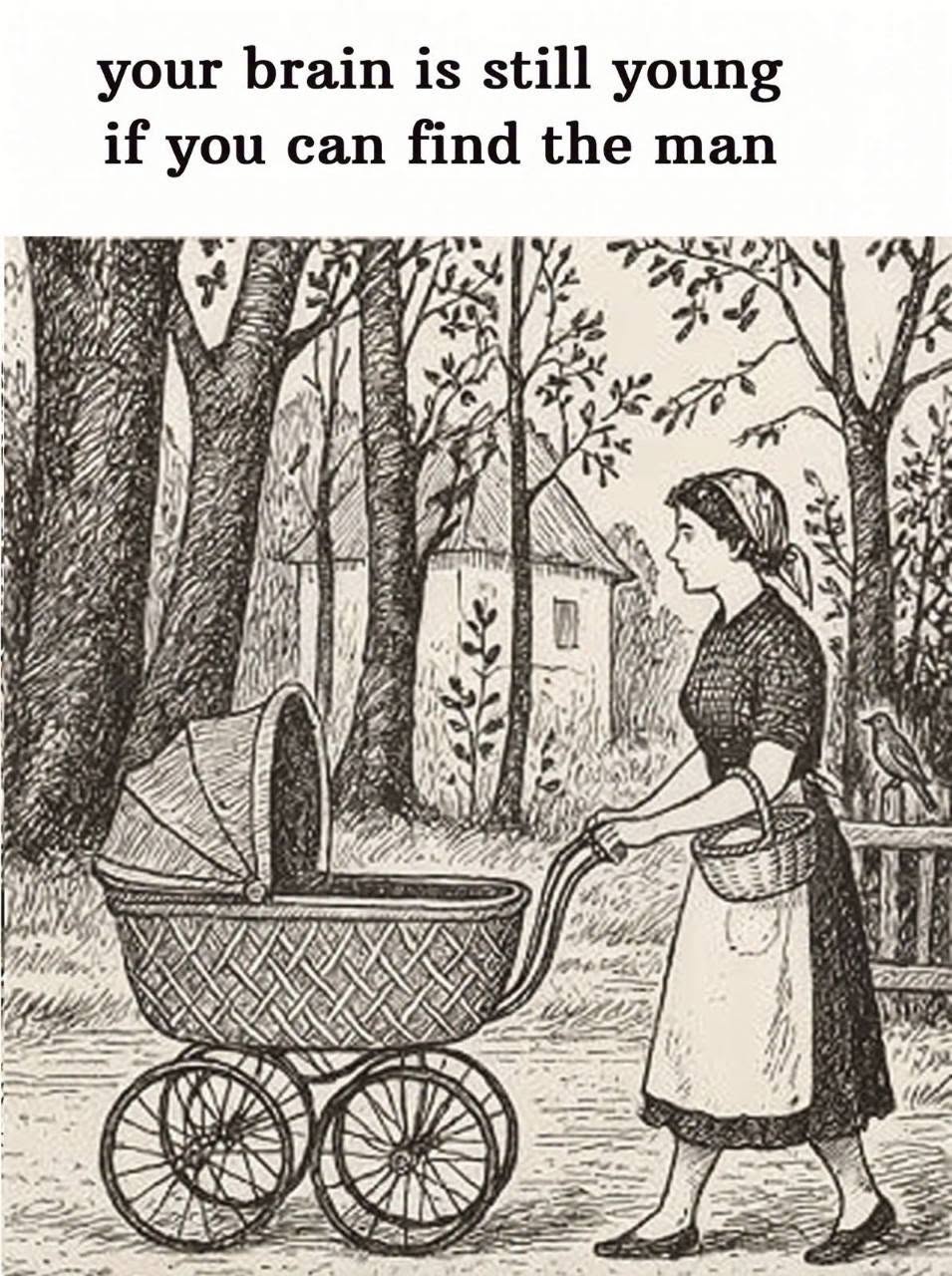
You scan.
You squint.
You move your phone.
You tilt your head.
You stare at the same tree for thirty seconds.
Nothing.
Then someone points him out.
And you’re thinking:
How did I not see that?!
That’s the reward.
Your brain gets a little burst of satisfaction from solving the perceptual problem.
It’s the same reason riddles, puzzles, spot-the-difference games, and visual challenges can be so engaging.
There’s a mystery.
There’s uncertainty.
And then there’s the satisfying moment of resolution.
What This Illusion Reveals About Your Brain
So what does this little hidden-man puzzle actually tell us?
Quite a lot.
Your Brain Looks for Patterns
Your visual system is constantly organizing information into patterns and meaningful objects.
That’s generally a good thing.
Without it, everyday life would be incredibly difficult.
Your Expectations Matter
What you expect to see can influence how you interpret what you’re looking at.
Tell someone to search for a face and suddenly certain shapes become much more noticeable.
Attention Is Selective
You can’t consciously focus on everything in a complex scene at once.
Your brain prioritizes.
That’s efficient—but it also means important information can sometimes slip past your attention.
Perception Can Change Without the Image Changing
This may be the coolest part.
The picture remains exactly the same.
Your eyes haven’t suddenly received a new photograph.
Yet your experience changes dramatically.
That’s a powerful reminder that seeing isn’t the same thing as simply recording.
Why Your Brain Sometimes Misses the Obvious
There’s a famous phenomenon in psychology called inattentional blindness.
It refers to failing to notice a visible object or event because attention is directed elsewhere.
A classic example is the famous “invisible gorilla” experiment, in which participants concentrating on a particular task sometimes failed to notice an unexpected person in the scene.
The hidden-man illusion isn’t the same experiment, but it demonstrates a related idea:
What you pay attention to influences what you notice.
You can be looking directly at something without consciously recognizing it.
That’s one of the most humbling things about human perception.
Try the Illusion Again
Now that you’ve read all this, go back to the image.
Look again.
You may find that the hidden man is much easier to see.
That’s not because the image changed.
It’s because you changed the way you were looking at it.
And that tiny difference is the entire magic of the puzzle.
A Fun Challenge to Try With Friends
Want to make this even more fun?
Show the illusion to someone without telling them exactly where the man is.
Give them a time limit.
Try:
30 seconds.
Then ask:
“Did you find him?”
If they haven’t, give them a vague hint instead of pointing directly at him.
For example:
“Look at the shapes rather than the objects.”
Or:
“Try looking at the negative space.”
Then watch their face when they finally see it.
That little moment of recognition is half the fun!!
Frequently Asked Questions
What is a hidden-image optical illusion?
It’s an image designed to conceal a recognizable figure or object within another visual scene. The hidden subject may share outlines, colors, shadows, or shapes with the surrounding image.
Why can’t I find the hidden man?
Your brain may have already organized the image into one interpretation, making it difficult to recognize the alternative. Attention, expectations, image complexity, and viewing distance can all affect how quickly you spot the figure.
Does finding the hidden man mean I’m intelligent?
No. These puzzles aren’t dependable measures of intelligence. They primarily test visual attention and your ability to recognize an alternative pattern within a complex image.
Why can I see the man after someone points him out?
Once you know what you’re looking for, your brain has a new interpretation available. The same lines and shapes can now be grouped differently, making the hidden figure much easier to recognize.
What is pareidolia?
Pareidolia is the tendency to perceive familiar meaningful patterns in ambiguous or random stimuli, especially faces. Seeing faces in clouds is a classic example.
What is figure-ground perception?
Figure-ground perception is the process of separating an object of attention—the figure—from its surrounding background, or ground. Hidden-image illusions often manipulate this relationship.
Can optical illusions trick your eyes?
More accurately, they can reveal how your visual system interprets information. Your eyes detect light and patterns, but your brain plays a major role in determining what those patterns mean.
Why do optical illusions look different to different people?
People can differ in attention, experience, expectations, viewing habits, and perceptual strategies. The construction of the illusion itself can also make one interpretation easier for some viewers than others.
The Bigger Lesson Behind the Tiny Hidden Man
Here’s what I love about these puzzles.
They seem like simple entertainment.
Find the man.
Solve the picture.
Move on.
But underneath that little challenge is a much bigger lesson about how we experience the world.
Your brain isn’t a passive camera.
It’s an interpreter.
It’s constantly taking incomplete information and turning it into a coherent picture of what’s happening around you.
Most of the time, that system works beautifully.
You recognize faces.
You identify objects.
You navigate rooms.
You read words.
You catch a ball.
You know where one object ends and another begins.
But optical illusions remind us that perception can be flexible.
Sometimes the brain makes one interpretation.
Then, with a little new information, it makes another.
And suddenly the impossible becomes obvious.
For Complete Cooking STEPS Please Head On Over To Next Page Or Open button (>) and don’t forget to SHARE with your Facebook friends