Temperature is particularly important.
Cold honey becomes thicker and flows more slowly.
Warm honey becomes less viscous and flows more easily.
That means the exact same honey can behave differently depending on whether the bottle has been sitting in a cool kitchen, a warm cupboard, or direct sunlight.
The bottle itself also matters.
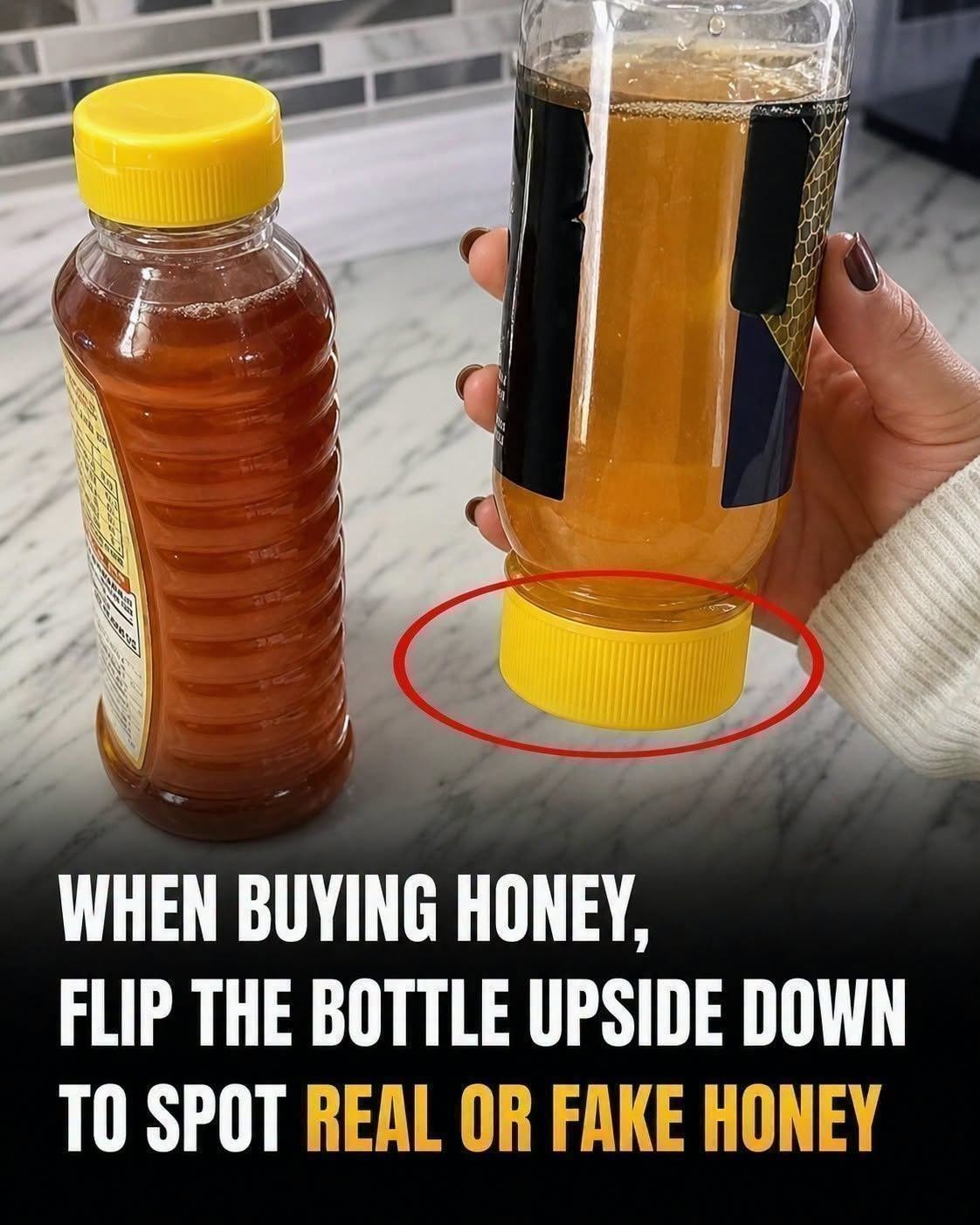
A narrow container can produce different visual effects from a wide jar.
The amount of honey, the size of the air bubble, and the angle of the bottle can all influence what you observe.
So while flipping the bottle can be an interesting demonstration of honey’s viscosity, it is not a reliable authenticity test.
Why the “Bubble Test” Became Popular
The attraction of the bottle test is easy to understand.
People want a quick way to protect themselves from poor-quality products.
Honey can be relatively expensive compared with ordinary sugar, and consumers naturally want to know whether they are getting what the label promises.
The idea that pure honey should behave in a particular way gives shoppers a simple visual rule.
If the bubble moves slowly, people may conclude the honey is real.
Continued on next page 👇(page 2)👇
If it moves quickly, they may suspect dilution.