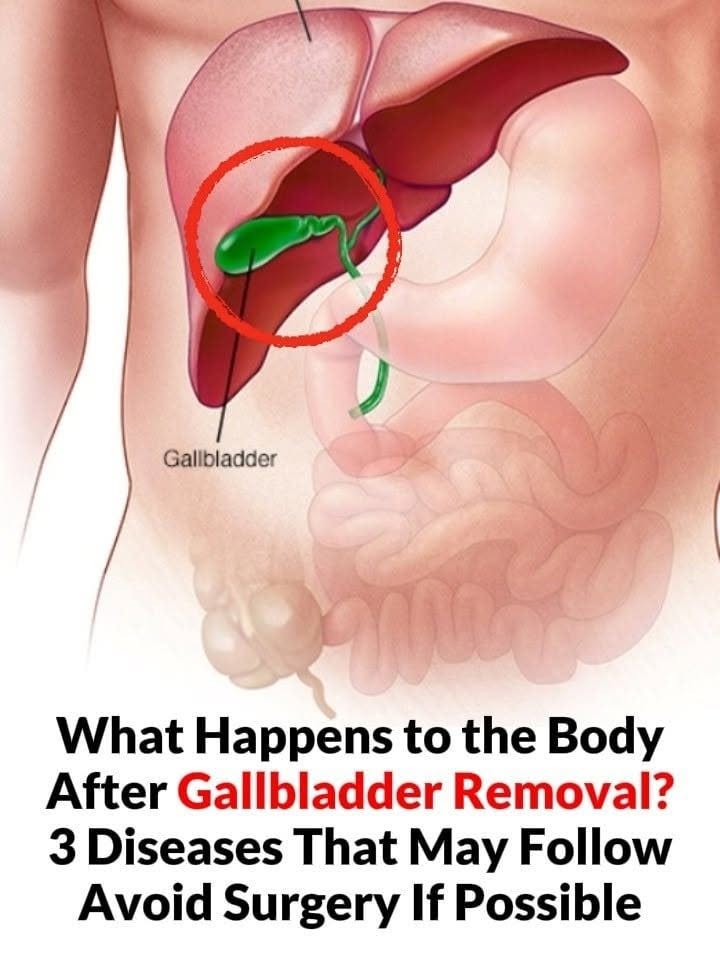
After Gallbladder Removal: 3 Conditions You Could Develop — Why You Should Avoid the Surgery When Possible

Gallbladder removal, medically known as cholecystectomy, is one of the most common abdominal operations. It is usually recommended when gallstones or gallbladder disease cause repeated pain, inflammation, infection, or other complications.

Many people live completely normal lives without a gallbladder. However, digestion does change after  surgery, and a minority of patients experience persistent digestive symptoms.

Gallstone treatment options

Claims that everyone should “avoid gallbladder surgery whenever possible” can be misleading. In some situations, delaying necessary surgery can lead to serious complications. The decision should always be based on an individual


medical assessment.

What Does the Gallbladder Actually Do?

The liver continuously produces bile, a digestive fluid that helps the body break down and absorb fats.

Post-surgery care products

The gallbladder acts mainly as a storage reservoir. Between meals, it collects and concentrates bile. When you eat—particularly a meal containing fat—the gallbladder contracts and releases bile into the small intestine.

When the gallbladder is removed, the liver continues producing bile.

The main difference is that bile is no longer stored and released in concentrated amounts. Instead, it flows more continuously from

Leave a Reply

Your email address will not be published. Required fields are marked *