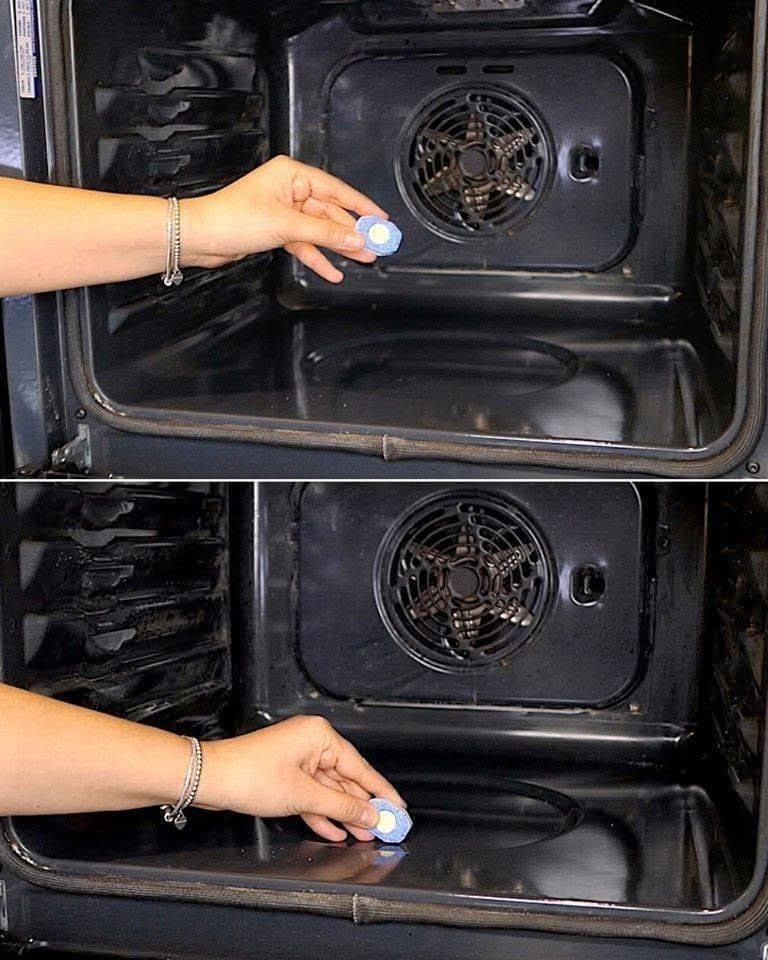
A sparkling oven can make the entire kitchen feel cleaner, but baked-on grease, food splatters, burnt sugar, and old cooking residue can be surprisingly difficult to remove. After months of roasting, baking, and reheating food, ordinary wiping may no longer be enough.
One popular household trick suggests using a dishwasher tablet to loosen stubborn oven grime. There is some logic behind the idea: dishwasher tablets are formulated to attack grease, starches, proteins, and dried food deposits. However, they were designed for dishwashers, not specifically for oven interiors, so the method needs to be used carefully.
A dishwasher tablet may help on certain washable oven surfaces, racks, and glass, but it is not suitable for every oven component. Some ovens have catalytic liners, special coatings, exposed heating elements, aluminum parts, sensitive seals, or self-cleaning surfaces that can be damaged by aggressive cleaning products.
The safest rule is simple: check your oven manufacturer’s cleaning instructions first. If the manual warns against alkaline detergents, abrasive cleaners, or products not specifically designed for ovens, follow those instructions instead of a viral cleaning hack.
Why Dishwasher Tablets Can Cut Through Grease
Dishwasher tablets are designed to remove stubborn food residues from dishes under hot-water conditions. Depending on the product, they may contain alkaline cleaning agents, surfactants, enzymes, water softeners, oxygen-based bleaching ingredients, or other compounds that help break down food and grease.
These ingredients explain why dissolved dishwasher detergent may loosen some baked-on oven residue.
However, strong cleaning chemistry also explains why gloves, thorough rinsing, and surface compatibility matter.
What a Dishwasher Tablet Can Help Remove
When used appropriately, a diluted tablet solution may help loosen:
Greasy cooking splatters
Dried food residue
Some baked-on deposits
Grease on removable oven racks
Residue on compatible oven glass
It may not completely remove extremely thick carbonized deposits in a single treatment.
If an oven has been neglected for years, several gentle cleaning sessions may be safer than trying to remove everything with one extremely concentrated cleaner and aggressive scrubbing.
What You Will Need
1 dishwasher tablet
Warm water
A small bowl or container
A soft sponge or microfiber cloth
A soft non-scratch brush if needed
Clean water for rinsing
Rubber or household cleaning gloves
Dry cloths or paper towels
Important Safety Check Before You Begin
Before applying dishwasher detergent inside an oven, identify what type of oven you have.
Modern ovens may include:
Standard enamel interiors
Pyrolytic self-cleaning ovens
Catalytic cleaning panels
Steam-cleaning systems
Special easy-clean coatings
These surfaces do not necessarily tolerate the same cleaning products.
Catalytic liners are particularly important because they have a porous coating designed to absorb and oxidize grease. Scrubbing them or coating them with strong detergent may damage their function.
If your oven has removable catalytic panels, consult the manual before applying any cleaning product.
Never Clean a Hot Oven With Dishwasher Detergent
The oven should be switched off and completely cool before cleaning.
Do not apply a dishwasher tablet solution and then turn the oven on to “activate” it unless the appliance manufacturer specifically recommends such a procedure.
Heating cleaning chemicals unnecessarily can produce irritating fumes, bake residue onto surfaces, or damage oven components.
Step 1: Remove the Oven Racks
Take out the racks, trays, and other removable accessories.
This gives you better access to the oven walls and allows the racks to be cleaned separately.
Before cleaning coated trays or specialty racks with dishwasher detergent, check whether their manufacturer allows alkaline cleaners.
Step 2: Remove Loose Debris
Use a dry cloth, soft brush, or handheld vacuum suitable for the task to remove loose crumbs and burnt food particles.
Removing dry debris first prevents it from turning into muddy residue once water is added.
Step 3: Prepare a Diluted Dishwasher-Tablet Solution
Place a dishwasher tablet in a bowl containing warm water and allow it to dissolve.
You do not need an extremely concentrated mixture.
A diluted cleaning solution is generally easier to spread, easier to rinse away, and less likely to leave a thick detergent film.
If the tablet has a dissolvable wrapper, follow the package directions. Do not handle concentrated detergent with bare hands for extended periods.
Why Gloves Are a Good Idea
Dishwasher detergents are formulated to clean food residues, not to be gentle hand soaps.
Concentrated detergent may irritate or dry the skin.
Wearing household cleaning gloves is therefore sensible, especially for anyone with sensitive skin, eczema, cuts, or irritation.
Step 4: Spot-Test Before Cleaning the Entire Oven
Before coating a large area, apply a small amount of diluted solution to an inconspicuous compatible surface.
Allow it to sit briefly, wipe it away, rinse, and inspect the area.
If the finish becomes dull, discolored, rough, or otherwise altered, stop using the method.
The dishwasher-tablet trick can be useful, but the safest version begins with something viral cleaning videos often skip: checking what your oven interior is actually made of.