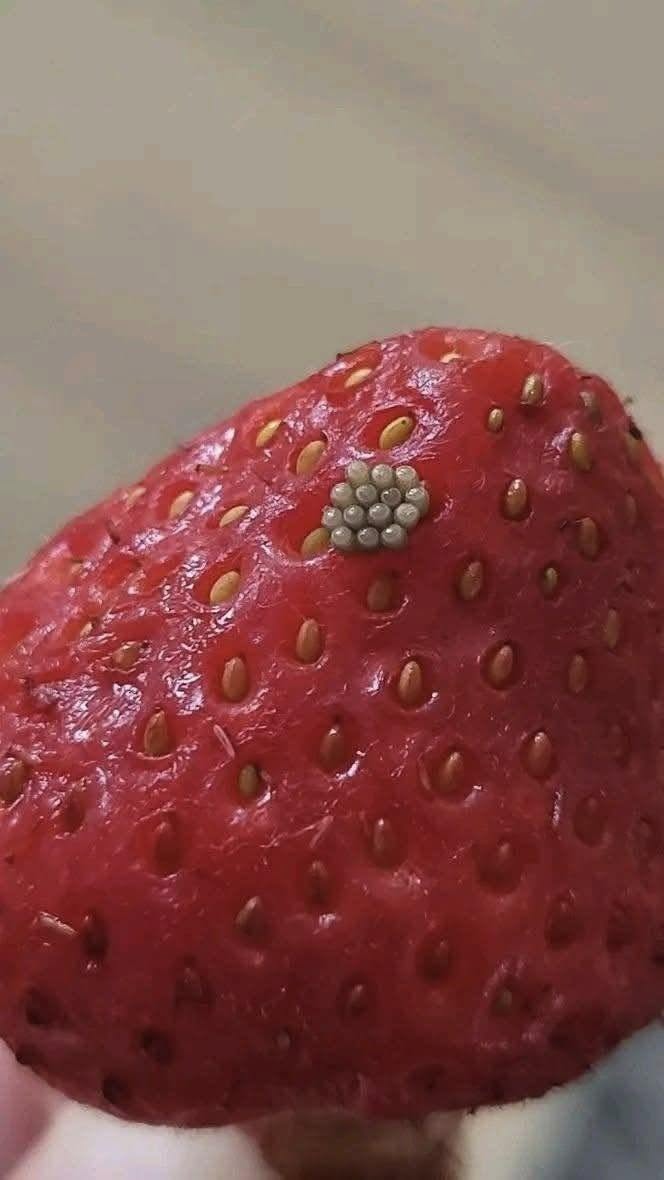
I soaked my berries in salt water and saw these white wiggling things come out. Should I just throw them away?
If you’ve seen the viral TikTok videos, you know the drill. A person places fresh strawberries in a bowl of salt water. They wait 15-20 minutes. Then tiny white worms emerge from the berries, wriggling in the water.
It’s disgusting. It’s alarming. And it makes you want to throw away every strawberry in your fridge.
I saw the video a few years ago, and I’ll admit, I didn’t eat strawberries for weeks. I couldn’t unsee those little white worms. Every time I bit into a berry, I imagined them crawling inside.
Then I did some research. I talked to entomologists (insect scientists). I read agricultural studies. And I learned that the truth is far less alarming than the videos suggest.
Let me walk you through what those white worms really are, whether they’re dangerous, and whether you should throw away your berries.
First, What Are Those White Worms?
The “worms” you’re seeing are almost certainly the larvae of the spotted wing drosophila (Drosophila suzukii), a type of fruit fly.
What it is: A small fly native to Southeast Asia that has spread to North America, Europe, and South America. Unlike other fruit flies that lay eggs in rotting fruit, the spotted wing drosophila lays eggs in ripening, still-healthy fruit.
How it works: The female fly uses her serrated ovipositor (egg-laying tube) to cut into the skin of a ripening strawberry (or blueberry, raspberry, blackberry, cherry). She lays eggs inside the fruit. The eggs hatch into tiny larvae (maggots) that feed on the fruit from the inside.
What you’re seeing: The larvae are small (2-3 mm long), white to pale yellow, and worm-like. When you soak the berries in salt water, the salt irritates the larvae, causing them to exit the fruit.
Important: These are not parasitic worms. They don’t infect humans. They’re fruit fly larvae. They eat fruit, not people.
Are They Dangerous?
No. The spotted wing drosophila larvae are not harmful to humans.
The science:
They are not parasitic. They cannot survive in the human digestive system.
They are not toxic. They don’t produce venom or poison.
They are not known to transmit diseases to humans.
They are essentially a tiny bit of extra protein (if you accidentally eat them).
The worst-case scenario: Eating a few larvae might cause a slight “ick” factor, but it won’t make you sick. Your stomach acid will break them down like any other protein.
The real risk: None. The larvae are considered a cosmetic issue, not a food safety issue.
Why Does Salt Water Make Them Come Out?
The salt water soak is not a “purification” step. It’s a diagnostic tool.