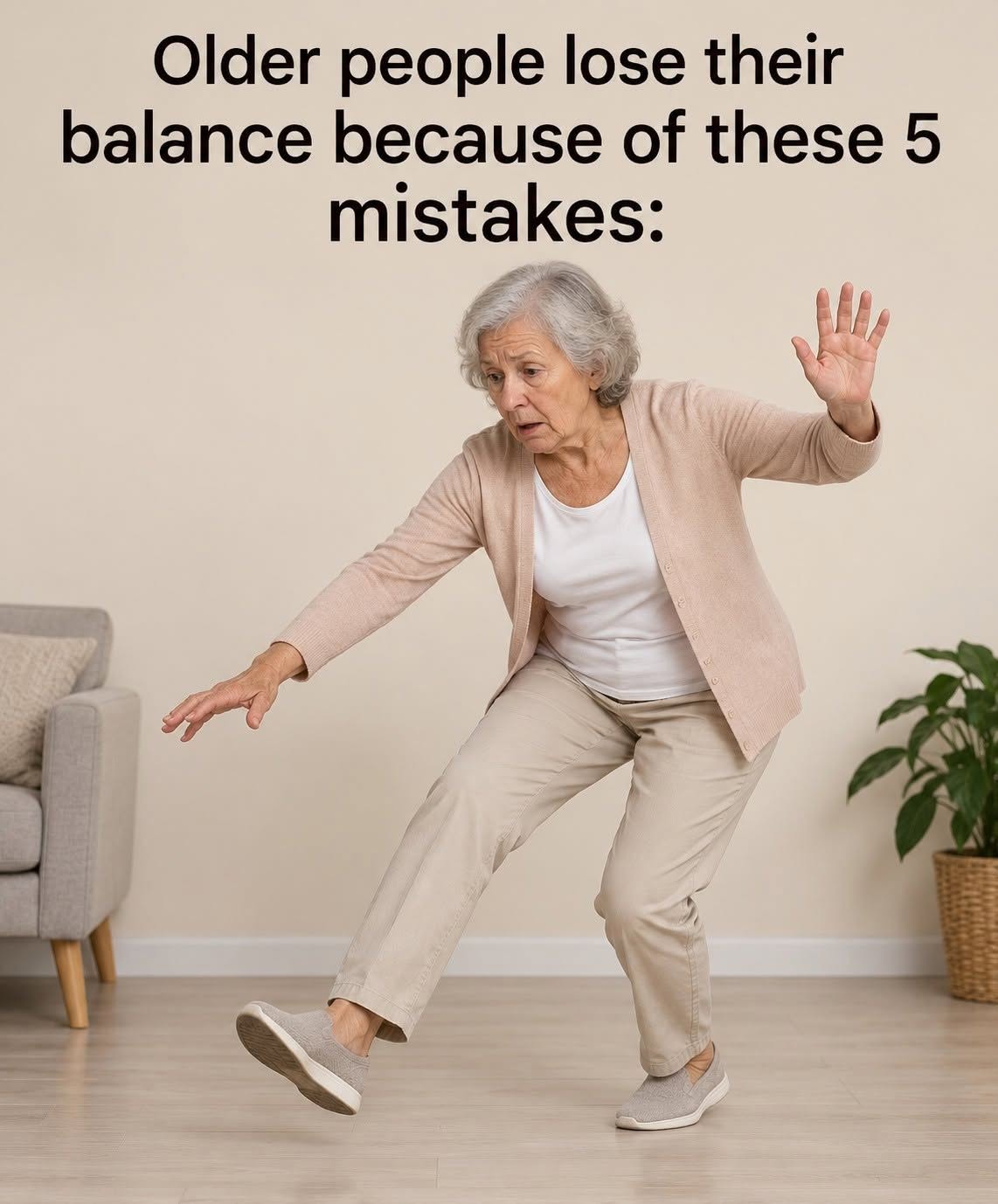
Footwear is surprisingly important.
Loose slippers, smooth soles, high heels, or shoes that don’t fit correctly can make walking less stable.
The National Institute on Aging recommends nonskid, rubber-soled, low-heeled shoes and advises against walking on stairs or floors in socks or footwear with smooth soles.
Look for footwear that:
- Fits securely
- Supports the foot
- Has good traction
- Is comfortable to walk in
- Doesn’t easily slip off
The CDC also identifies foot pain and poor footwear as modifiable fall risk factors.
Sometimes a seemingly small change in footwear can make everyday movement feel more secure.
3. Ignoring Dizziness or Feeling Lightheaded
Feeling dizzy or unsteady shouldn’t automatically be dismissed as “just getting older.”
Balance problems can have numerous causes.
The National Institute on Aging notes that certain medications, inner-ear disorders and conditions involving the heart, blood vessels, thyroid, nerves, vision or diabetes can contribute to dizziness and balance difficulties.
Blood pressure can also fall when someone stands up from a sitting or lying position, causing them to feel wobbly.
One simple habit that may help some people is standing up slowly rather than suddenly.
Persistent or recurring dizziness deserves medical evaluation rather than simply trying to live with it.
4. Overlooking Hazards Around the Home
Sometimes the problem isn’t your balance.
It’s your environment.
A loose rug, electrical cord, poorly lit hallway, slippery bathroom floor or cluttered walkway can turn a small misstep into a serious fall.
CDC recommendations for making a home safer include removing tripping hazards, improving lighting, installing grab bars around the bathroom and putting railings on stairs.