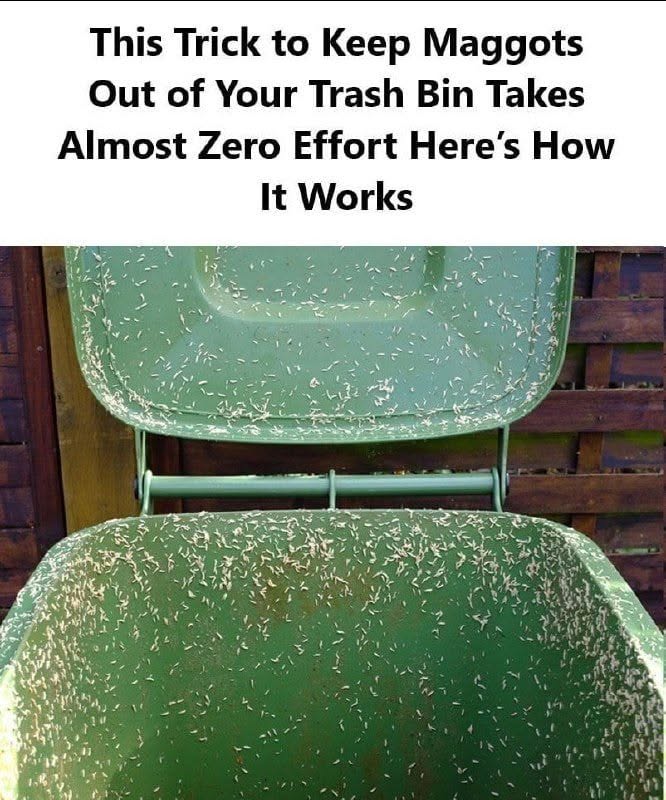
Opening a trash bin and discovering dozens of small white larvae crawling around the lid, sides, or bottom can be an unpleasant surprise. The problem is especially common during warm weather, when food waste decomposes quickly and flies are highly active.
Although maggots can seem to appear almost overnight, they do not appear spontaneously. They are the immature larval stage of certain flies. An adult fly finds suitable organic material, lays eggs, and under favorable conditions those eggs can hatch surprisingly quickly.
The good news is that a trash-bin infestation is usually manageable. Removing contaminated waste, cleaning away organic residue, allowing the container to dry, and preventing flies from reaching future food waste can make a major difference.
The most effective strategy is not simply killing the larvae you can see. It is understanding why flies selected the bin in the first place and removing the conditions that allowed them to reproduce.
What Exactly Are Maggots?
Maggots are fly larvae. They represent one stage in the normal fly life cycle rather than a separate type of insect.
The general cycle is:
Adult fly
Egg
Larva, commonly called a maggot
Pupa
Adult fly
Different fly species prefer different materials, but household garbage containing decomposing food can provide an attractive place for several common flies to lay eggs.
Meat, fish, cooked leftovers, spoiled food, pet waste, and other moist organic materials can be especially attractive.
Why Maggots Seem to Appear Overnight
The speed is one reason people find infestations so confusing.
You may look inside the bin one day and notice nothing unusual. Shortly afterward, numerous larvae may be visible.
The eggs are small and can easily go unnoticed. Warm conditions can accelerate fly development, and the larvae become much easier to see after hatching.
What appears to be a sudden invasion may therefore have started earlier when a fly gained access to exposed waste and deposited eggs.
Why Trash Bins Are So Attractive to Flies
A garbage container can accidentally provide several things flies need in one place: food, moisture, warmth, organic material, and a relatively protected environment.
When the lid is repeatedly opened or does not close properly, flies may also have easy access to the contents.
The Biggest Attraction: Food Waste
Not all household trash is equally attractive to flies.
Dry cardboard, empty packaging, and clean paper are generally much less appealing than moist decomposing food.
Common problem items include raw meat trimmings, cooked meat leftovers, fish and seafood scraps, animal bones with food attached, food-soiled packaging, spoiled leftovers, fruit waste, some vegetable scraps, pet food, and pet waste.
Animal-based food scraps can become particularly strong-smelling as they decompose in warm conditions.
Moisture Makes the Situation Worse
Leaking garbage bags, discarded liquids, food juices, rainwater, condensation, and wet food scraps can create a damp layer at the bottom of the bin.
This moisture combines with decomposing organic material and can produce exactly the environment flies seek.
A clean, relatively dry container is much less inviting than one containing a warm mixture of food residue and liquid.
Heat Can Accelerate the Problem
Trash bins left in strong summer sun can become very warm.
Heat accelerates food decomposition, increases odors, and can support rapid insect activity.
Whenever practical, keeping an outdoor garbage container in a cooler shaded location can help slow decomposition.
The bin still needs to remain accessible for collection and positioned according to local waste rules.
Bad Odors Are More Than an Annoyance
A strong garbage smell is often evidence that organic material is decomposing.
Odors can also attract flies searching for suitable places to feed and reproduce.
Trying to cover the odor with perfume does not remove the underlying attraction.
Cleaning food residue, controlling moisture, and securely containing waste are more important than simply making the bin smell better.
Step One: Remove the Source
If you already have an infestation, begin by dealing with the garbage itself.
Wear suitable household cleaning gloves and avoid direct contact with decomposing waste.
Seal contaminated garbage appropriately and dispose of it according to your local waste-collection rules.
If collection day is approaching, moving the waste out of the bin during scheduled collection is often the simplest way to eliminate the larvae’s primary food source.
Do not leave loose infested garbage elsewhere around the property, where flies may simply continue breeding.
Check for Torn or Leaking Bags
Once the bin is emptied, inspect the bottom.
A surprisingly common cause of recurring odors is a small amount of food liquid that leaked through a garbage bag and remained underneath it.
Look for meat juices, food residue, sticky liquid, grease, pieces of food, damaged bags, and residue around the rim.
Removing visible maggots without removing these materials may provide only temporary relief.
Getting rid of the larvae you can see is only half the job—the hidden food residue at the bottom, rim, and lid can determine whether flies return.