Our personality is our strongest asset. The traits we possess not only help shape the connections we make with those around us, but also affect the ways we face challenges and express ourselves.
However, just like the strengths we possess, we also have flaws—those tiny imperfections that make us human.
Accepting our virtues and flaws help us learn and grow. The truth is that not only our strengths, but also our vulnerabilities truly define who we are as individuals.
If you ever wondered what your “worst flaw” might be, maybe you should take the test below and discover.
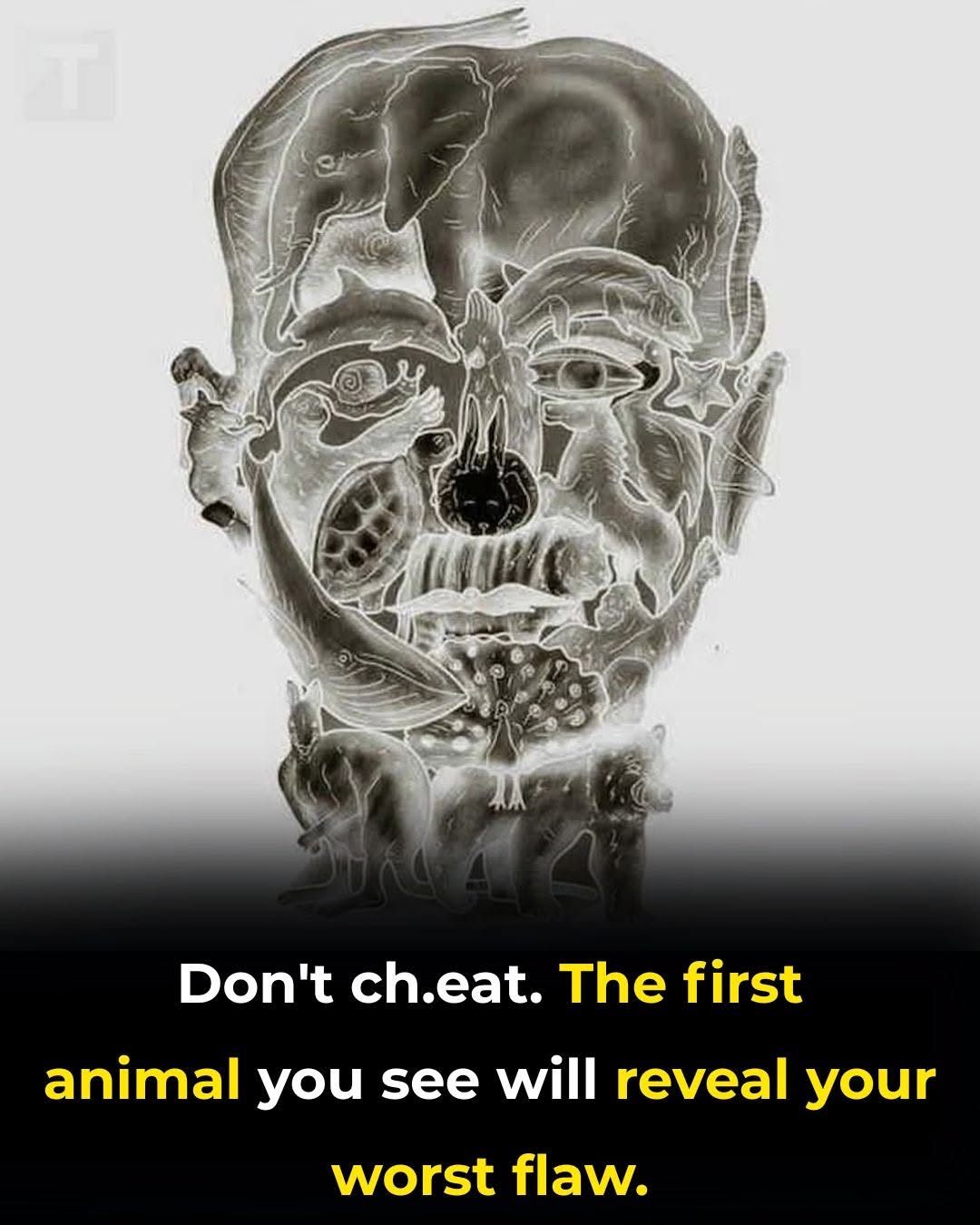
The image below resembles a full human face, but it is made up of different animals, and each of those animals is a representation of a flaw one possesses.
Now, if you want to learn what your “worst flaw” is, take a quick glance at the photo and identify the first animal you notice.
Of course, these tests aren’t backed by science, but many enjoy them for entertainment.
Each of the animals is associated with a unique characteristic.
While the elephant hints at stubbornness, the iguana represents someone who is emotionally distant.
Further, the pig stands for indulgence, the cricket for anxiety, and the horse for pride.
Spotting the dolphin first may indicate impulsiveness, the bear is related to rigidity, and the fox represents avoidance.
The rest of the animals and the traits they reveal are as follows: the rabbit shows insecurity, the toucan reveals thatyou are an attention-seeker, the kangaroo shows inconsistency, and the peacock vanity.
Noticing the turtle first may indicate that you are a cautious person, while the whale might symbolize emotional isolation. The gorilla indicates dominance, the duck reveals mood swings, the starfish may show you are someone escaping reality, the snake reveals you are a manipulative individual, and the sloth bear is related to procrastination.
Further, the bird shows instability, and the snail resistance to change.
Which animals have you spotted first?
What Does the First Animal You Notice Reveal About Your Personality? A Deeper Look at Your Hidden Traits
At first glance, an optical illusion may seem like nothing more than an interesting picture. Yet certain images can capture our attention in unexpected ways. A face made from multiple animals, for example, invites the brain to search for familiar shapes and patterns. One person may immediately notice an elephant, while another sees a rabbit, a fox, or a dolphin.
These differences make visual personality games entertaining. They encourage us to pause, look again, and think about the characteristics we recognize in ourselves.
The animal you notice first does not scientifically reveal your personality or identify your greatest weakness. What catches your eye can depend on image design, visual attention, expectations, and even the size or contrast of particular shapes.
Still, the symbolic meanings attached to these animals can provide an enjoyable starting point for self-reflection.
Rather than treating any result as a fixed label, consider it an invitation to ask yourself a few questions: Do I sometimes become too stubborn? Do I avoid difficult conversations? Am I overly concerned about what other people think? And which habits would I like to improve?
Let’s explore the personality traits associated with each animal in greater detail.
1. The Elephant: When Determination Becomes Stubbornness
The elephant is often associated with strength, loyalty, intelligence, and a remarkable memory. In this personality game, however, it represents stubbornness.
People who identify with this symbol may have strong convictions and a clear sense of what they believe is right. They are often dependable and persistent, especially when working toward an important goal.
These qualities can be valuable. A determined person does not give up easily when circumstances become difficult. They may remain committed to their responsibilities even when others lose motivation.
However, determination can become a problem when someone refuses to consider another point of view.
For example, imagine a disagreement between friends. One person may continue defending an opinion even after new information shows that their original understanding was incomplete. Instead of listening, they become more focused on proving that they are right.
This is where confidence can turn into stubbornness.
A possible area for growth: Practice listening without immediately preparing a response. Changing your mind after receiving better information is not a sign of weakness. It is a sign of maturity.
2. The Iguana: Emotional Distance and Difficulty Opening Up
The iguana symbolizes emotional distance in this interpretation.
Some people are naturally private. They may prefer to process their feelings alone rather than discussing personal matters with friends or family.
Being reserved is not necessarily a flaw. It can reflect independence, careful thinking, and a desire to protect personal boundaries.
The difficulty begins when emotional distance prevents meaningful connections.
A person may care deeply about someone but rarely express affection. They may avoid discussing problems, withdraw during disagreements, or appear indifferent when others need emotional support.
Over time, people around them may misunderstand their silence as a lack of interest.
In reality, the person may simply struggle to communicate vulnerable feelings.
A possible area for growth: Start with small expressions of appreciation. A sincere thank-you, an honest conversation, or a simple message asking how someone is doing can strengthen relationships without requiring you to reveal everything about yourself.
3. The Pig: Indulgence and the Desire for Immediate Comfort
The pig represents indulgence and excessive attachment to pleasure.
Everyone enjoys comfort. We like good food, relaxing weekends, entertainment, shopping, and moments when we can forget our responsibilities.
There is nothing wrong with enjoying these things. Problems arise when immediate pleasure repeatedly takes priority over long-term well-being.
For example, someone may spend money impulsively because shopping makes them feel better temporarily. Another person may continually postpone exercise, work, or important responsibilities in favor of activities that offer immediate enjoyment.
This pattern is sometimes described as prioritizing short-term rewards over long-term goals.
The challenge is not to eliminate pleasure but to develop balance.
A possible area for growth: Before making an impulsive decision, pause and ask whether the choice will still feel satisfying tomorrow. Small moments of reflection can help prevent habits that create unnecessary stress later.
4. The Cricket: Anxiety and Overthinking
In this visual personality interpretation, the cricket represents anxiety.
People who relate to this symbol may spend considerable time thinking about possible problems, imagining negative outcomes, or worrying about situations they cannot fully control.
They may replay conversations in their minds, wondering whether they said something inappropriate. They may also feel uncomfortable when plans change unexpectedly.
This tendency can sometimes make a person careful and prepared. Thinking ahead can help identify risks and prevent mistakes.
However, excessive worry can become exhausting.
A person may spend so much time imagining what could go wrong that they struggle to enjoy what is happening in the present.
They may also confuse the possibility of a problem with the certainty that it will happen.
A possible area for growth: Separate facts from assumptions. Ask yourself what you actually know, what you are imagining, and what practical action you can take. If anxiety regularly interferes with sleep, relationships, or daily activities, professional support may be helpful.
5. The Horse: Pride and the Need to Maintain an Image
The horse is often associated with freedom, energy, elegance, and independence. In this game, it represents pride.
Pride can be a healthy source of self-respect. It allows people to recognize their achievements and maintain personal dignity.
However, excessive pride can make it difficult to admit mistakes or ask for help.
Some people feel that apologizing means losing authority. Others avoid admitting uncertainty because they fear appearing weak.
In relationships, this can create unnecessary distance. Two people may both want to repair a disagreement, yet neither is willing to make the first move.
The desire to protect one’s image can become more important than resolving the actual problem.
A possible area for growth: Remember that an apology does not erase your worth. Being able to say “I was wrong” or “I need help” can demonstrate emotional strength rather than weakness.
6. The Dolphin: Impulsiveness and Acting Before Thinking
The dolphin represents impulsiveness.
People who identify with this symbol may be energetic, spontaneous, and eager to experience new things. They often enjoy opportunities that appear unexpectedly.
Spontaneity can make life exciting. It may encourage creativity, adventure, and the willingness to try something unfamiliar.
However, acting too quickly can also lead to avoidable mistakes.
Someone may make an important purchase without considering their budget, send an angry message during an argument, or agree to a commitment without thinking about the time required.
The consequences may only become clear afterward.
A possible area for growth: Introduce a short pause before major decisions. For expensive purchases, emotional messages, or important commitments, give yourself time to think through the consequences.
7. The Bear: Rigidity and Resistance to Other Perspectives
The bear symbolizes rigidity.
People associated with this animal may value structure, routine, and familiar ways of doing things. They often prefer clear expectations and predictable environments.
These characteristics can make them reliable and organized.
However, excessive rigidity can make it difficult to adapt when circumstances change.
For example, someone may insist on following an old method even when a new approach would be more efficient. They may also struggle to accept different lifestyles, opinions, or working habits.
The world is constantly changing, and flexibility is an important skill.
A possible area for growth: Try occasionally doing something differently. Listen to an unfamiliar perspective, experiment with a new method, or allow another person to take the lead.
You do not need to abandon your principles to become more open-minded.
8. The Fox: Avoidance and Escaping Difficult Situations
The fox is commonly associated with cleverness and adaptability. In this personality game, it represents avoidance.
Avoidance occurs when someone repeatedly postpones or escapes situations that make them uncomfortable.
This may involve difficult conversations, important decisions, emotional responsibilities, or tasks that seem overwhelming.
At first, avoiding a problem can bring relief. If a conversation feels uncomfortable, not having it may make the day easier.
Unfortunately, unresolved problems rarely disappear simply because they are ignored.
A delayed conversation can become a larger disagreement. An unfinished task may create additional pressure. A financial issue may become more difficult to manage.
A possible area for growth: Break difficult situations into smaller steps. Instead of trying to solve everything at once, identify one action you can take today.
Facing a problem gradually is often easier than waiting until it becomes impossible to ignore.
9. The Rabbit: Insecurity and Fear of Judgment
The rabbit represents insecurity.