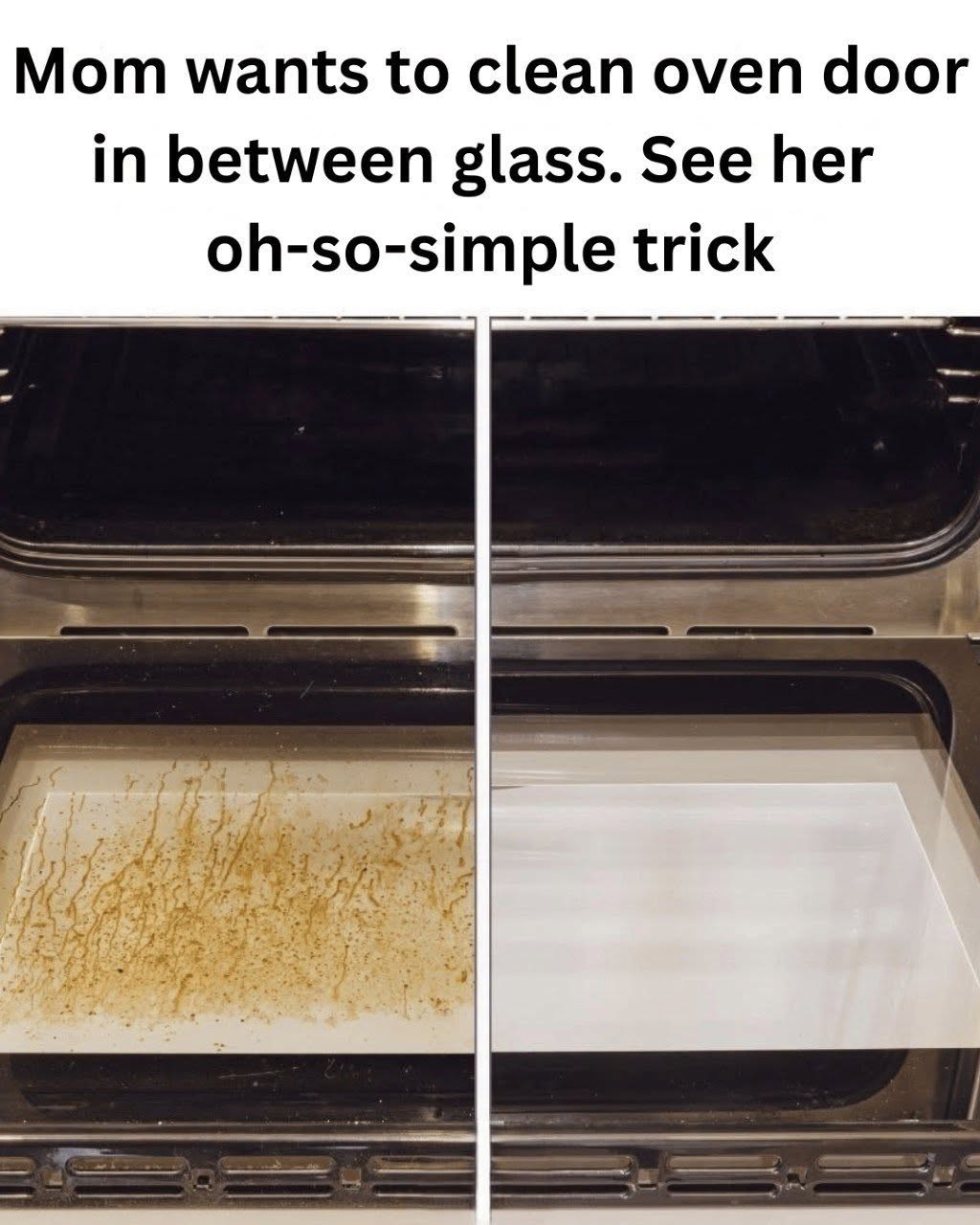
Few kitchen cleaning tasks feel as frustrating as staring at a cloudy, grease-splattered oven door. You can scrub the interior, wipe down the stovetop, and polish the exterior, but that baked-on grime between the glass layers or clinging to the inside of the door seems almost impossible to remove.
The good news? You don’t need expensive, fume-heavy oven cleaners. A simple, natural trick using common household ingredients can restore your oven door glass to a crystal-clear shine—with minimal elbow grease.
Why Oven Door Glass Gets So Dirty
CAUSE
RESULT
Baked-on food splatters Grease and food particles carbonize under high heat
Steam and condensation Creates a cloudy film between glass panels (if double-paned)
Built-up grime over time Becomes harder to remove with each use of the oven
Regular wiping after spills helps, but once grime has baked on multiple times, standard all-purpose cleaners often fail.
The Simple Trick: Baking Soda and Vinegar
This classic natural cleaning duo works exceptionally well on oven door glass.
What You’ll Need
INGREDIENT / TOOL PURPOSE
Baking soda Mild abrasive; lifts baked-on grime
White vinegar
Dissolves grease and reacts with baking soda to loosen debris
Dish soap (optional) Cuts through heavy grease
Microfiber cloth or sponge Non-scratch scrubbing
Squeegee or razor blade scraper For stubborn, thick buildup (use with extreme care)
Spray bottle For vinegar application
Old toothbrush For corners and edges
Step-by-Step Instructions
Step 1: Prepare the Oven
ACTION WHY IT MATTERS
Ensure the oven is completely cool Working on a hot surface is dangerous and can cause burns
Remove loose debris Wipe away loose crumbs with a dry cloth
Step 2: Make a
Baking Soda Paste
ACTION DETAILS
Mix ½ cup baking soda with 2–3 tablespoons of water Adjust to form a spreadable paste (not too runny)
Add 1 tablespoon of dish soap (optional) Helps cut through heavy grease
Step 3: Apply the Paste
ACTION DETAILS
Spread the paste evenly over the inside of the oven door glass Focus on areas with visible baked-on grime
Avoid getting paste into heating elements or vents Can cause smoking or damage
Step 4: Let It Sit
TIME EFFECT
15–30 minutes For light to moderate buildup
1–2
hours or overnight For thick, stubborn, baked-on grease
The longer the paste sits, the more it softens the carbonized grime.
Step 5: Spray with Vinegar
ACTION REACTION
Fill a spray bottle with white vinegar Vinegar reacts with baking soda to create a fizzing action
Spray generously over the dried paste The fizzing helps lift grease and debris
Step 6: Scrub Gently
ACTION TOOL
Wipe away the loosened paste Damp microfiber cloth or sponge
Use circular motions for stubborn spots Non-abrasive sponge
Reach corners and edges Old toothbrush
Step 7: Tackle
Remaining Burnt Spots
FOR THIS BUILDUP USE THIS TOOL CAUTION
Thin, stubborn residue Plastic scraper or old credit card Safe for glass
Very thick, baked-on carbon Razor blade scraper Hold at a 45-degree angle; never scrape dry glass
Critical warning: Never use a razor blade on warm glass. The glass can crack or shatter. Ensure the oven is completely cool.
Step 8: Rinse and Dry
ACTION DETAILS
Wipe the glass with a clean, damp cloth Removes all remaining residue
Dry with a microfiber cloth Prevents water spots and streaks
Repeat