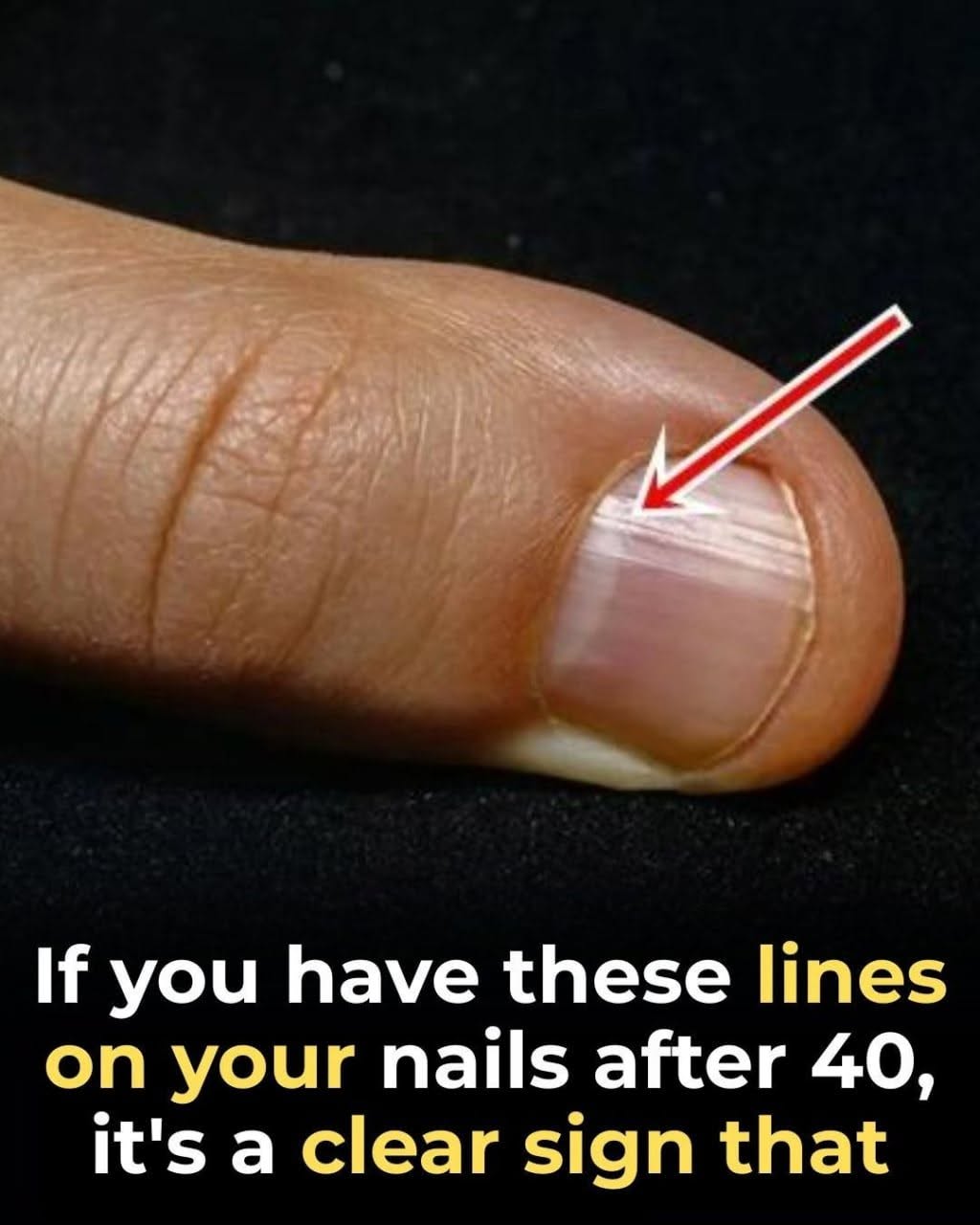
Your Nails Could Be Sending Warning Signs — Especially After 40: What Those Lines Really Mean
Have you recently noticed lines, ridges, or changes in the appearance of your fingernails?
If you’re over 40, you may have heard that nail changes are a warning sign of a serious health problem. While that claim can sound alarming, the reality is more nuanced. Many nail changes are completely harmless and become more noticeable with age. Others, however, can sometimes provide clues that deserve medical attention.
So, what should you actually look for?
Vertical Nail Ridges Are Often a Normal Part of Aging
One of the most common changes people notice as they get older is the appearance of vertical lines running from the cuticle toward the tip of the nail.
These ridges are particularly common with age and, by themselves, are usually not a reason for concern. Mayo Clinic notes that vertical nail ridges can become more prominent as people get older because of normal changes in nail growth.
This means that seeing a few fine vertical lines after 40 does not automatically mean something is wrong with your health.
Horizontal Grooves Are Different
Horizontal grooves deserve a little more attention.
These lines are sometimes called Beau’s lines. They occur when nail growth is temporarily interrupted or slowed. Possible triggers include a significant illness, high fever, major physical stress, surgery, or trauma affecting the nail.
Because fingernails grow slowly, a groove may remain visible for some time before eventually moving toward the end of the nail and growing out.
If several nails suddenly develop prominent horizontal grooves, especially after an illness or other major health event, it is worth mentioning the change to a healthcare professional.
Spoon-Shaped Nails Can Have Another Meaning
Another unusual nail change is known as koilonychia, or spoon-shaped nails.
Instead of curving outward normally, the nail becomes unusually thin and develops a depression in the center, creating a spoon-like appearance.
The American Academy of Dermatology notes that spoon-shaped nails can sometimes be associated with iron deficiency, although there can be other causes as well.
The important point is that you shouldn’t assume you have an iron deficiency simply because your nails look different. A healthcare professional can determine whether testing is appropriate.
What About Nails That Curve Dramatically?
Some people naturally have curved nails, but a new change in nail curvature can sometimes be significant.
A condition called nail clubbing causes the nails to curve downward while the fingertips may become wider or swollen. It can be associated with certain heart, lung, liver, or gastrointestinal conditions.
If your nails have gradually developed a noticeably different shape, particularly if the change is new, it’s a good idea to have them evaluated rather than trying to diagnose the cause yourself.
Nail Color Changes Shouldn’t Always Be Ignored
Changes in nail color can happen for many harmless reasons, including staining, injury, nail polish, or fungal infections.
However, some persistent color changes can occasionally be associated with underlying medical conditions. The American Academy of Dermatology lists several nail color changes that may warrant evaluation, depending on the overall appearance and the person’s health.
A new dark streak, persistent blue or unusual discoloration, or a significant change affecting one nail should be checked by a healthcare professional rather than dismissed.
Not Every Nail Imperfection Means Disease
This is perhaps the most important thing to remember.
Nails can change because of:
Normal aging
Minor injuries
Repeated exposure to water or chemicals
Nail products and manicures
Dryness
Infections
Temporary interruptions in nail growth
Certain nutritional or medical conditions
Even white spots, ridges, and brittleness can have relatively simple explanations. Mayo Clinic notes, for example, that white marks can occur after minor nail injuries and that vertical ridges commonly become more noticeable with age.
When Should You See a Doctor?
Consider getting a professional opinion if you notice a new, persistent, or rapidly changing nail abnormality, particularly if several nails are affected or the change occurs alongside other unexplained symptoms.
It’s especially worth seeking medical advice for:
New horizontal grooves across several nails
Significant changes in nail shape
Spoon-shaped nails
New or persistent unusual discoloration
Nails that become detached from the nail bed
Dramatic swelling or curvature of the fingertips
Nail changes that continue to worsen
A dermatologist or other healthcare professional can examine the nails and determine whether further testing is necessary.
The Bottom Line
Your fingernails can sometimes provide useful clues about what’s happening in your body, but they are not a diagnostic test.
For people over 40, ordinary vertical ridges are often simply part of getting older. At the same time, sudden or unusual changes in nail shape, color, or texture can sometimes deserve closer attention.
So the next time you notice a new line on your nail, don’t panic. Take a closer look, consider whether it is changing, and remember that the best way to understand a persistent abnormality is to have it evaluated by a qualified healthcare professional.
Your nails may not tell the whole story—but sometimes, they can be worth listening to.