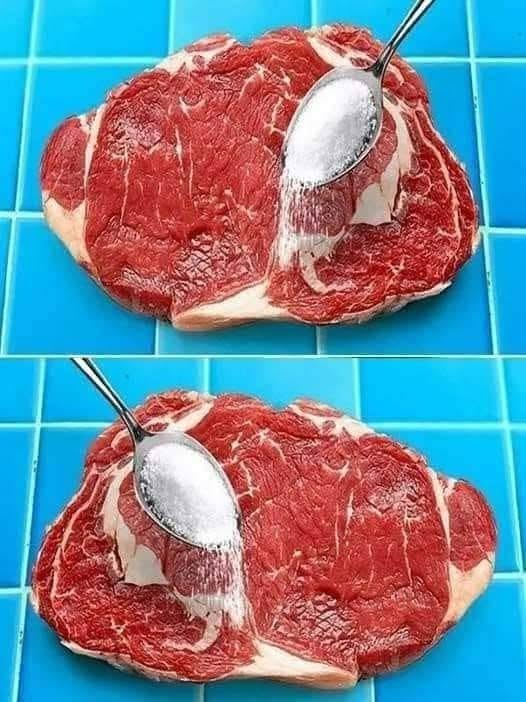
Baking soda (sodium bicarbonate) is alkaline — meaning it raises the pH on the surface of the meat.
Here’s what happens when you apply it:
1. Raises surface pH
Creates a more alkaline environment
2. Denatures proteins
Loosens muscle fibers, preventing them from tightening during cooking
3. Retains moisture
Helps meat hold onto water, staying juicy even when cooked quickly
 Result: More tender, moist meat — especially helpful for lean, quick-cooked cuts like stir-fries or grilled chicken breasts.
This technique is widely used in Chinese stir-fry recipes, where it’s part of a “velveting” process that keeps meat soft and silky.
Best Meats to Tenderize with Baking Soda
Not all meats need this treatment — but these benefit the most:
Chicken breast
Lean and prone to drying out — baking soda helps retain moisture
Pork chops (thin-cut)
Prevents toughness in high-heat cooking
Flank steak or skirt steak
Makes naturally chewy cuts more tender
Salmon fillets
Keeps delicate fish moist under high heat
Ground meat (for stir-fries)
Improves texture and juiciness
 Ideal for dishes that cook quickly at high heat, like stir-fries, grilling, or sautéing.
 How to Use Baking Soda to Tenderize Meat (Step-by-Step)
 Ingredients
1 lb (450g) meat, sliced thin (¼–½ inch thick)
¾ tsp baking soda (for every 12 oz / 350g of meat)
1–2 tbsp water (optional, for even coating)
 Never exceed 1 tsp per pound — too much causes soapy taste and mushy texture.